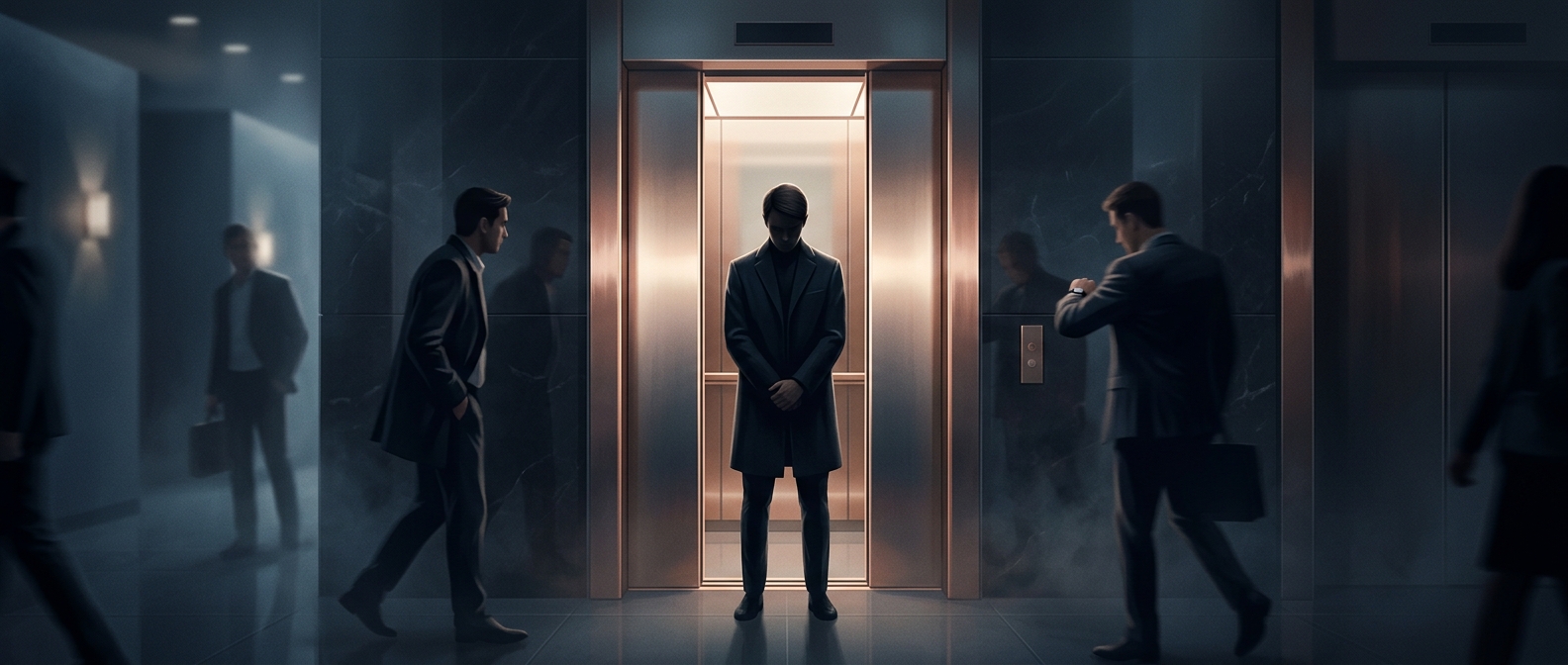
The doors make a crowded ride easier to read
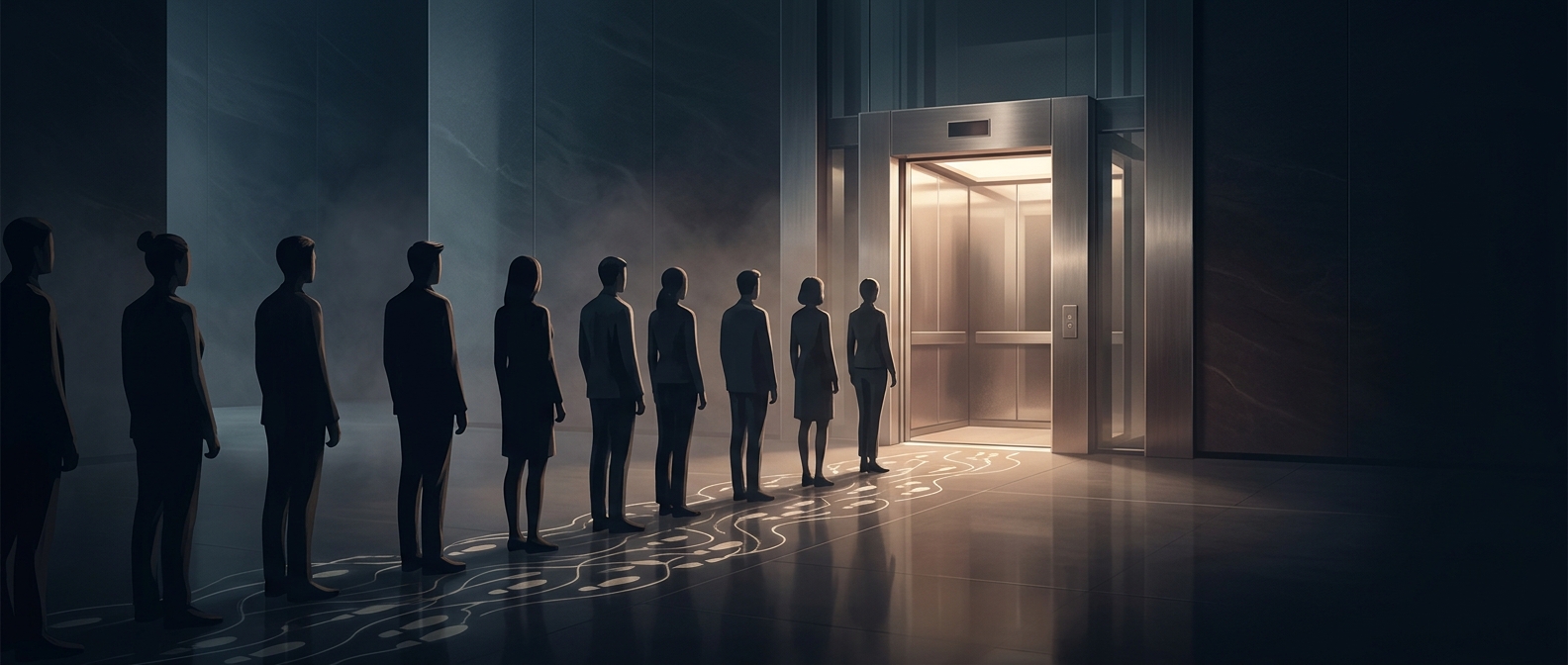
An elevator is a small moving room with little to do and few places to look. Facing the doors gives riders a shared reference point: they can notice when the car stops, who is preparing to exit, and whether someone needs room to pass. That information helps people coordinate without having to ask or make sustained eye contact.
The orientation also suits the elevator’s main movement. Riders enter and leave through the same opening, often in quick succession. Turning toward it keeps the route through the car legible: people near the doors can step aside, while those farther back can see when it is their turn. The shared direction is therefore practical even when no one is consciously planning it.
A small etiquette built into the room
In a larger space, people can spread out or choose separate points of attention. An elevator offers fewer options, and staring directly at other riders can feel unusually intense at close range. Looking toward the doors gives everyone something relevant to watch while preserving a little social distance.
The result is a quiet form of coordination. A rider’s glance toward the opening can signal readiness to leave; a step back can make a path. The doors are not just an exit—they are the common cue that lets strangers share a tight space without much conversation.