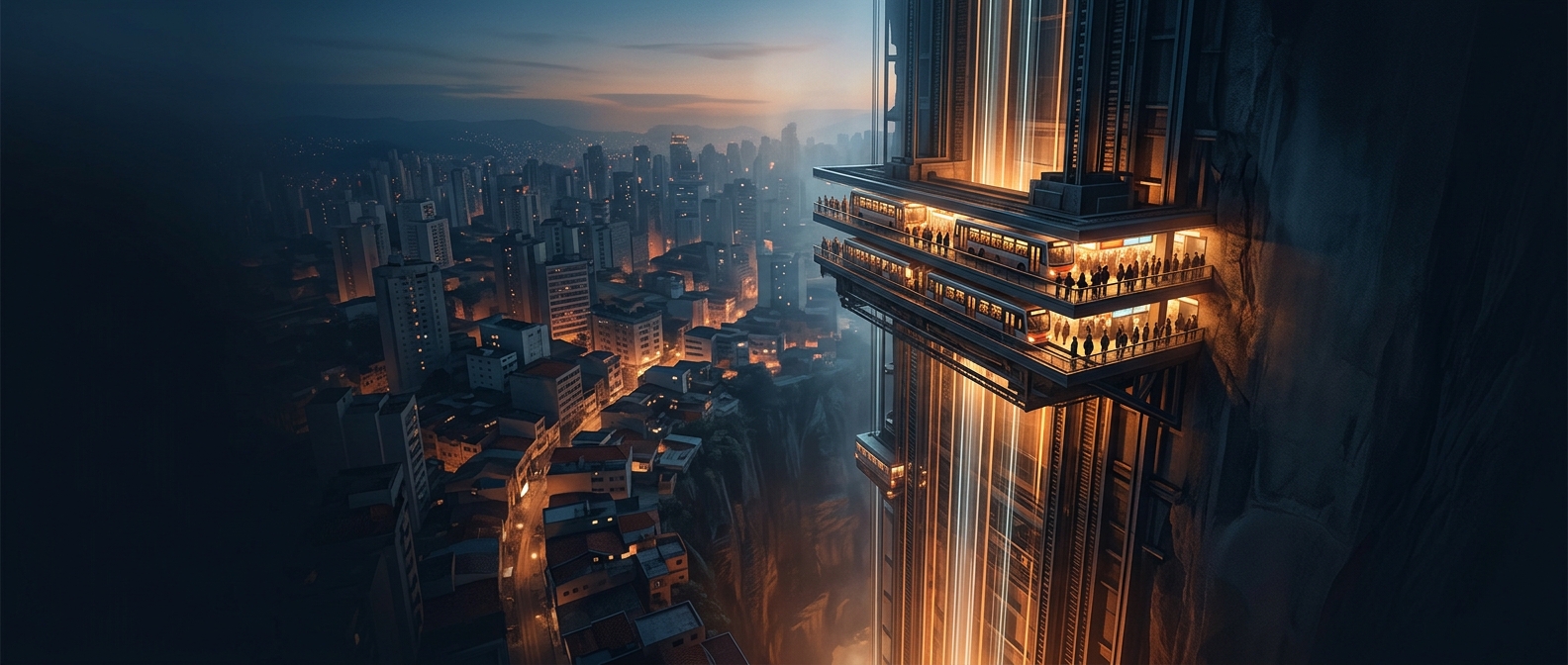
How Salvador’s Elevador Lacerda bridges the city
Salvador, in Brazil, grew across two distinct levels: Cidade Alta, the upper city, and Cidade Baixa, the lower city beside the waterfront. The steep escarpment between them is more than a change in scenery. It separates neighborhoods and everyday destinations, making a short trip on a map a demanding climb on foot.
The Elevador Lacerda carries passengers straight up and down that slope. Instead of following a road that winds around the hillside—or climbing stairs—the lift moves people between the two levels in minutes. Its stations are built into the city at either end, so the elevator functions as part of the street network rather than as a ride designed only for visitors.
Why a vertical route matters
The elevator’s usefulness comes from what it connects. People can move between the lower city’s waterfront and the upper city’s streets without treating the escarpment as a barrier they must walk around. That makes the lift a piece of public transportation shaped by Salvador’s terrain: the route is vertical because the city itself is.
It also changes how the distance feels. A steep divide that could turn an ordinary errand into a strenuous journey becomes a direct ride between two parts of town. In Salvador, the elevator is not simply a shortcut through the landscape; it is one of the links that lets the city’s two levels work as a single urban place.