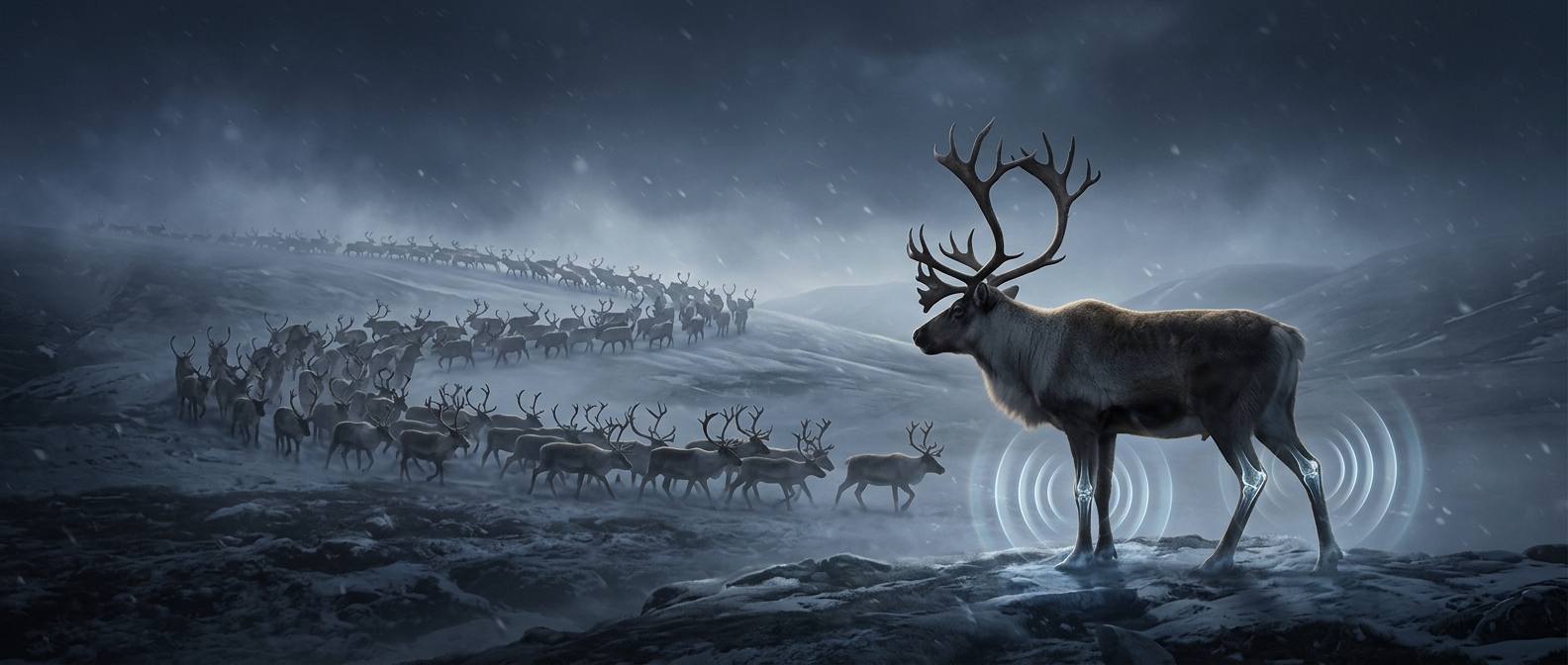
A hoof that changes its contact with the ground
A reindeer’s hoof is not a rigid shoe with the same surface in every season. Beneath its two main toes are soft pads that become more prominent in summer. On damp, soft ground, the pads provide a broader, yielding contact surface, helping the animal keep its footing.
From soft ground to snow and ice
As winter approaches, the pads shrink back. The harder outer edges of the hoof are then more exposed, giving them a firmer point of contact with frozen ground. Those edges can press into snow and grip irregularities in ice more effectively than a broad, soft pad would.
The change is useful because the challenge underfoot changes: summer brings wet, yielding terrain, while winter often means snow-covered or frozen surfaces. Instead of relying on one hoof surface for both, reindeer alter which part bears more of their weight.
The payoff is seasonal traction
This is not a literal tire swap, but the comparison captures the mechanical advantage: the hoof’s softer pads suit yielding ground, while its harder edges help on winter surfaces. The same animal carries both forms of traction, with the season changing which one does more of the work.