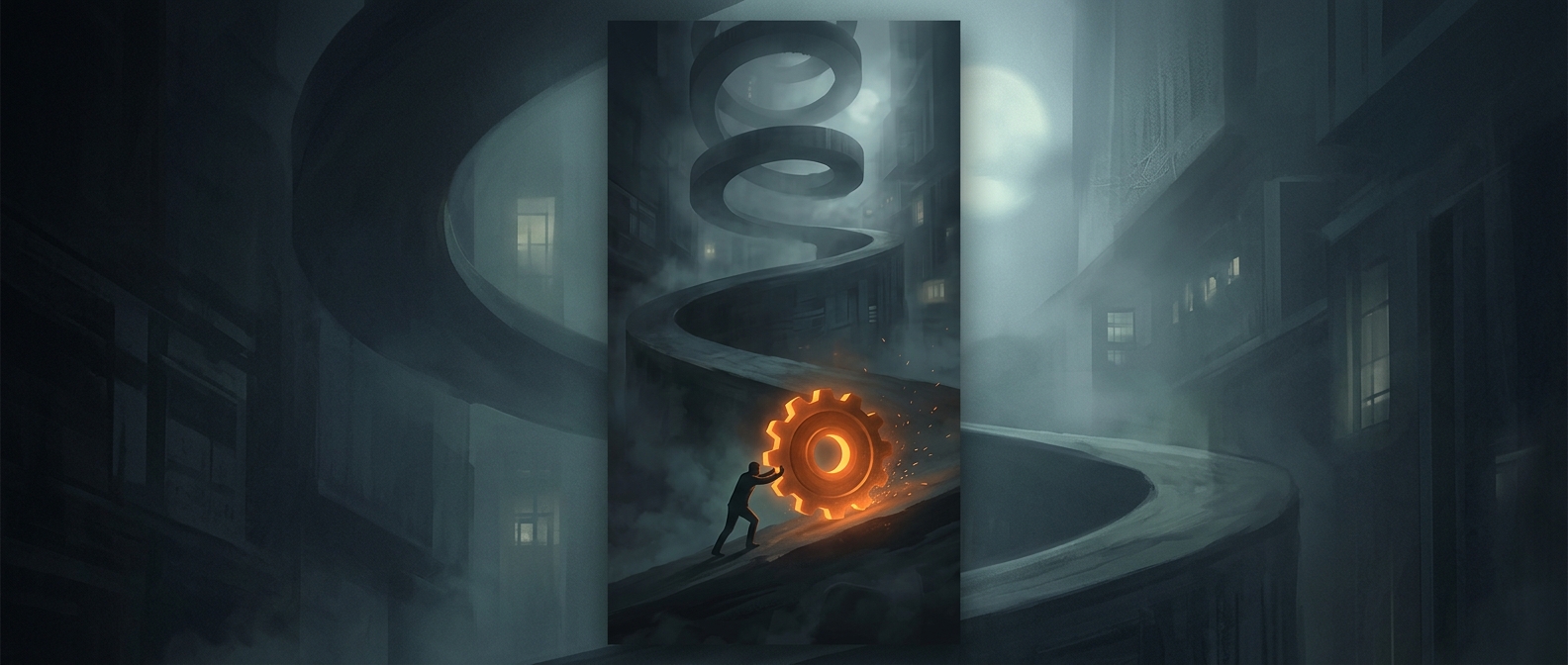
When work stops feeling like a choice
A demanding job can require long hours without making someone compulsively overwork. The key difference is not simply how much a person works, but whether they feel driven to keep going even when they want to stop and can see the cost. A completed task brings little lasting satisfaction; attention quickly shifts to what remains unfinished.
How the cycle keeps itself going
Work can serve two roles at once: a way to measure personal worth and a way to keep difficult feelings at bay. A deadline or new assignment offers a clear target. Focusing on it may briefly quiet anxiety, guilt, or self-doubt, while finishing it can provide a short-lived sense of being valuable. When that relief fades, another task offers the next chance to feel in control.
This helps explain why praise or success may not settle the pattern. If worth depends on doing more, achievement can raise the standard rather than make rest feel safe. Time away from work may then bring unease, which sends the person back to working and reinforces the cycle.
The cost becomes part of the pattern
Over time, work can crowd out sleep, recovery, relationships, and interests outside the job. Those losses matter not only because they damage well-being, but because they leave fewer sources of connection and self-worth beyond work. The warning sign is not ambition itself; it is when stopping feels harder than continuing, even as life narrows around the job.