How the spindle finds the chromosome copies
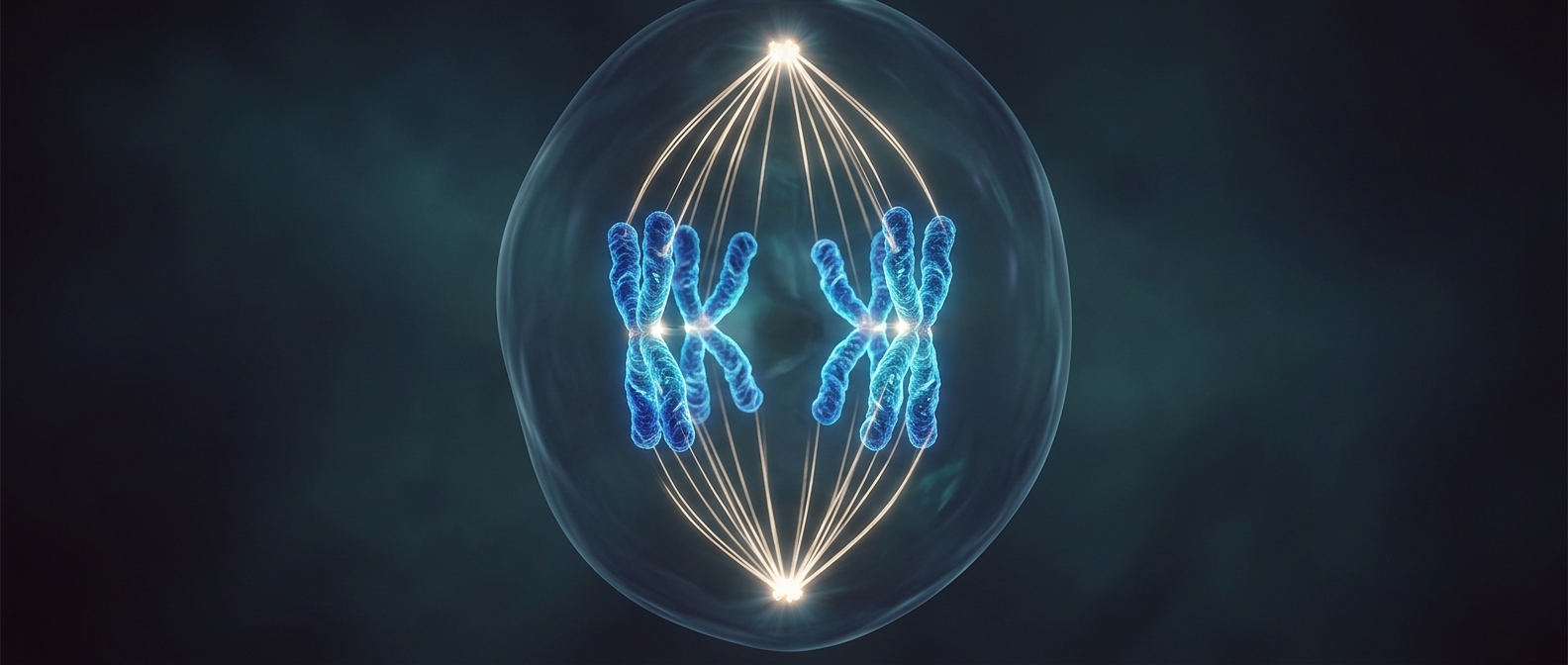
After DNA is copied, each chromosome consists of two matching sister chromatids held together until the cell is ready to separate them. Meanwhile, the cell builds a spindle: a framework of tiny protein tubes called microtubules that extends from opposite sides of the cell.
At a chromosome’s midpoint, a protein structure called a kinetochore acts as an attachment point. Spindle microtubules from opposite sides connect to the kinetochores of the paired chromatids. The arrangement gives each copy a route toward a different end of the cell.
A checkpoint before the pull
The cell does not simply start separating chromosomes as soon as fibers touch them. It pauses while checking that the chromosomes are attached to the spindle from opposite sides. If an attachment is missing or improperly arranged, the checkpoint delays separation, reducing the chance that both copies will end up in the same new cell.
Once the attachments are ready, the molecular links holding sister chromatids together are cut. The spindle then draws the separated chromosomes toward opposite ends. Microtubules can shorten as their building blocks are removed, helping move the chromosomes; other parts of the spindle also help position the cell’s two sets.
Why the timing matters
The pull is only one part of a coordinated sequence. The cell must first copy its DNA, attach the copies correctly, and release them only when the spindle is prepared. Afterward, the cell divides its contents between two daughter cells.
That sequence is why chromosome separation is more than a tug-of-war: the checkpoint helps ensure that the tug begins only after each copy has a connection to the correct side. A successful split gives each daughter cell a complete set of genetic instructions.