How an iris makes blue without blue pigment
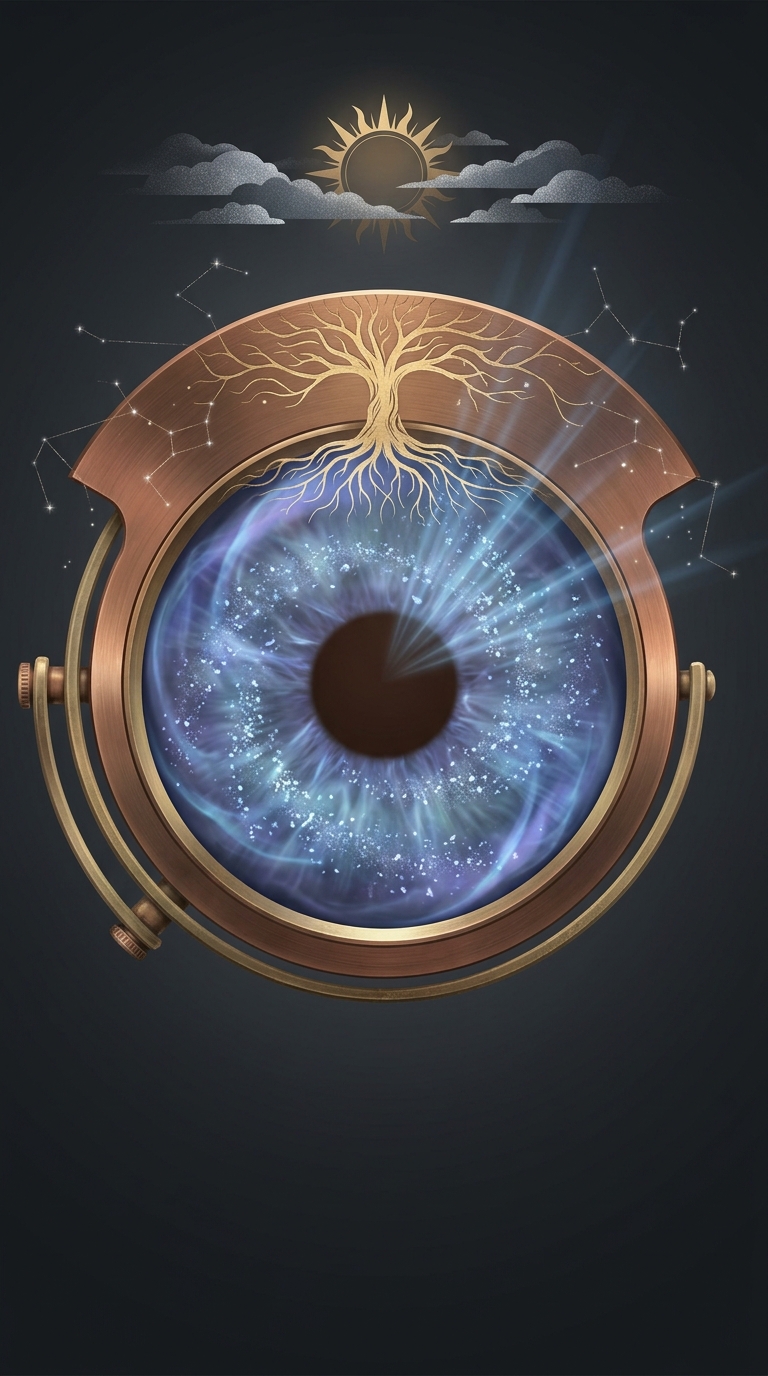
The iris is the colored ring around the pupil. Its front layer contains pigment called melanin, which absorbs some incoming light. In a blue eye, that layer has relatively little melanin, so light penetrates the iris’s tissue and is scattered back toward an observer. The scattered light is weighted toward shorter wavelengths, making the iris appear blue.
This is structural color: the color comes from how light interacts with tissue, not from a blue dye in the eye. The sky’s blue appearance also involves light scattering, though the atmosphere and the iris are different materials and scatter light in different ways.
Why less pigment can mean more glare
Melanin helps absorb light. With less pigment in the iris, more light can pass through or scatter within it rather than being absorbed. That extra stray light can contribute to discomfort in bright conditions, much as light entering from the side can make a bright window harder to ignore.
But eye color alone does not determine how sensitive someone is to glare. The pupil narrows in bright light, and sensitivity also depends on factors such as the eye’s overall health and a person’s individual response. Blue-eyed people may be more prone to discomfort for some, but plenty are not unusually light-sensitive—and people with darker eyes can be bothered by glare too.
The useful distinction is between how an iris looks and how a person experiences light: low pigment helps create the blue appearance and can affect stray light, but it is only one part of the story.