How Uranus Became a Clue
After Uranus was discovered in 1781, astronomers tracked its position against predictions based on the known planets’ gravity. Over time, observations did not line up perfectly with those calculations. The mismatch was small, but persistent: Uranus seemed to be moving a little faster or slower than expected at different points in its orbit.
That discrepancy could have meant the measurements or the model were wrong. But it also suggested another possibility: an unseen planet might be pulling on Uranus.
Working Backward From a Gravitational Tug
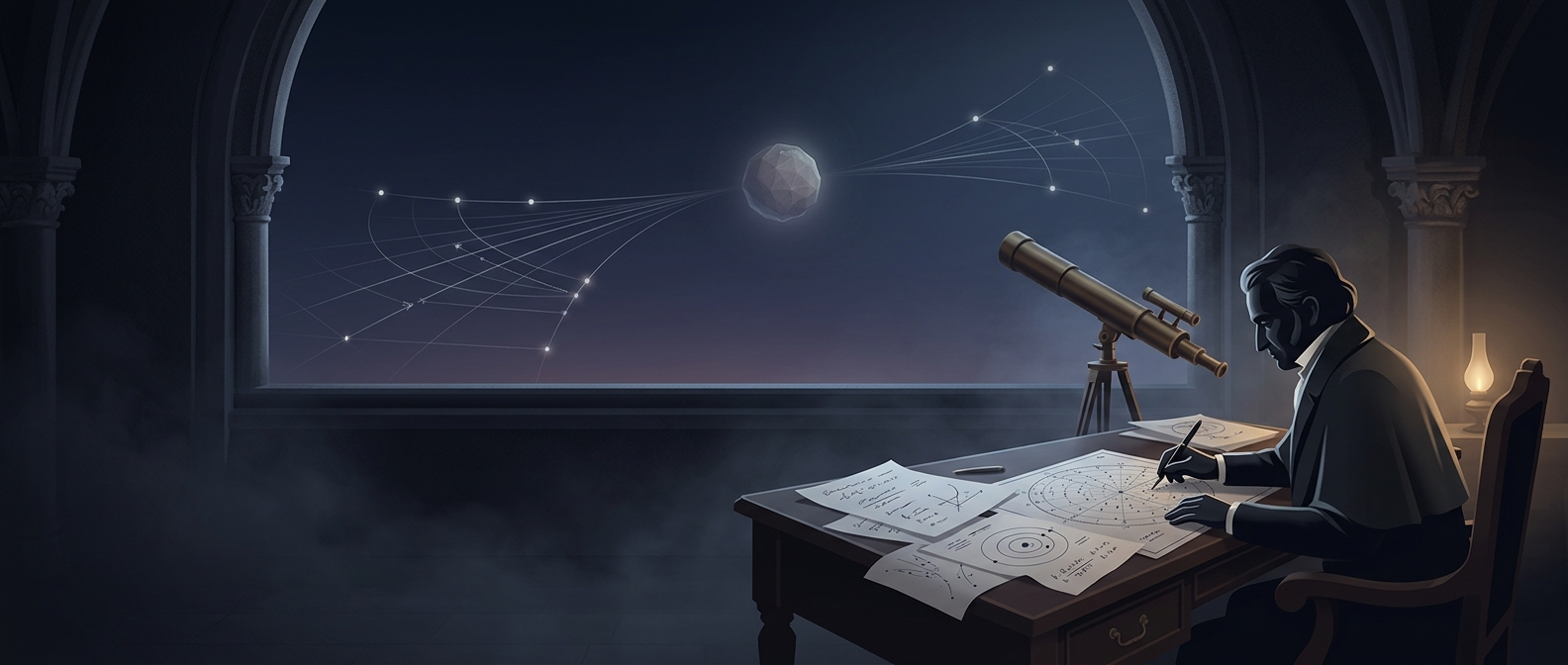
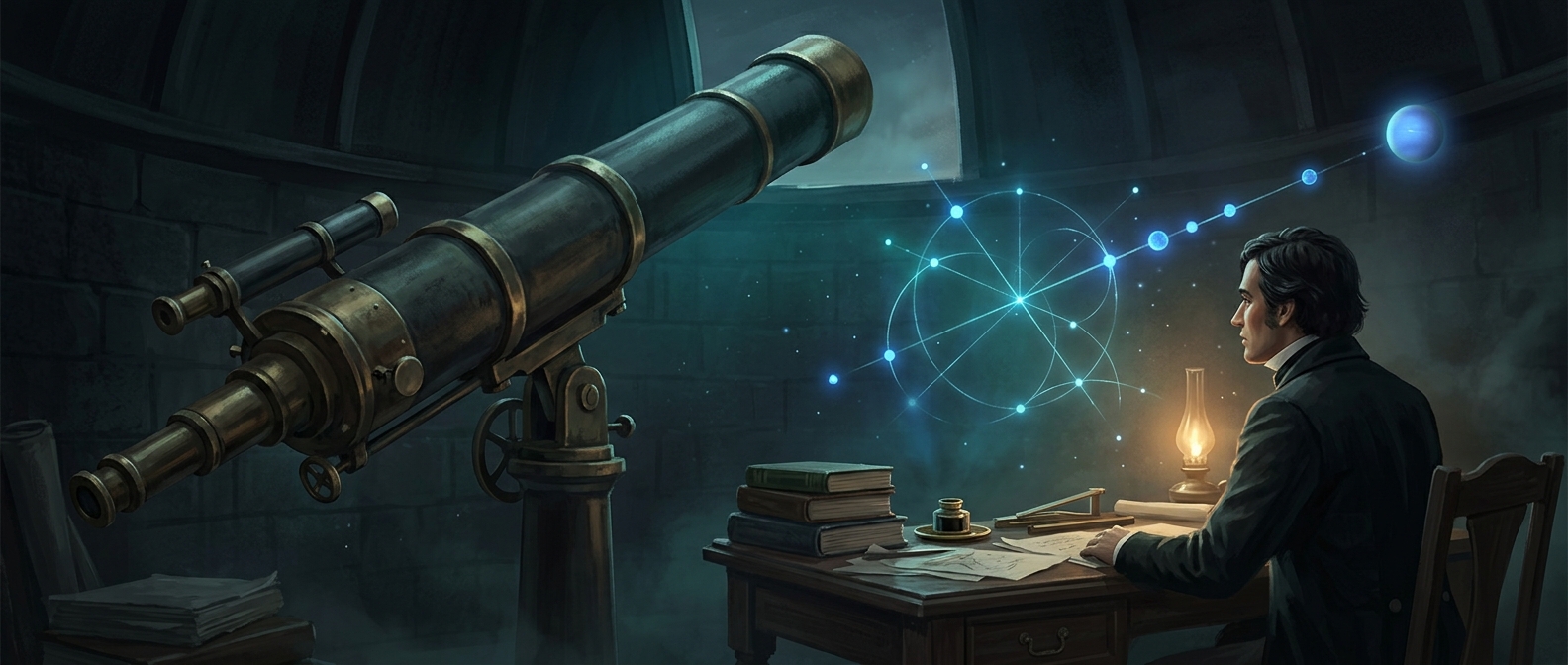
Gravity affects motion even when the object causing it cannot be seen. Astronomers could calculate how a hypothetical planet’s position and mass would alter Uranus’s path, then compare those predictions with the observed deviations. This was an inverse problem: start with the effect and infer a plausible cause.
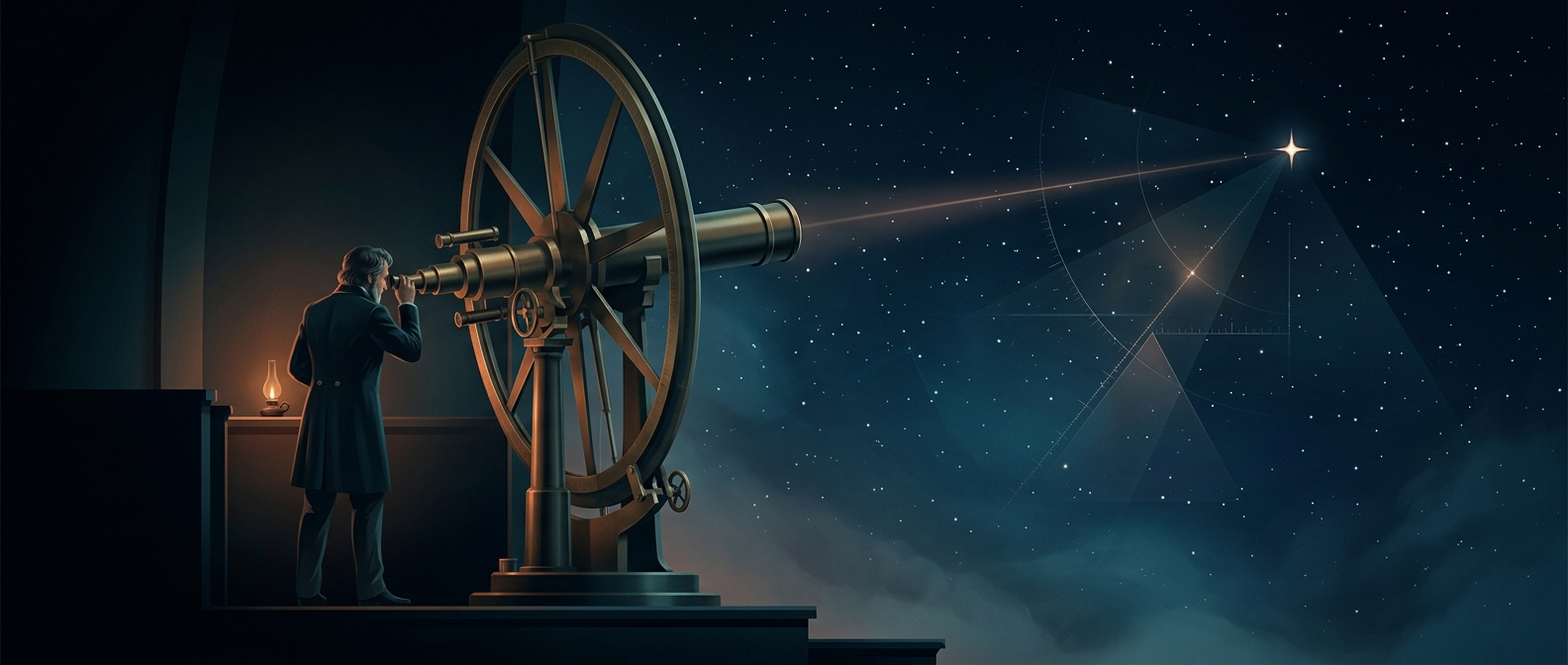
In the 1840s, the mathematicians John Couch Adams in Britain and Urbain Le Verrier in France independently worked on this problem. Le Verrier sent his predicted position to astronomer Johann Galle at the Berlin Observatory. On September 23, 1846, Galle and his assistant Heinrich d’Arrest searched that region and identified a planet close to the predicted spot.
What the Discovery Proved—and What It Didn’t
The result showed that a planet’s influence can be detected through another world’s motion before the planet itself is visible. It also gave Newtonian gravity a striking test: calculations made from Uranus’s irregular path led astronomers to a new world in the sky.
The match was not a perfect demonstration that mathematics can reveal any hidden object on its own. The predicted location guided a telescope search, and the discovery depended on observations as well as calculation. But it changed the search from scanning the whole sky to checking a particular patch. Neptune first announced itself not as a point of light, but as a slight misstep in Uranus’s orbit.