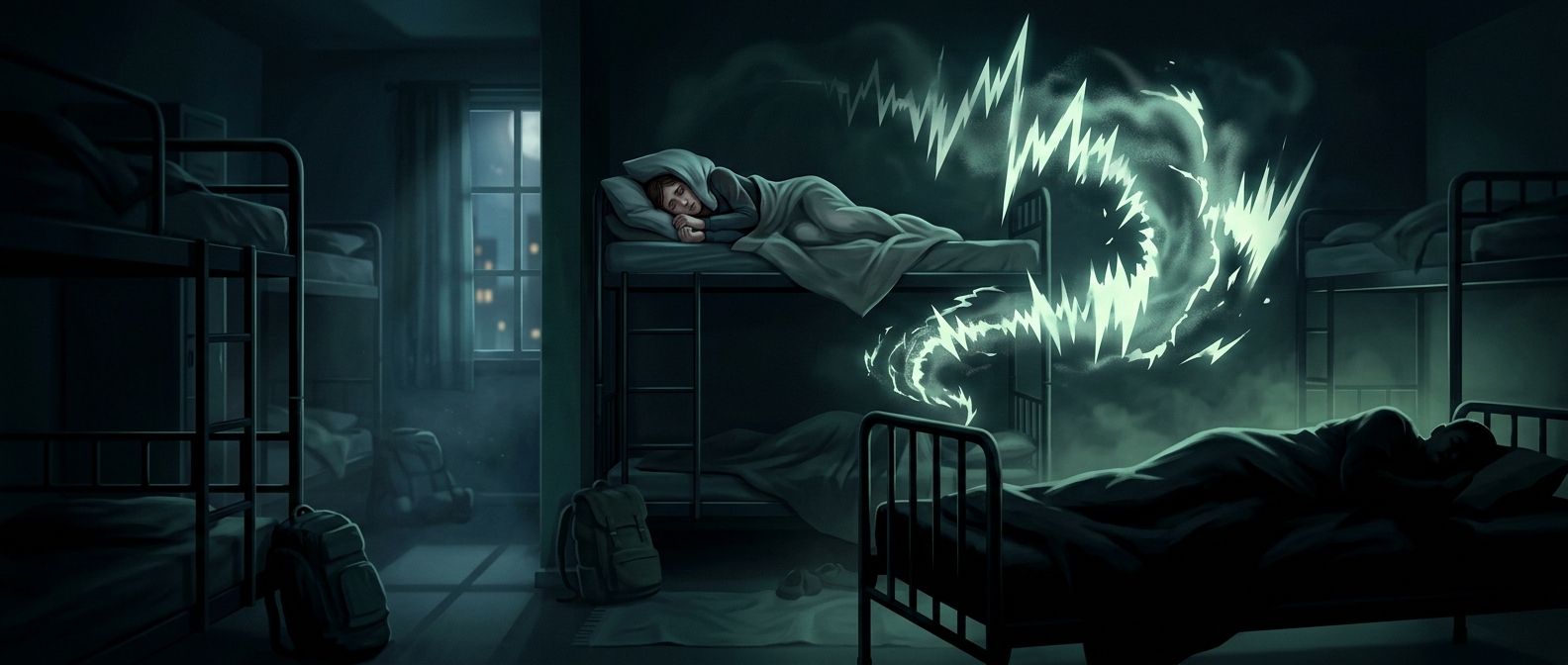
Why Snoring Carries Through a Hostel Dorm
Snoring begins when airflow makes relaxed tissues in the throat vibrate during sleep. It can sound especially loud in a quiet room, where there is little competing noise to mask it. In a dorm, hard walls, close-set bunks, and a sleeper just above or beside you leave little distance for the sound to fade.
The problem is not only volume. Snoring often comes in uneven bursts, so a sleeper may keep noticing it just as they are drifting off. Earplugs can soften the sound but may not block its lower, stronger notes—and they cannot prevent the bed itself from transmitting a little vibration.
The Room Choice Is Part of the Sleep Plan
Dorms trade privacy for price and company. If uninterrupted sleep matters, a smaller room or private room reduces the number of possible noise sources; a bed farther from the center of the room may help too, though it is no guarantee. A fan or steady background sound can make irregular noises less noticeable, while earplugs are worth bringing as backup.
A hostel stay can still be a good bargain, but the cost is not always just the nightly rate. In a shared room, one person’s ordinary sleep noise becomes everyone else’s room condition—a useful reason to treat quiet and privacy as part of the booking decision.