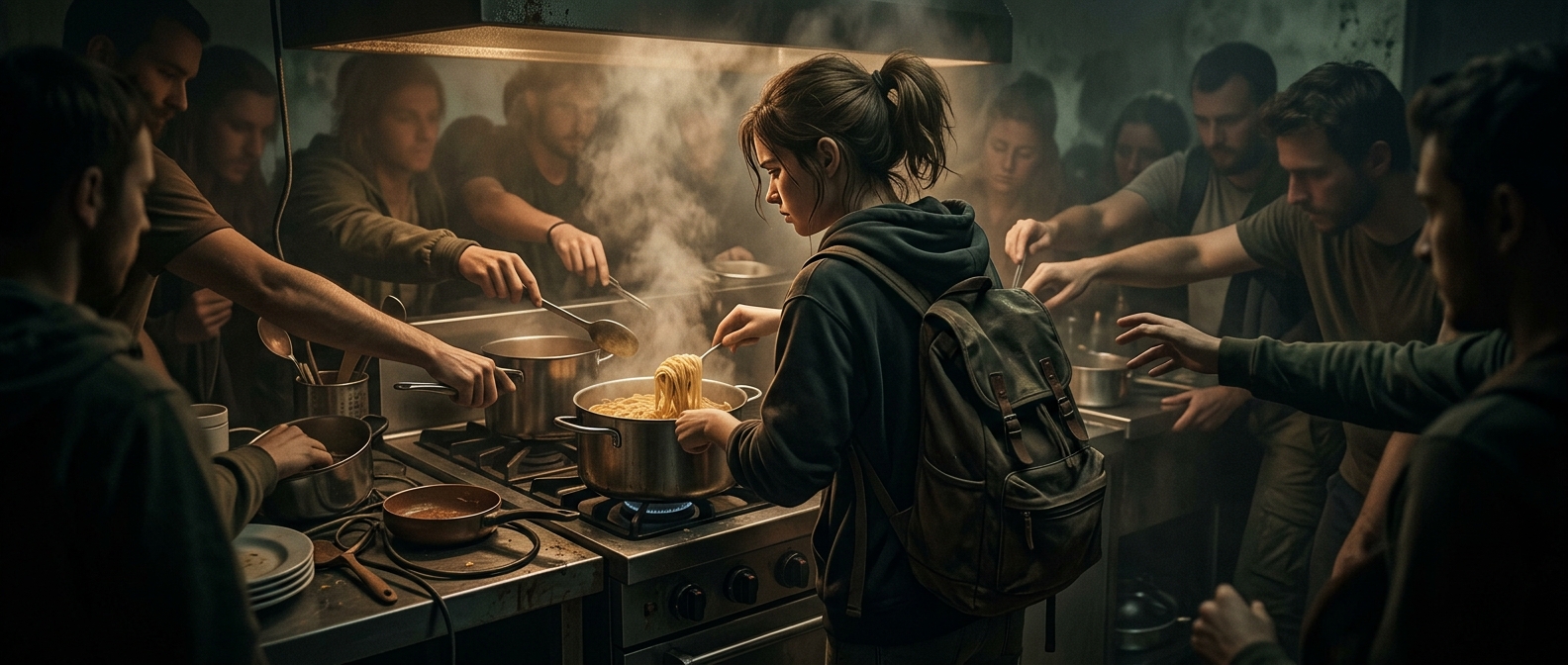
Why Dinner Gets Harder at the Busiest Hour
A hostel kitchen is shared infrastructure, not a private kitchen with a few extra users. Travelers arrive and leave on different schedules, but many want to cook around the same time. A single stove or stretch of counter can become a bottleneck: one person’s long simmer delays everyone waiting to boil water, and unfinished cleanup leaves the next cook with less usable space.
The friction comes from coordination as much as from cooking. In a home, people generally know whose food is whose and who is responsible for putting things away. In a hostel, short stays and unfamiliar routines make those expectations less clear. Even ordinary tasks—finding room for ingredients, locating a usable utensil, deciding whether a pot is free—take extra attention.
A Small Meal Depends on Many Shared Decisions
Pasta is simple only when the equipment and workspace are ready. If the pot is occupied, the burner is in use, or there is nowhere to drain the noodles, the steps stop being a smooth sequence. You may need to wait, improvise, or change the order of tasks while other people move through the same narrow space.
That is why a basic dinner can feel disproportionately tiring after a day of travel. The work is not just preparing food; it is repeatedly adapting to other people’s timing and to whatever the kitchen makes available. The room’s condition can shape the meal before the water even boils.
The Kitchen Is Also Part of the Hostel Experience
Shared kitchens are meant to let travelers eat cheaply and use a common space, but those benefits depend on everyone leaving the room workable for the next person. A quick rinse, clearing a burner, or making space on the counter can prevent a small inconvenience from becoming another traveler’s delay.
In a crowded hostel, the most useful kitchen skill may be flexibility: a dinner plan that can survive a wait, a missing tool, or a change of station.