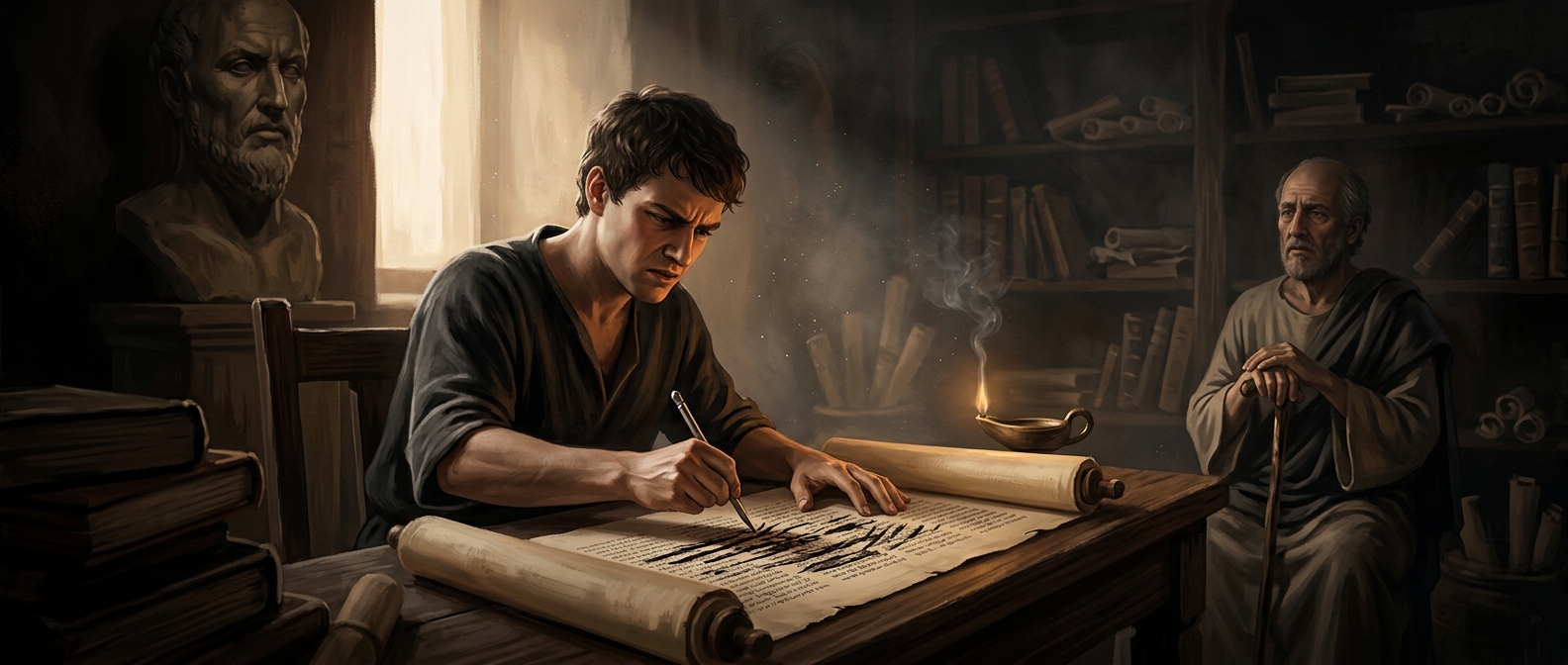
Poverty as a religious discipline
For mendicant friars, poverty was not simply a modest lifestyle. It was a deliberate refusal to possess property as a way of life. The word mendicant comes from begging: instead of supporting themselves through land or wealth, friars depended on donations and moved among ordinary people to preach and serve.
The ideal drew on the belief that religious holiness meant following Christ’s example of having no worldly possessions. Giving up ownership was meant to loosen the grip of security, status, and self-interest—and to make a friar’s dependence on God visible in everyday life. Poverty was therefore a rule of religious commitment, not merely a personal preference.
The difficulty of owning nothing
The ideal became especially demanding when applied not just to individual friars but to their communities. A person could renounce a house or income; an order still needed places to live, books to study, and supplies for its work. Some traditions, especially the Franciscans, pressed the question sharply: could friars use necessities without claiming them as their property?
That distinction between using something and owning it helped preserve the ideal, but it also created practical and religious disputes. Mendicant poverty was not one identical rule across every order, and communities had to work out how strict renunciation could coexist with a lasting institution.
The striking consequence was that an order’s holiness could be judged not by what it accumulated, but by what it was willing to do without—even when the needs of its work made that standard difficult to keep.