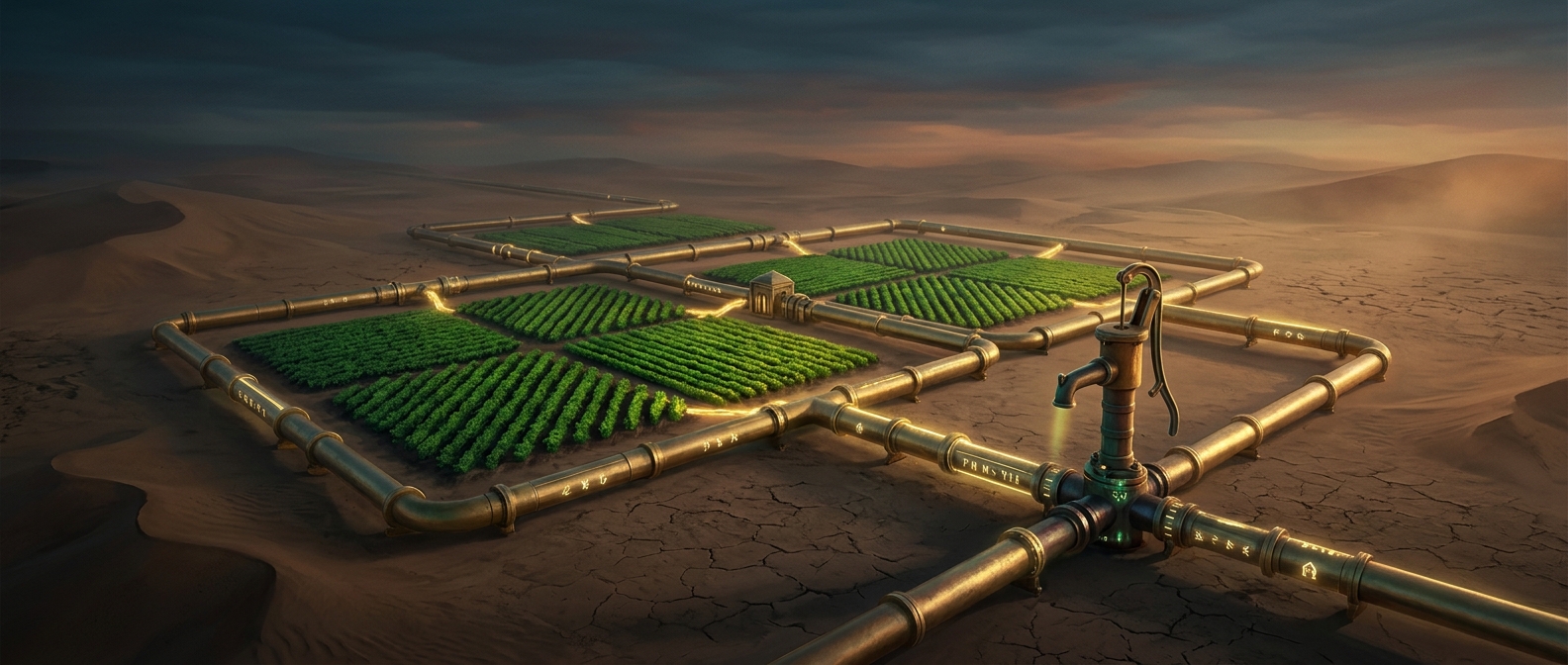
How Subsidies Can Keep Thirsty Crops in Dry Places
Growing a crop in an arid region is not just a matter of whether water exists. Farmers also weigh what it costs to deliver that water, and who bears the expense. Public support for irrigation—through subsidized water, infrastructure, or energy used to pump it—can lower a farm’s costs even when the crop requires frequent watering.
That changes the planting decision. If irrigation is cheaper than it would be without public support, a farmer may be able to grow a water-intensive crop such as lettuce and still make the numbers work. The subsidy does not make the region wetter; it changes the price signal that guides what gets planted.
The Tradeoff Behind the Lower Bill
Irrigation water has costs beyond the water itself: canals and pipes must be built and maintained, and pumping can require substantial energy. When taxpayers help pay those costs, the farmer faces a smaller bill, while some of the expense shifts to the public. The benefit is concentrated among water users, but the costs are spread across the broader tax base.
A lower price can also weaken the incentive to conserve. When water is scarce but its delivered cost to a farm is kept low, a crop that would otherwise be too expensive to irrigate may remain profitable. That can intensify competition for limited water, particularly during dry periods, though the consequences depend on local water supplies and rules.
What the Subsidy Makes Possible
The policy choice is not simply whether to grow lettuce. It is whether the public wants to support irrigation at a price that makes certain crops viable in places where water is naturally limited. The crop’s market price may not reflect the full cost of the water used to produce it. A head of lettuce can therefore look like an ordinary farm product while its affordability depends partly on who pays to move water to the field.