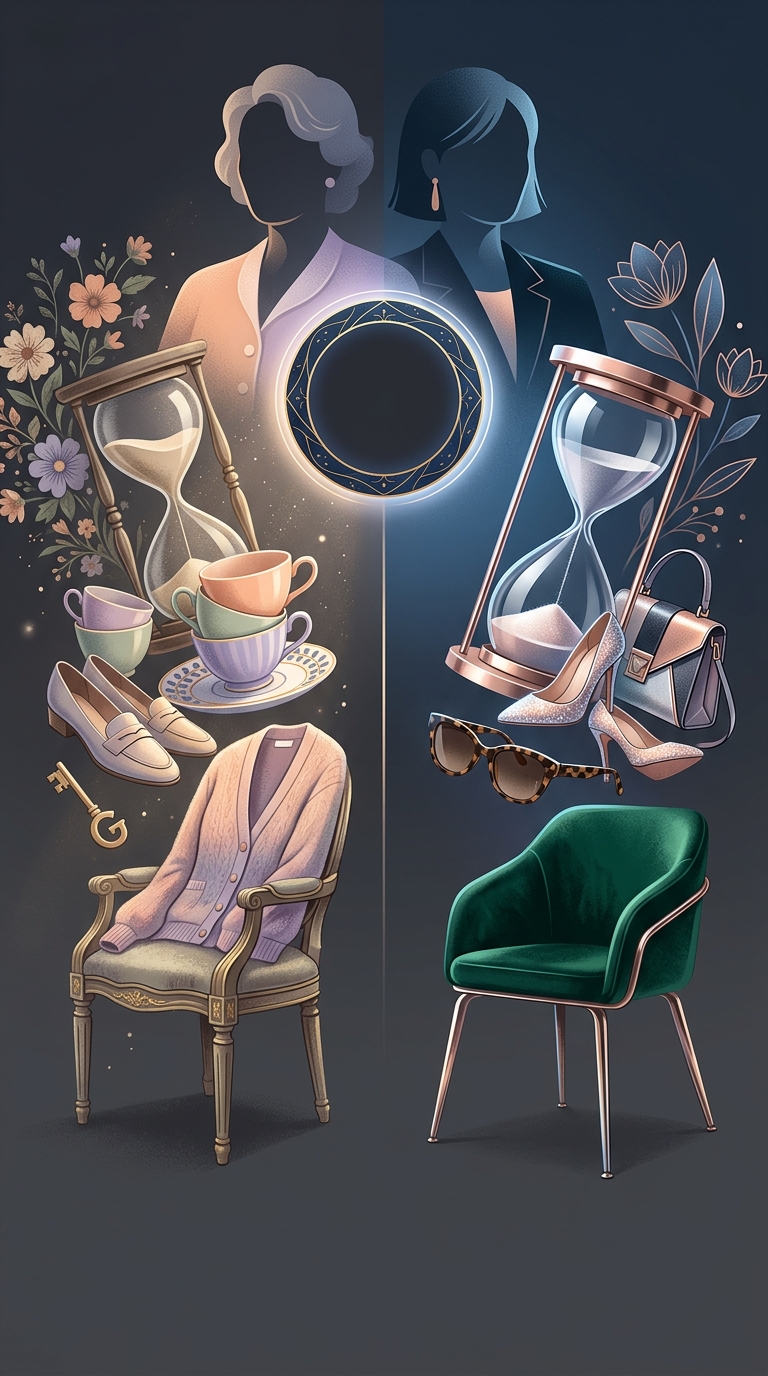
Fifty-one Was Not the Same Thing as “Old”
Rue McClanahan was 51 when The Golden Girls premiered in 1985. Sarah Jessica Parker was 56 when And Just Like That…, the Sex and the City revival, debuted in 2021—not the same age, but close enough to make the contrast revealing. The characters belonged to different generations of television, and their wardrobes helped signal what each show thought a woman’s later adulthood could look like.
Blanche Devereaux was a lively, flirtatious woman sharing a Miami house with friends; her romantic appetite was part of the comedy, not proof that she had become a different kind of person by crossing a particular birthday. The show’s pastel suits and broad sitcom style made age visible as a comic cue. But Blanche’s dates, rivalries, and desires also kept her firmly in the middle of the action.
From Age as a Joke to Age as a Plot
The Sex and the City revival returned to characters whose lives had once been organized around careers, friendships, romance, and city life. In their fifties, those same characters could still wear conspicuous fashion and occupy Manhattan, while the story made aging itself—and its effects on relationships and identity—part of the subject. The change is not simply that later television gave older women younger clothes; it let them remain protagonists without treating desire as a punchline by default.
That shift matters because television uses age to tell viewers who a character is allowed to be. A woman in her fifties can be cast as a comic “older lady,” or as the center of an ongoing story with choices still ahead. Blanche’s zest for dating already strained the first stereotype. Later, Parker’s return made the broader point harder to miss: a woman’s life does not stop being narratively interesting at fifty.