Why Shoji Let Light In Without Letting You See Through
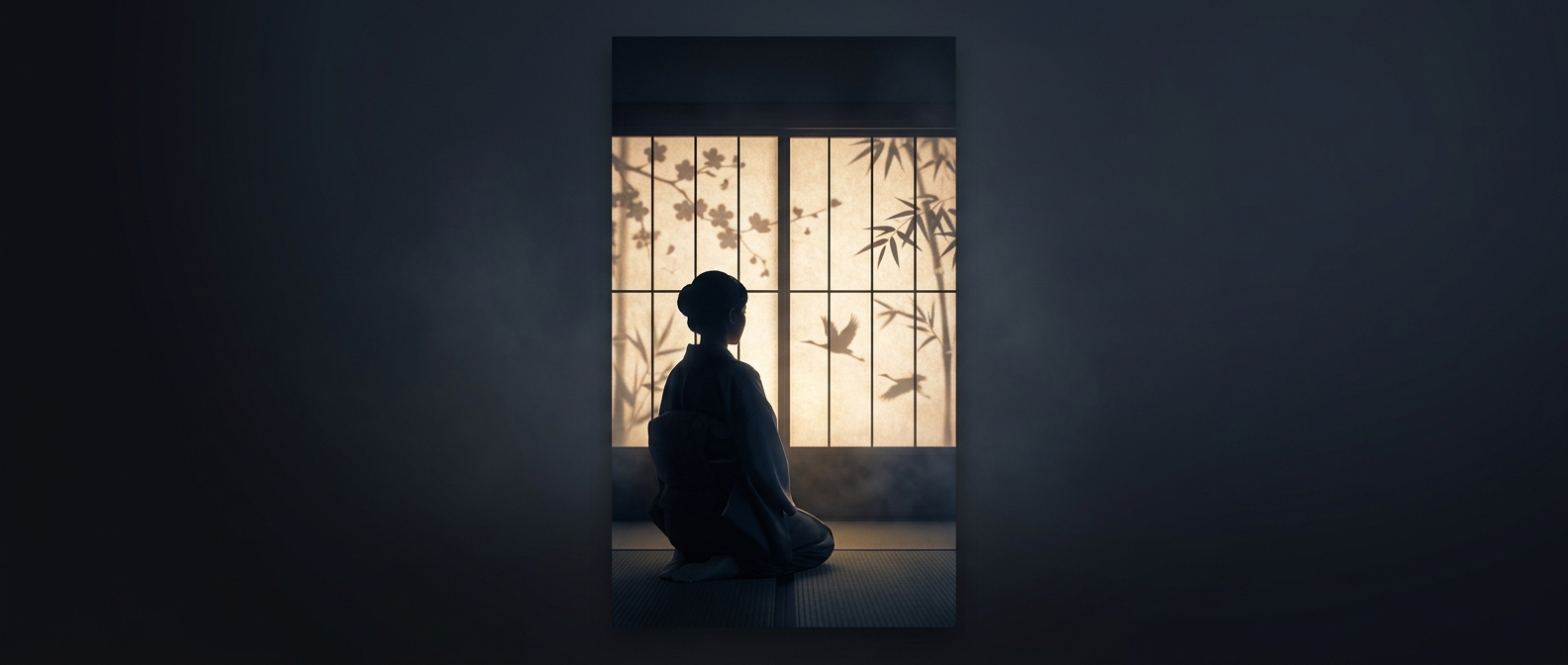
Shoji screens are made from a thin, translucent sheet—traditionally paper—stretched over a wooden lattice. Light can pass through the sheet, but its fibers redirect that light in many directions. This scattering blurs the shapes on the other side: a person may register as a shadow, while details such as facial features remain hard to make out.
The result is different from a clear window, which preserves the direction of light and therefore forms a recognizable image. A shoji screen instead spreads daylight across the room, softening strong contrasts between a bright exterior and a dim interior. The lattice supports the sheet while dividing the screen into panels; it does not turn the partition into a solid wall.
Why Visual Privacy Is Not Soundproofing
Sound travels as pressure changes in the air. When those changes reach a thin sheet, they can make it vibrate, transmitting some of the sound to the other side. A heavy, solid wall is harder to set vibrating and blocks far more sound; a paper screen has little mass to resist it. Sound can also pass through small openings around a sliding screen or its frame.
That difference reflects a practical tradeoff. Shoji can separate spaces while admitting gentle daylight and keeping a room visually screened, but they are not built to seal it off acoustically. A blurred silhouette is a kind of privacy; a quiet conversation requires more than a paper partition.