How an Ondol Floor Stored a Fire’s Heat
In a traditional Korean ondol, the fireplace did more than warm the air. Its hot gases were routed beneath the room through narrow channels called gudeul. The channels ran under a thick masonry floor and led toward a chimney at the far side of the house.
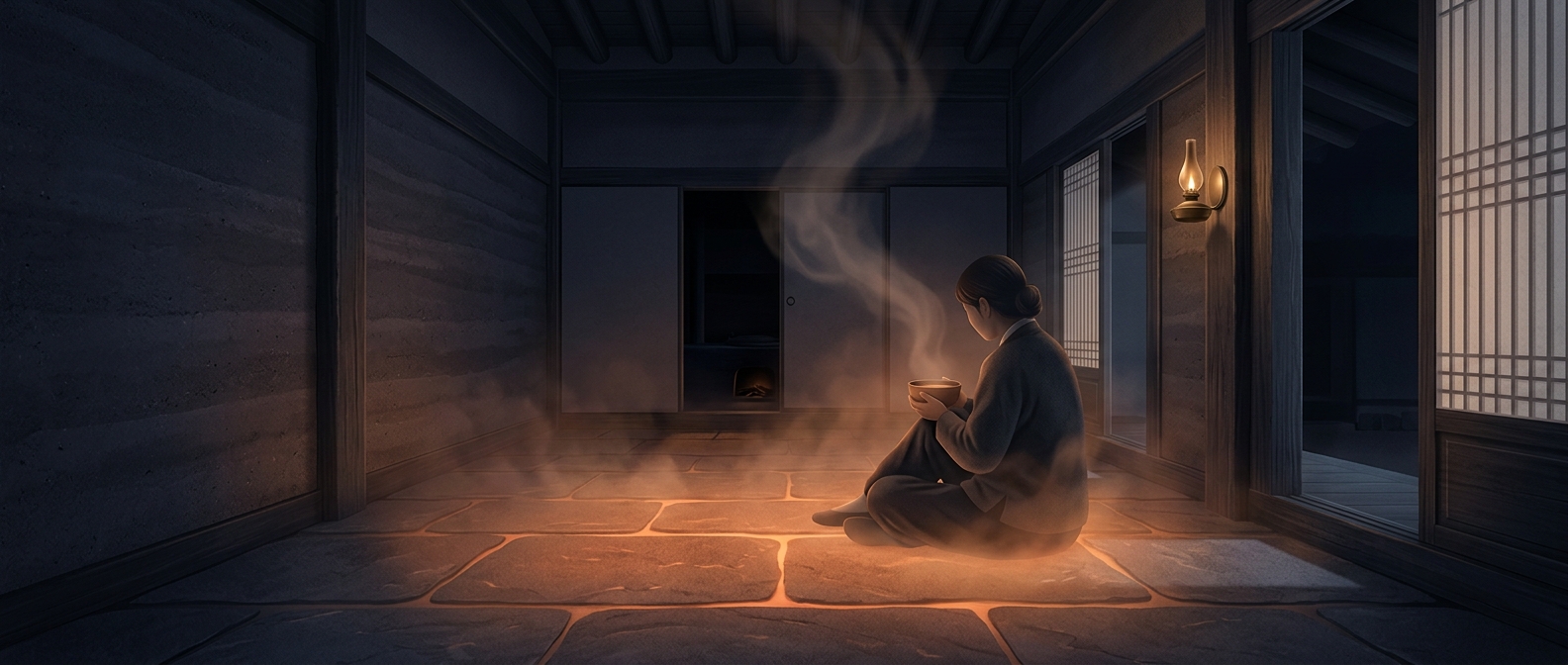
As smoke passed through, the masonry absorbed heat. Stone and earth warm slowly, but they also cool slowly: after the fire died, the floor continued giving off heat into the room. The floor acted as a thermal store, turning a brief burn into hours of gentler warmth.
Why Route Smoke Under the Room?
The layout made the fire do two jobs. It could be used for cooking at the hearth, while its exhaust heated the floor on its way to the chimney. Because warmth came from below, people could stay comfortable sitting or sleeping close to the floor without needing the whole room’s air to be equally warm.
The channels had to guide smoke without letting it leak into the living space, and the masonry had to hold heat while allowing the gases to escape. The result depended on the house itself: the hearth, underfloor passages, floor, and chimney formed one heating system.
A Slower Kind of Heat
Ondol traded rapid heating for persistence. The floor took time to charge with heat, but once warm, it continued radiating warmth after the flames were gone. That stored warmth is the reason a fire could end before the room stopped feeling heated.