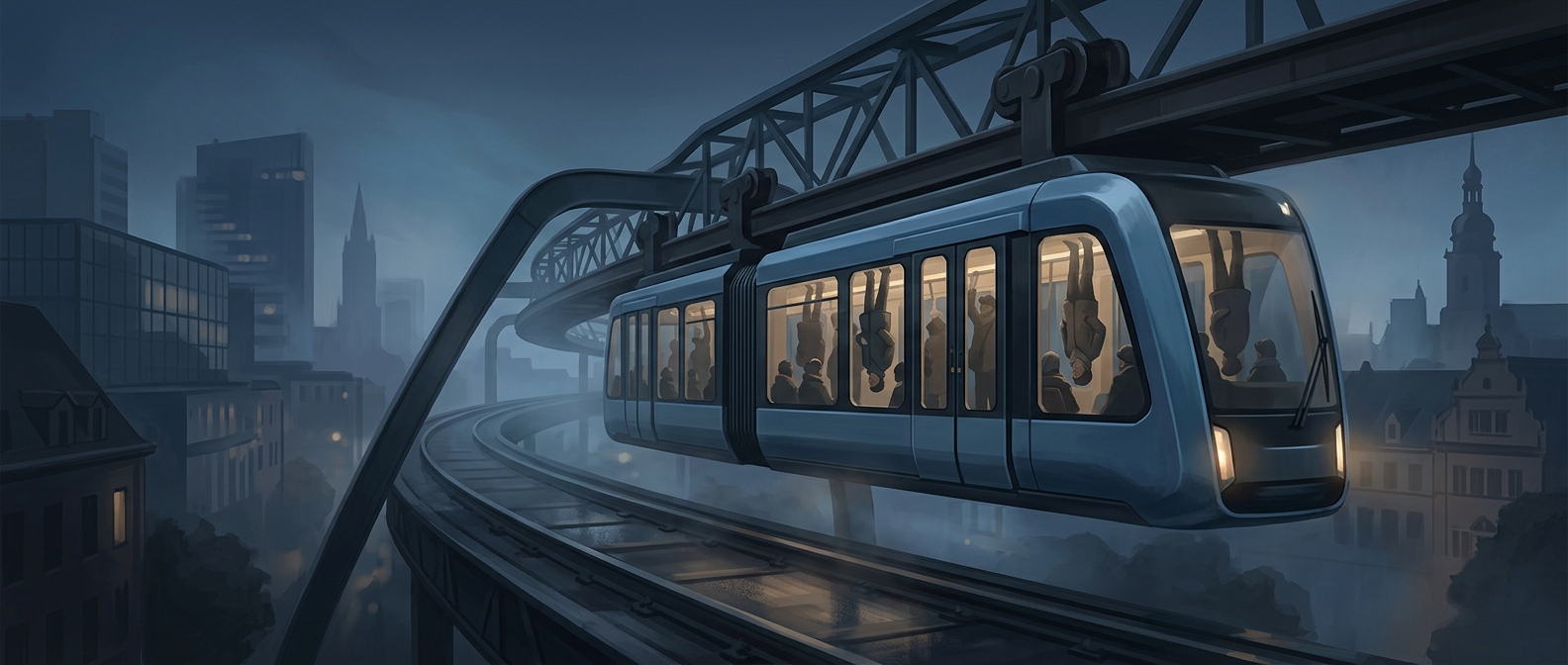
What It Takes to Hang Upside Down on a Train
A train can tilt, brake, and sway, but ordinary motion cannot hold passengers against its ceiling. Gravity still pulls them toward the floor. To create the scene shown here, the riders need some form of support—such as concealed restraints or a structure that holds them in place—or the train interior itself must be part of an inverted installation.
That distinction matters because the familiar cabin makes the image feel physically impossible. Seats, windows, and handrails tell the eye which way is down; seeing people oriented the opposite way clashes with those cues. The result is startling even before viewers work out how the setup is made.
Why the Train Still Looks Convincing
The effect depends on keeping the setting recognizable. A plain room turned upside down might read as a set, but a commuter carriage supplies everyday details that make the reversal immediate: the usual floor is overhead, and the usual ceiling appears to support the riders. Those cues give the scene its punch without changing what a train looks like.
The practical challenge is supporting people safely while preserving that illusion. Any hidden restraints or mounting points must carry their weight, while remaining unobtrusive enough that the carriage still reads as an ordinary place to travel. The striking contrast is therefore also the mechanism of the image: the more normal the train appears, the more dramatically its passengers seem to defy gravity.