A takeaway novelty built around contrast
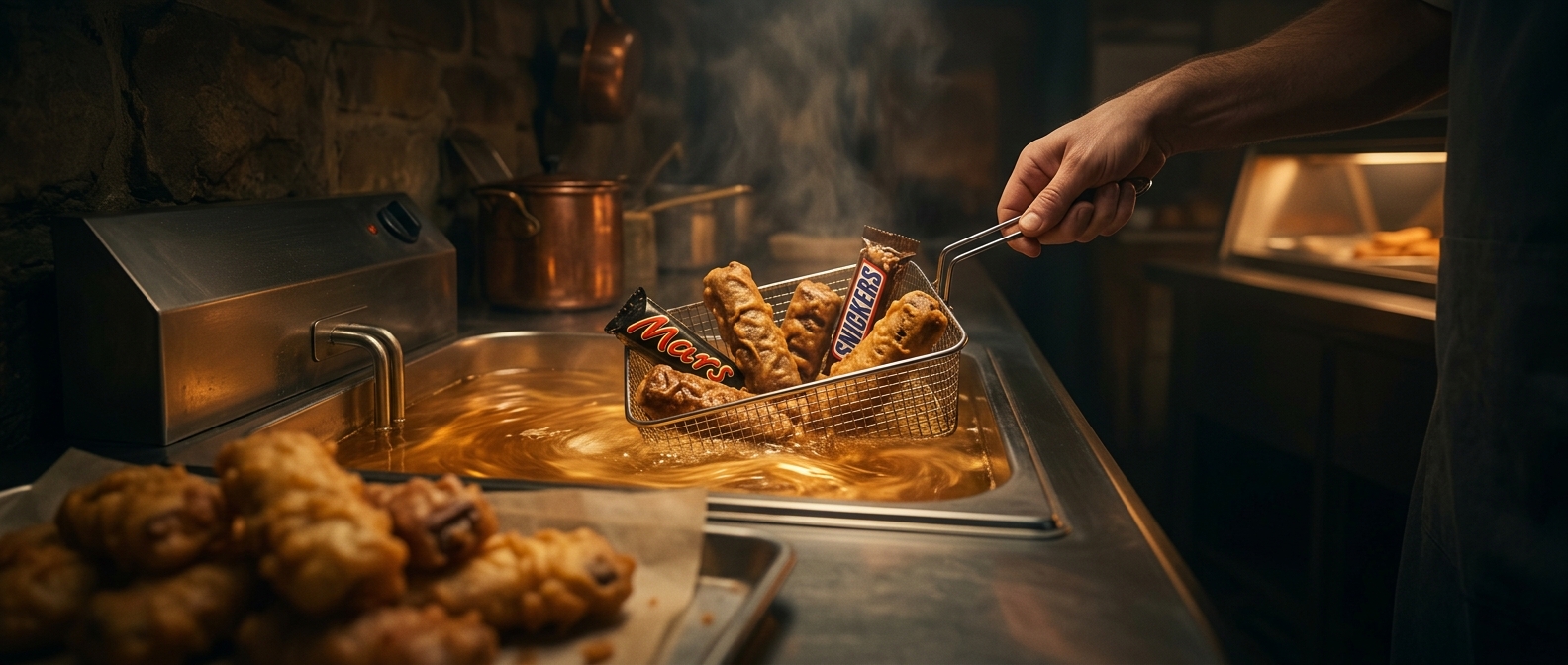
A deep-fried Mars bar turns a familiar chocolate bar into something with two distinct textures: a crisp, savory-leaning shell around a warm, sweet center. The appeal is less about changing the ingredients than about changing how they feel in one bite. The batter adds crunch; the chocolate and caramel become soft and flowing.
The Scottish connection is to chip-shop culture, where frying is already the method used for everyday takeaway foods. Putting a candy bar in the fryer makes that familiar technique part of the joke and the attraction: an ordinary packaged sweet becomes an over-the-top hot dessert.
Why the center stays soft—for a while
The batter does more than add crunch. As its wet surface meets hot oil, water in the coating rapidly turns to steam, helping dry and brown the outside. The resulting shell slows heat from reaching the candy directly, while the bar’s shape and the short cooking time limit how far warming can progress inward.
Chocolate softens as its fats melt, and caramel becomes more pliable with heat. So the bar can feel warm and gooey before its center reaches the temperature of the oil. Leave it in longer, however, and heat continues moving through the shell: the chocolate can liquefy, the coating can become too dark, and the neat contrast between crisp outside and soft inside disappears.
That narrow window is the point. The fryer briefly makes a candy bar behave like a hot pudding wrapped in a crisp crust—an effect that depends on stopping before the center catches up.