How eel broth turns into jelly
An eel’s body contains collagen, a structural protein found in skin and connective tissue. During slow cooking, heat loosens that tissue and converts some collagen into gelatin, which dissolves into the surrounding liquid. Once the broth cools, the gelatin forms a soft network that traps the liquid, making it set into a wobbling jelly.
That process explains why the dish needs no separately added gelatin: the eel contributes both the meat and the setting agent. The amount and firmness of the set can vary with the eel, how much skin and connective tissue are included, and how the broth is cooked and cooled.
A practical way to use the whole fish
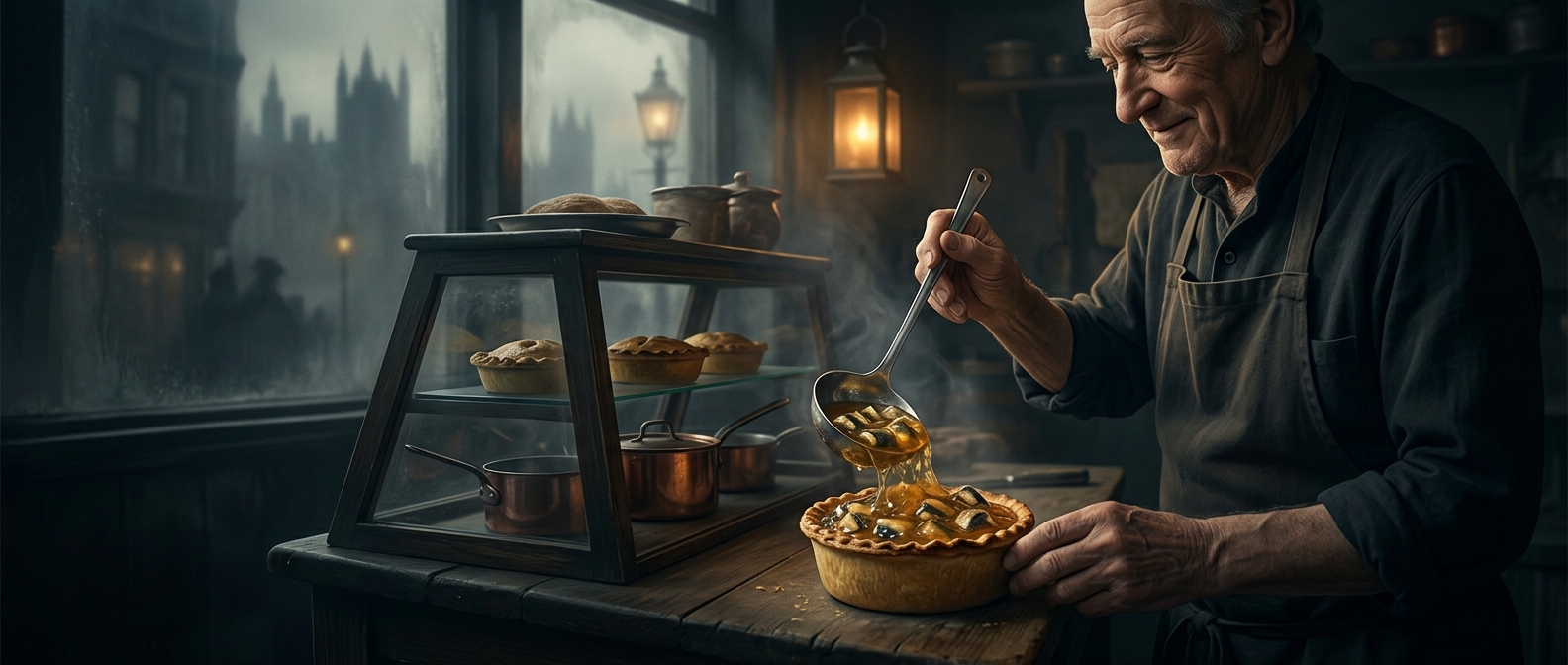
Jellied eel was associated with working-class food in London, where eels were an accessible fish. Cooking them in broth and letting it set produced a dish that could be served cold, with the meat held in place by its own cooking liquid. The jelly is not a coating added afterward; it is the cooled broth, thickened by material extracted from the eel itself.
The striking kitchen chemistry is also a simple form of thrift: parts that might otherwise be discarded help turn a pot of fish into a dish that holds together on its own.