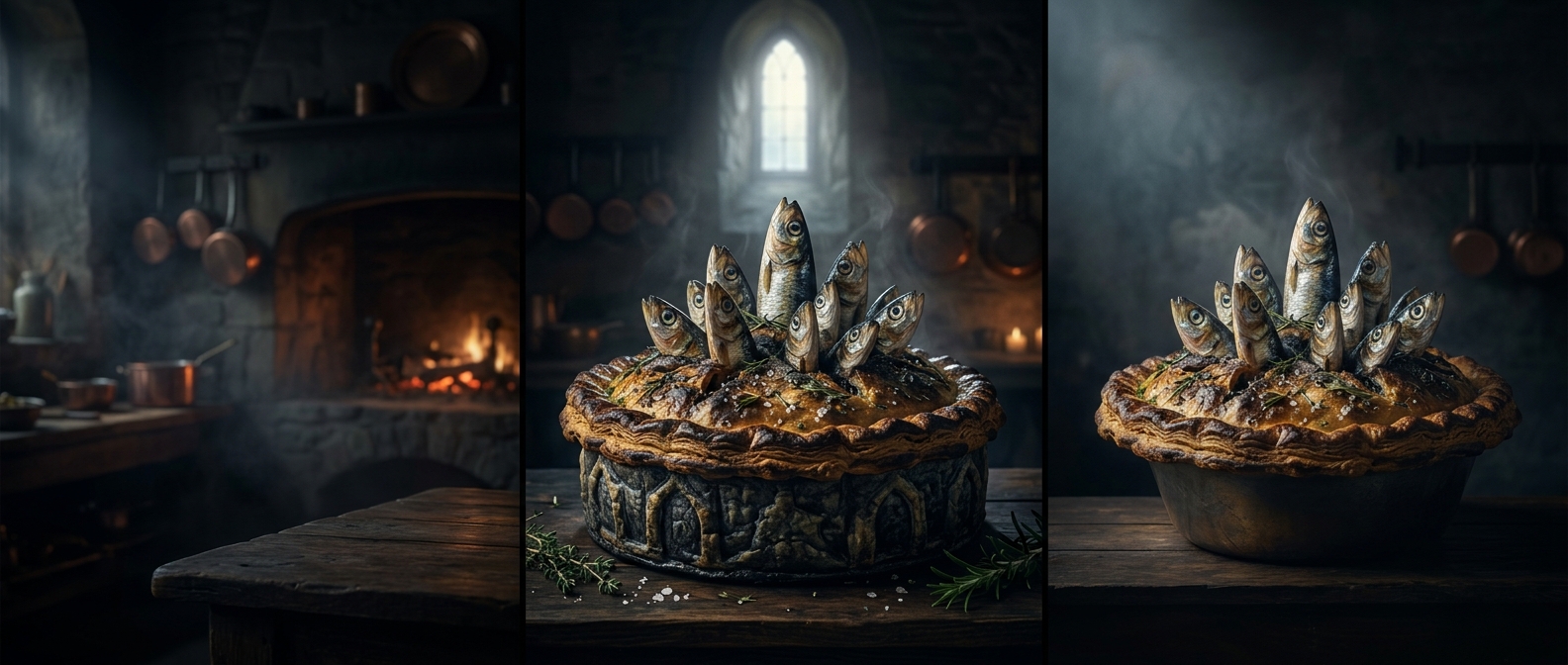
How Stargazy Pie Turns Fish Into Its Own Sauce
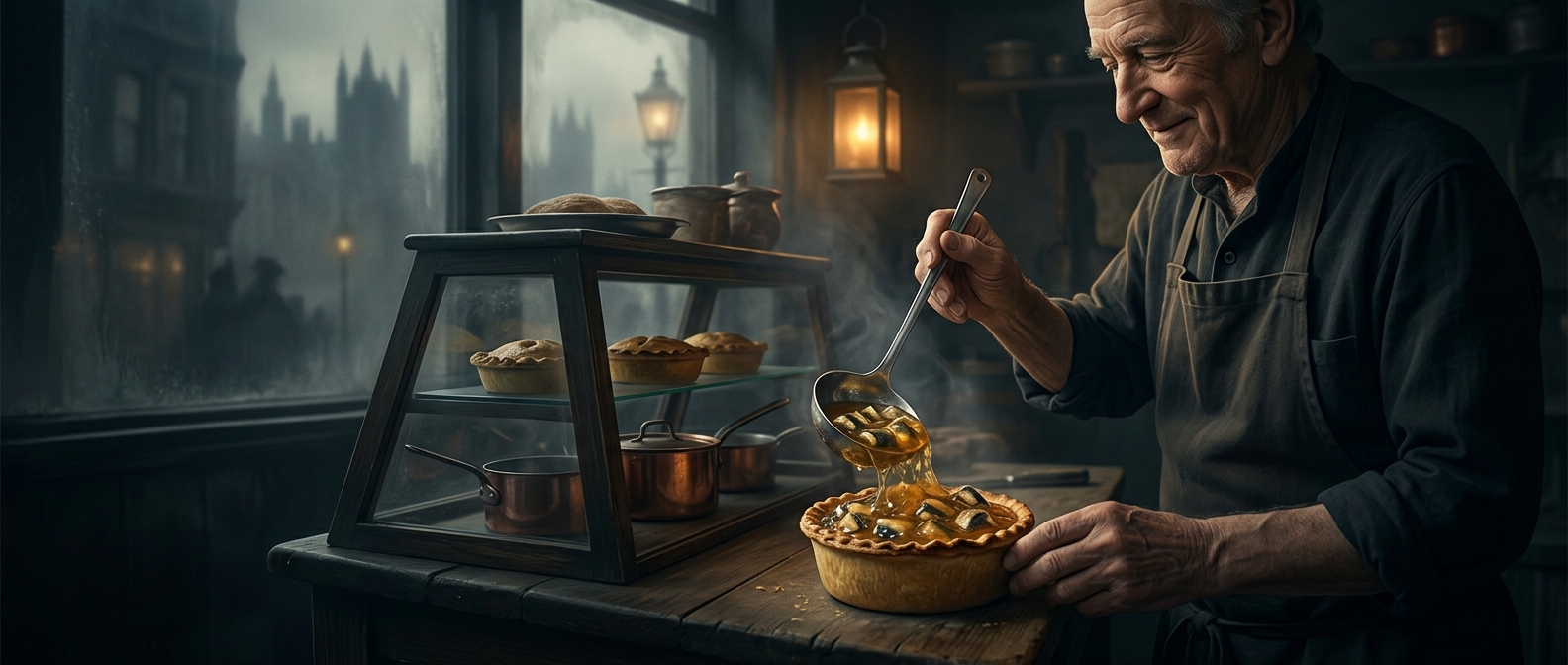
The heads are only the visible ends of whole fish. In a traditional stargazy pie, pilchards—small, oily fish also called Cornish sardines—are arranged through a filling, with their heads set above the pastry. As the pie heats, fat and juices escape from the fish and run back into the filling, enriching it as they cook.
That matters because pilchards have a stronger, oilier flavor than lean white fish. Their cooking juices mingle with the pie’s other ingredients, commonly potatoes and onions, giving the filling a savory depth without requiring a separate sauce. The pastry helps hold that moisture and flavor in the dish rather than letting it evaporate into the oven.
Why Let the Fish Break Through?
The arrangement is practical as well as theatrical: fish kept entirely beneath a pastry lid would still flavor the filling, but their juices would have less direct route to run down from the exposed ends. The heads also make the pie recognizable at a glance, turning a cooking choice into its signature appearance.
So the unsettling little faces are not merely decoration. They signal the pie’s central cooking idea: the fish stays whole, and its own juices season the meal as it bakes.