How Two Motions Become One Path
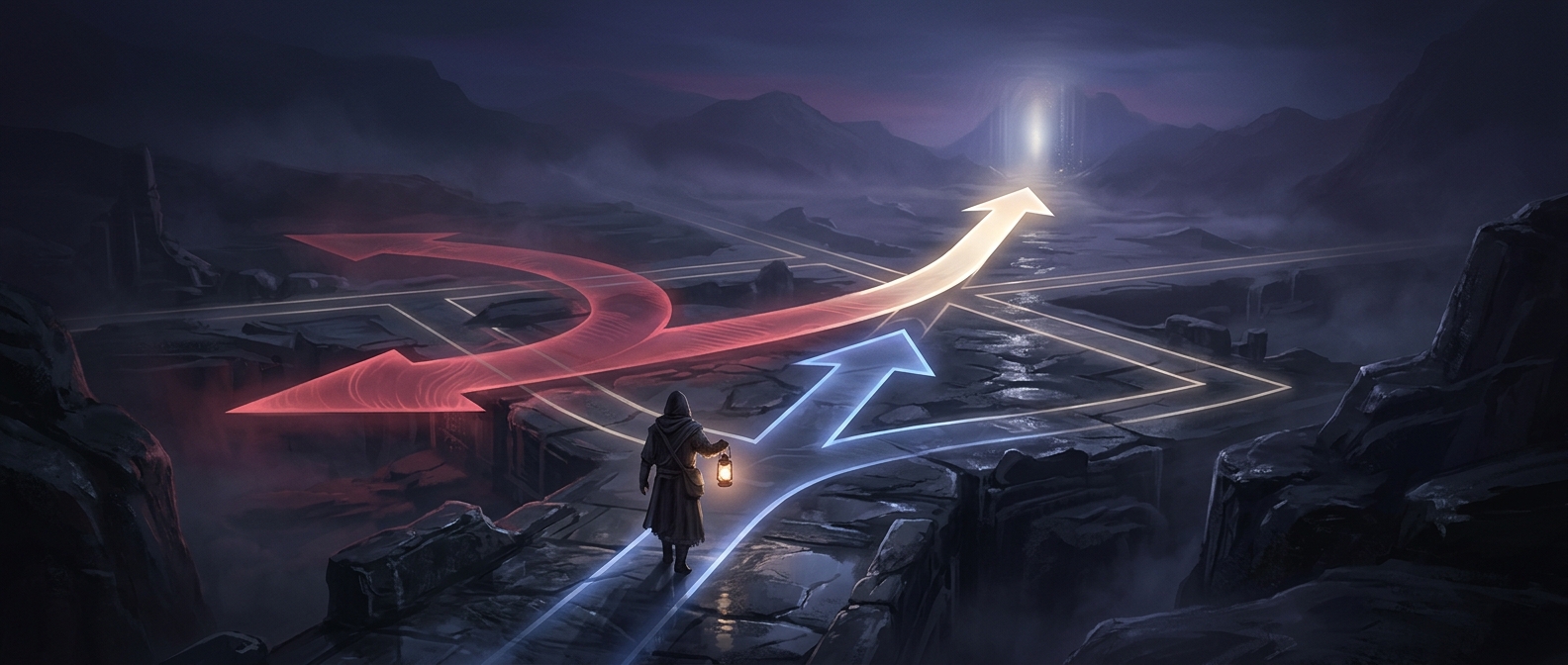
A walking person has one motion relative to the treadmill belt: forward. The belt has another motion relative to the floor: sideways. To someone standing on the floor, the person’s movement combines both. This is the idea behind vector addition: combine motions by adding their speed-and-direction components.
Imagine the belt carries the walker sideways at a steady rate while the walker moves forward at a steady rate. In the same amount of time, the walker gains some distance forward and some distance sideways. Their position therefore changes along a diagonal, even though neither motion is diagonal on its own. The steeper component determines which way the diagonal leans; changing either speed changes the path.
The Reference Point Matters
Motion is always described relative to something. The walker may be moving straight forward relative to the belt, while moving diagonally relative to the room. Neither description is wrong: each answers a different question about what the walker’s position is being compared with.
The same reasoning explains why a boat aimed straight across a river can land downstream. Its motion through the water carries it across, while the current carries it along the river. The boat’s route over the riverbed is the combined result. Vector addition lets you predict that route from the two motions, rather than treating the observed path as a mysterious third force.
In real situations, speeds and directions can change, and a person may adjust their steps to compensate. But when the components stay steady, the diagonal is a direct consequence: each interval of time adds forward progress and sideways drift to the same position.