How Lemaître made expansion a physical possibility
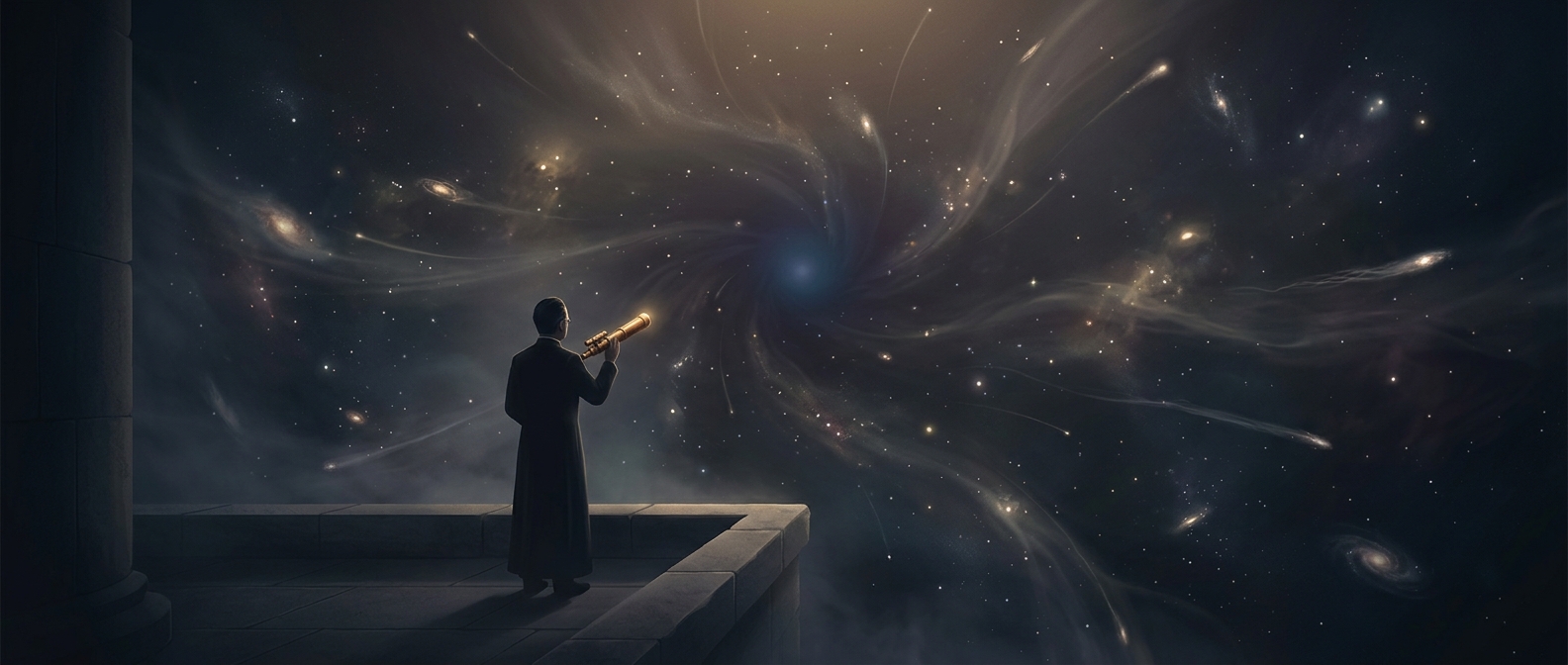
The idea grew out of a problem in gravity. Einstein’s equations describe how matter and energy shape the universe, but they do not require the universe to remain unchanged. When Belgian physicist Georges Lemaître worked through those equations in the 1920s, he found solutions in which the universe changes size over time. That offered a way to explain why galaxies appear to be moving away without treating their motion as a flight from one special center.
At the time, many scientists favored a universe that stayed broadly the same. Lemaître’s proposal was therefore more than a mathematical curiosity: it made cosmic change a testable possibility.
Connecting the equations to the sky
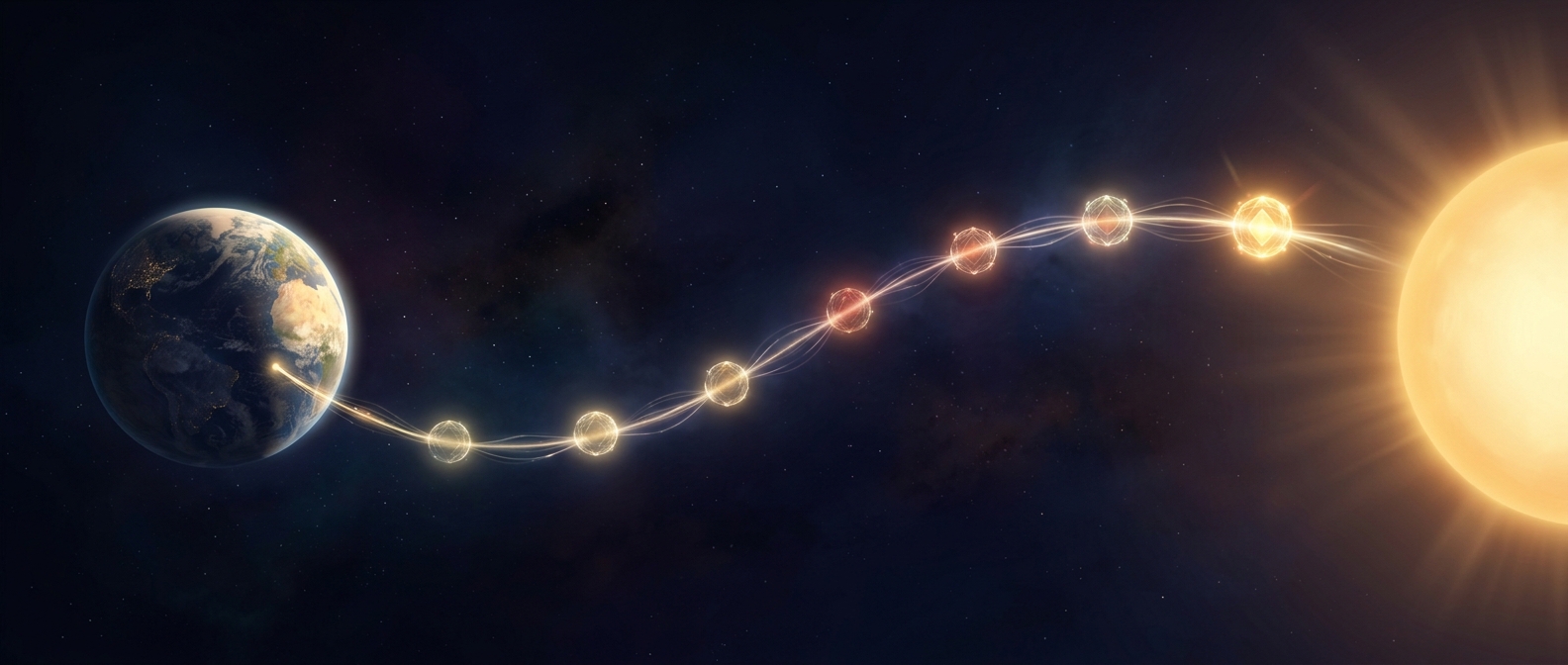
Lemaître also looked for an observational clue. Astronomers had measured the distances to some galaxies and found that their light was shifted toward red. A redshift is a lengthening of light’s wavelength; in an expanding universe, it can arise as space stretches during the light’s journey. By comparing available distance and redshift measurements, Lemaître argued that more distant galaxies should generally show greater recession.
The evidence was limited, and the measurements were uncertain. But the key step was linking a pattern in the sky to a specific consequence of an expanding universe. The proposal could be challenged with better observations rather than accepted on mathematical elegance alone.
From proposal to a changing picture
Lemaître published this connection in 1927, before Edwin Hubble published his influential 1929 analysis of galaxy distances and recession speeds. Later observations strengthened the case for expansion. The shift in thinking was profound: the universe was no longer simply a fixed stage on which galaxies moved. Its changing scale became part of the story—and, by tracing that change backward, a clue to the universe’s earlier history.