How carbon dioxide becomes Martian snow
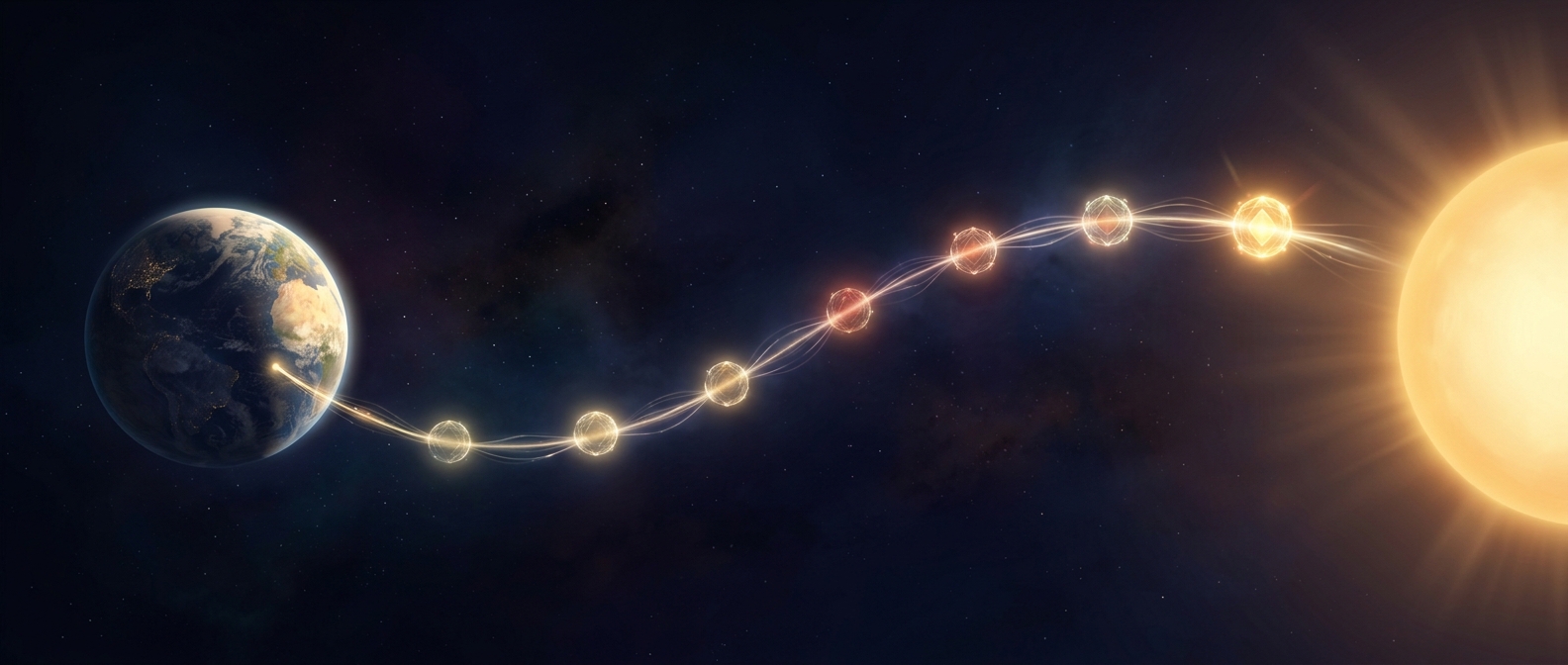
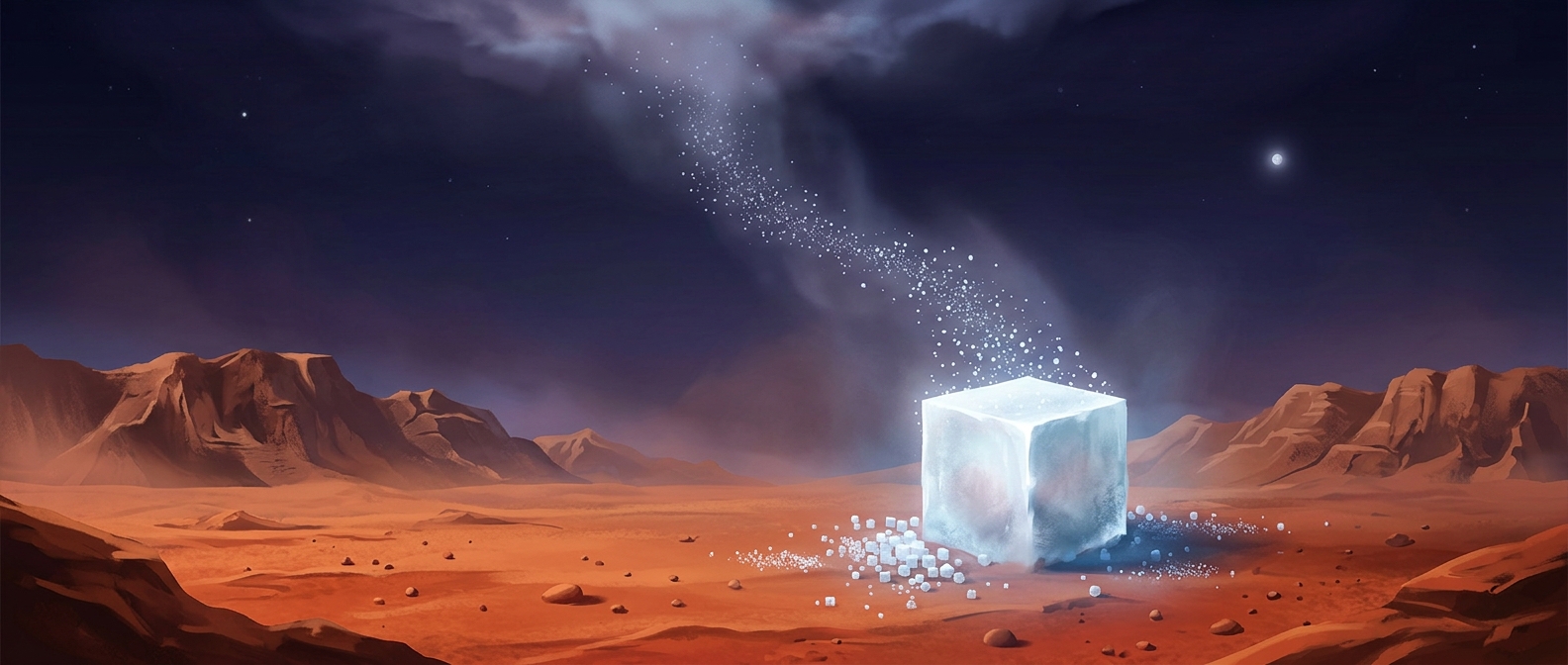
Mars’s atmosphere is mostly carbon dioxide. During the planet’s long polar winters, the ground and air can become cold enough for some of that gas to turn directly into solid carbon dioxide—a process called deposition, the reverse of ice evaporating into vapor. Tiny solid particles form in clouds and can fall as snow; some carbon-dioxide frost also settles directly onto the surface.
The “cubes” are inside the crystals
A crystal’s structure describes how its molecules are arranged, not necessarily the shape you would see with your eyes. In solid carbon dioxide, molecules repeat in a cubic pattern. That makes the snow’s microscopic structure different from water ice, whose molecules form a different repeating arrangement.
A falling particle may contain many microscopic crystals, and its overall shape depends on how it grows and on conditions in the cloud. The word “cubes” therefore describes the underlying pattern—not a blizzard of tiny, neatly cut blocks.
A seasonal blanket that can disappear
Carbon-dioxide snow and frost help build Mars’s seasonal polar caps. When sunlight returns and the surface warms, much of this frozen carbon dioxide changes straight back into gas rather than melting into liquid water. That gas returns to the atmosphere, so the polar cover grows and shrinks with the seasons.
The striking part is that Martian snowfall can be made from the planet’s dominant atmospheric gas: in the coldest regions, the air itself supplies the material that briefly blankets the ground.