Why Peach’s capture keeps starting the adventure
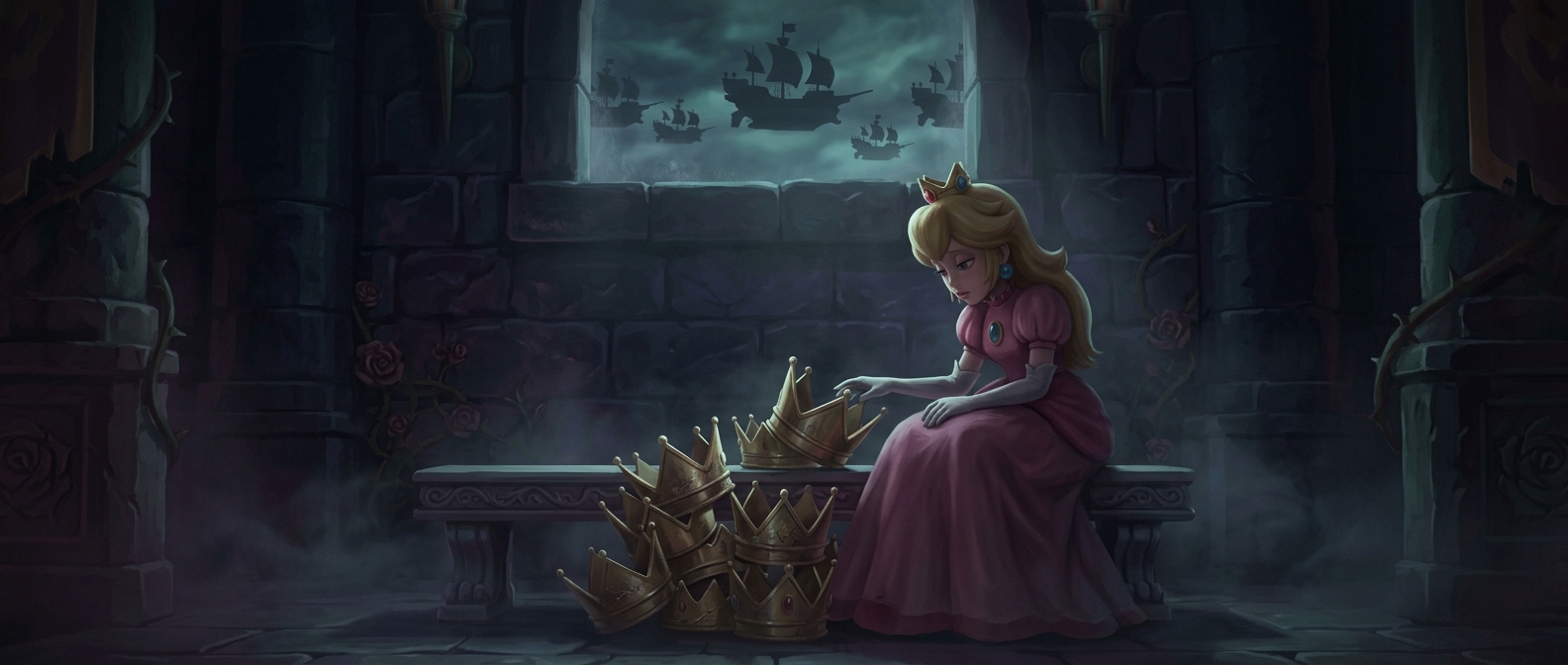
In many Super Mario games, Peach’s kidnapping is less a plot twist than a reliable way to give Mario somewhere to go. Bowser takes her, the Mushroom Kingdom is put at risk, and the player gets a clear goal: cross a sequence of worlds and reach the villain. The setup is easy to understand even when the game’s real attraction is jumping, exploring, or collecting things rather than following a complicated story.
That simplicity also makes the premise reusable. A new game can change its landscapes, power-ups, and challenges without needing to explain a wholly new conflict. The familiar rescue gives the adventure a starting point, while the play itself supplies most of the variety.
A recurring plot does not define every Peach story
Peach is not always the person waiting at the end of a rescue. In games such as Super Princess Peach, she takes the lead, and other titles give her active roles in play. Those variations show how the series can keep its recognizable cast while shifting who gets to drive the action.
The joke about the kingdom’s unarmed Toad guards lands because the plot keeps returning to the same vulnerability. But the repetition is also practical game design: a familiar setup quickly points players toward the next challenge. When Peach is captured yet again, the story may be repeating itself—but it is also getting out of the way so the game can begin.