Sand turned a wooden stage into an arena
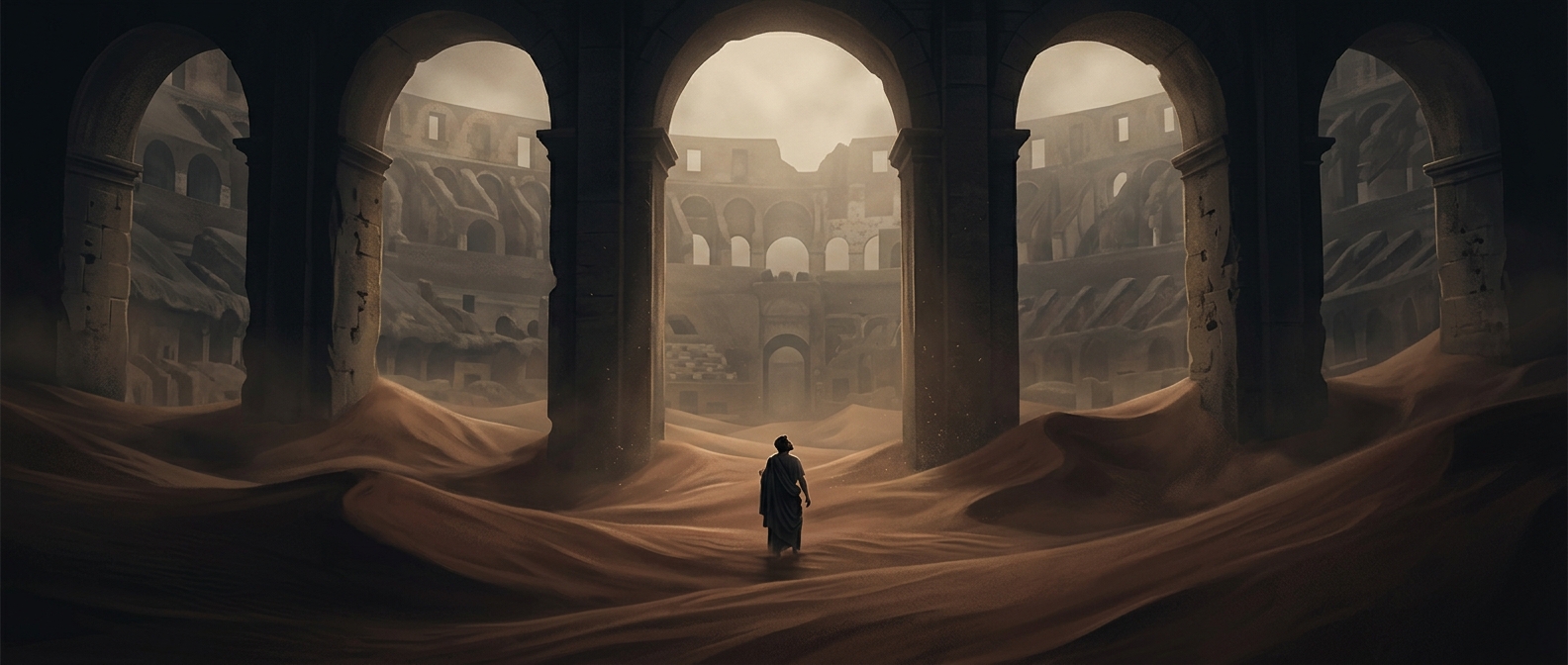
The Colosseum’s fighting surface was not a solid stone floor. It was a wooden platform laid above chambers and passageways, then spread with sand. That surface had to serve a rough, fast-changing show: combatants needed footing, and the boards beneath them had to be cleared and made presentable between events.
Sand helped on both fronts. It offered more grip than bare timber and gave workers a loose top layer they could rake, sweep, or replace when it became marked. That mattered on a platform assembled over a complicated system of underground spaces, where openings and lifting machinery connected the arena to the structures below.
A practical surface—and a lasting word
The sand did not make the arena self-cleaning. Rather, it made cleanup manageable: workers could remove or smooth the affected layer instead of scrubbing every mark from wooden boards. A fresh surface also helped conceal seams and wear in the platform, keeping attention on the spectacle above.
The connection survives in the word arena, which comes from the Latin harena, meaning sand. The material spread across the Colosseum’s floor was so closely associated with the place that it became the name for the performance space itself.