A moving test of command
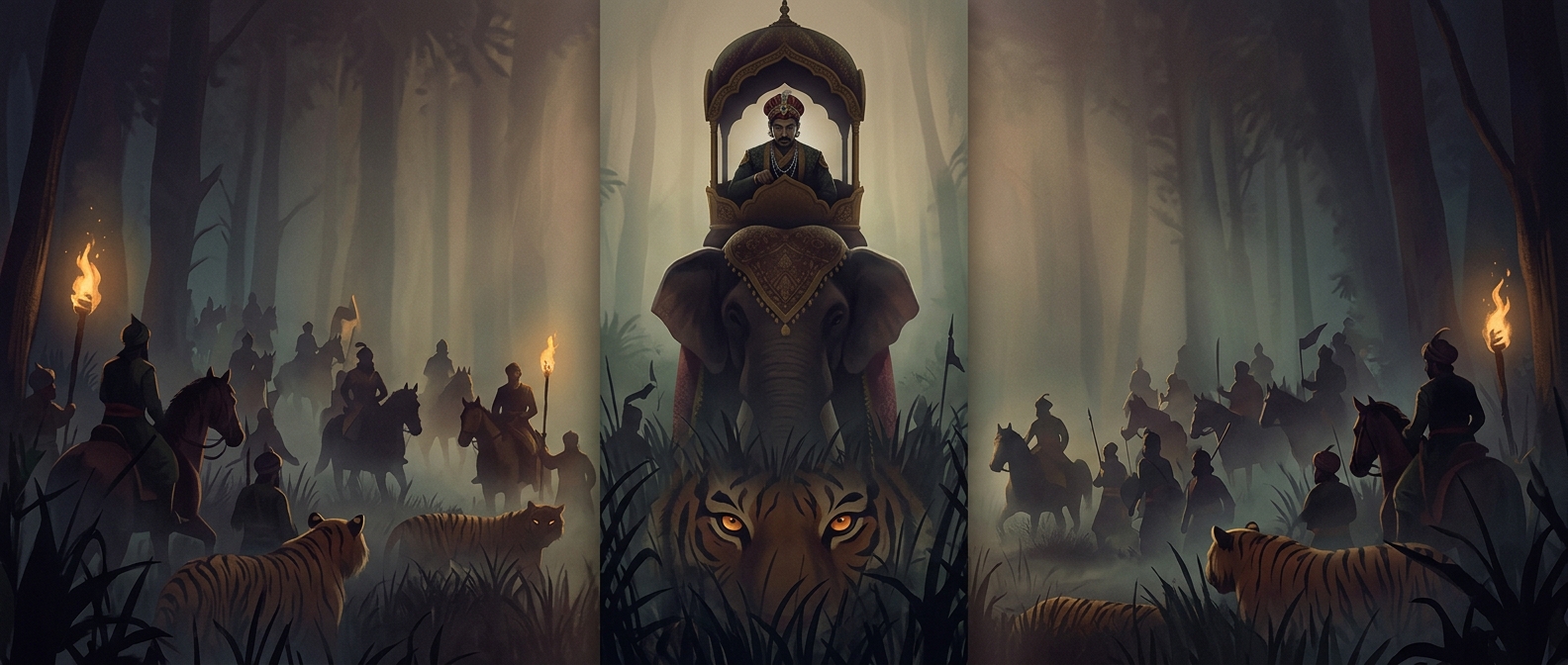
A qamargha turned a hunt into a problem of coordination. Cavalry units spread across a wide area, then gradually closed into a ring, pushing game toward a central enclosure. The operation depended on many separate groups following orders while moving over difficult ground; a gap or a premature rush could disrupt the whole formation.
That made the hunt useful to Akbar as a field inspection. He could watch whether commanders kept their men in position, responded to signals, and maintained control as the circle tightened. The spectacle was therefore more than a display of royal leisure: it put military organization on view without requiring a formal campaign.
What the hunt could—and could not—show
The test revealed practical qualities that mattered in war: coordination, obedience, and the ability to manage large bodies of cavalry. It also let the emperor observe the people responsible for governing and commanding those forces in a setting where their conduct was visible.
A successful hunt was not proof that an army would win a battle. The animals were not an opposing force, and the hunt did not reproduce the uncertainty of combat. But it exposed a basic military weakness in plain sight: an army that could not hold its shape while closing a ring would struggle to act as one under pressure. In Akbar’s hands, the chase made discipline something he could inspect rather than merely hear reported.