A painting built by many hands
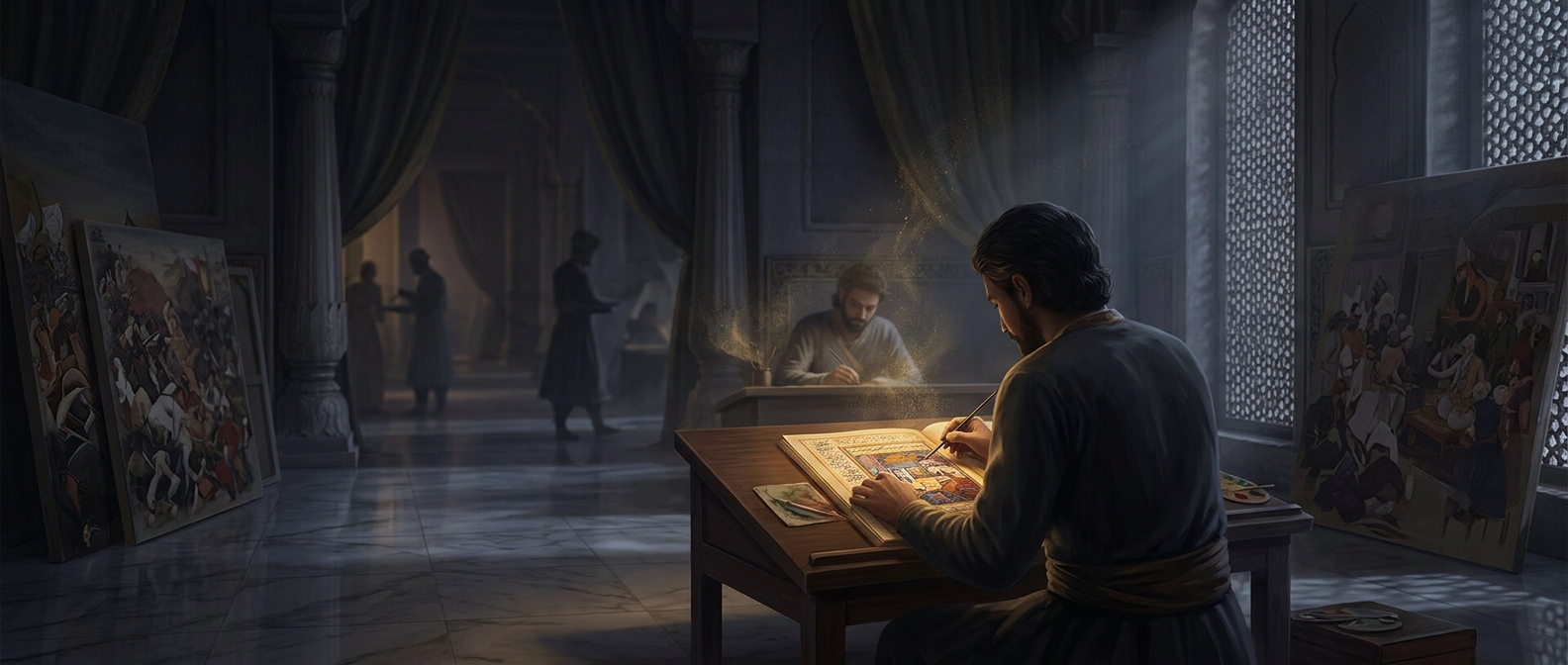
At Akbar’s court, an illustrated manuscript was not necessarily the work of one painter from first sketch to final brushstroke. The imperial atelier—a court workshop of artists—could divide a scene into stages. One painter might establish the composition, while another added color, faces, clothing, or fine details. This let a large team produce elaborate books for the emperor, but it also made each page a record of shared labor.
Collaboration made comparison possible
When artists contributed distinct parts to the same image, their abilities could be judged side by side. A painter who designed a lively scene might be compared with one whose figures or details gave it force. The arrangement turned teamwork into a kind of public test: fellow artists could see the differences, and the court patron could see what each person brought to the finished work.
That visibility mattered because royal favor was more than praise. It could bring further commissions and a stronger place within the court’s artistic world. Painters therefore had reason to stand out, even while depending on colleagues to complete a shared image. Rivalry did not cancel cooperation; the workshop made the two inseparable.
The page as a courtly contest
The result was not simply a collection of individual masterpieces. It was a system in which skill had to work within a team and still remain recognizable. Each finished scene carried both the workshop’s collective effort and traces of the artists competing to be noticed by the person who could reward them.