A face designed to stand for an idea
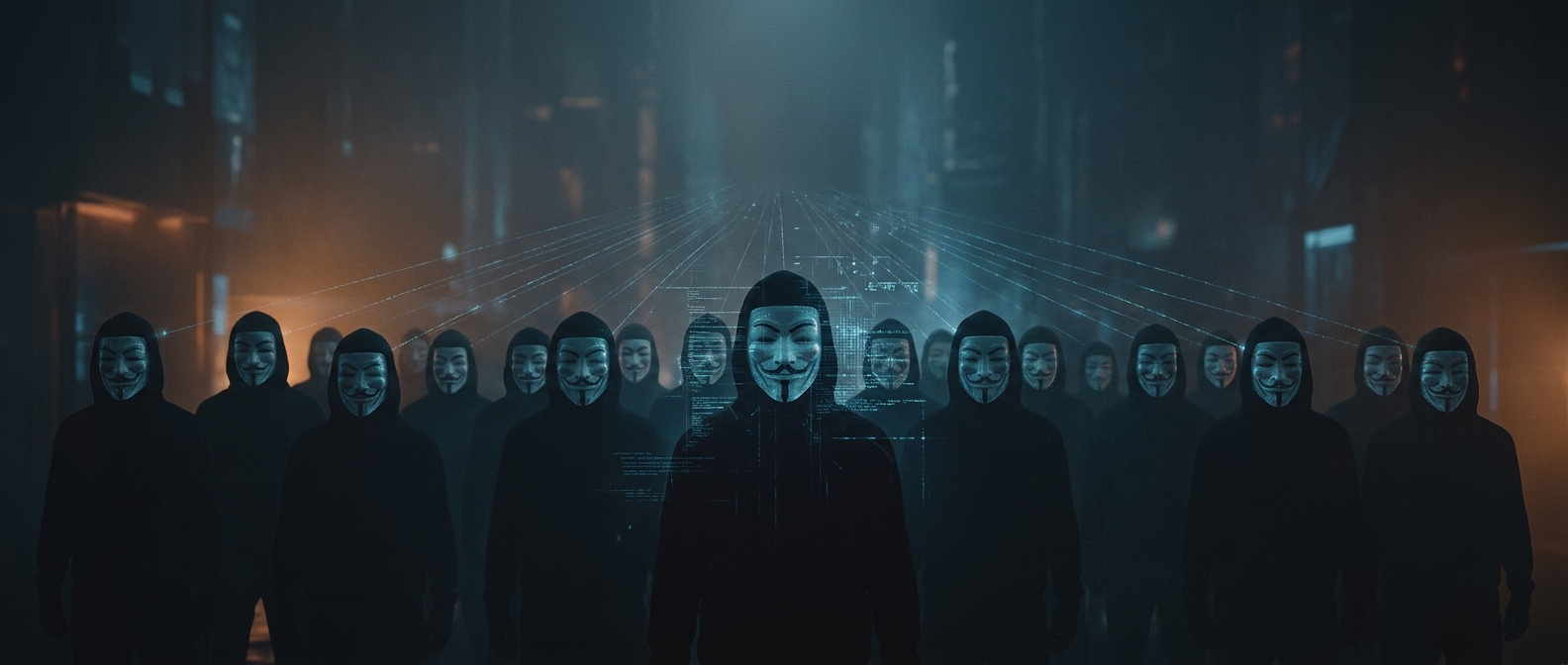
In V for Vendetta, the masked revolutionary V wears a stylized version of Guy Fawkes’s face: pale cheeks, pointed mustache and beard, and a fixed, almost cheerful expression. The mask makes V recognizable without revealing who he is. That tension—one distinct face concealing an individual—helps turn a personal character into a figure anyone might imagine becoming.
The image draws on a real and complicated history. Fawkes was one of the conspirators in the 1605 Gunpowder Plot, an attempt to blow up England’s Parliament. He was caught guarding the explosives. The plot’s failure made his name a lasting part of British political memory, but the historical Fawkes was not a champion of modern internet freedoms. The story’s creators repurposed his face, not his precise political program.
From story prop to public symbol
The mask’s visual simplicity helped it travel beyond the comic and its film adaptation. It can be recognized at a glance, reproduced cheaply, and worn by many people at once. In a crowd, that sameness can suggest that a protest is larger than any single participant; the disguise can also shield a wearer’s identity.
That double meaning is the mask’s strength. It makes rebellion visible while making the rebel anonymous. Once protesters and online activists adopted it, the fictional design became a flexible emblem: its meaning could shift with the cause, while its unmistakable face kept pointing back to the same idea—that an ordinary person can join a challenge to authority.