Why a Game Character Can Fold Into a Heap
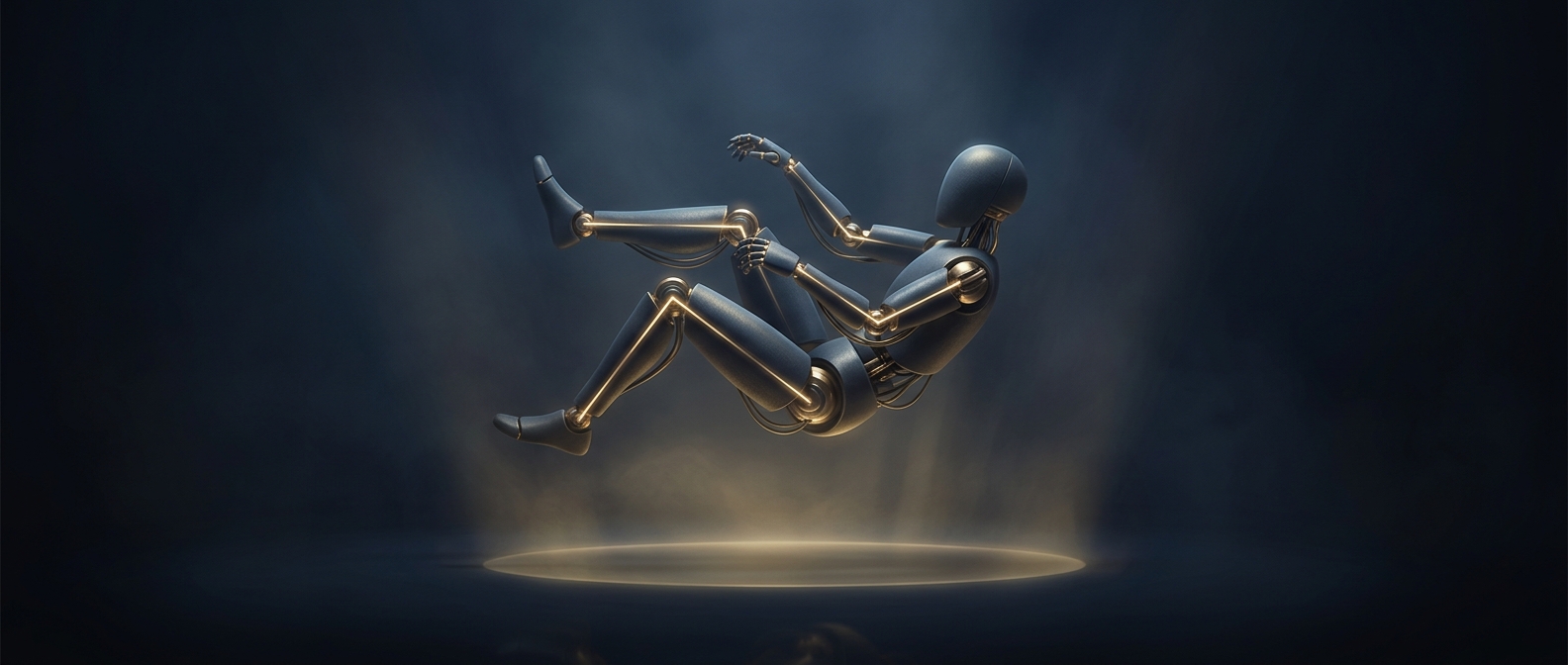
A ragdoll is a character represented as several solid pieces—such as a torso, head, and limbs—joined at the places where a real body bends. The joints are not just visual hinges: they impose constraints, rules that keep connected pieces within plausible distances and angles. A knee, for example, should bend mainly one way, not swivel freely like a wheel.
When something strikes the character, the game engine calculates how the pieces should move and then tries to keep the joints’ rules satisfied. That calculation happens in small steps, often repeatedly within a frame. A violent impact can make the pieces demand incompatible things: the collision pushes a limb sharply in one direction while its joint is still trying to keep it attached and within its allowed range.
When the Math Loses Its Balance
The engine uses a numerical solver—a procedure that approximates a workable answer to those competing demands. With limited calculation time, the solver may not settle on a smooth result. It can correct one joint, disturb another, and then make a larger correction on the next step. If the simulated body gains too much energy from those corrections, a limb may whip around, or the whole character may tumble in a way that looks more like cooked spaghetti than an athlete falling.
This is a tradeoff, not necessarily a broken game. More calculation, smaller time steps, and carefully tuned joint limits can make motion steadier, but they also cost computing time and can make falls look stiff. Designers often tune the physics to preserve a little chaos while preventing the most distracting failures. The comic spectacle comes from a body built to obey believable rules—and a collision force that briefly overwhelms the engine’s ability to keep them all in agreement.