How Skin Changes the Light From a Vein
Veins do not glow blue beneath the skin. They sit below a layered surface that changes which parts of the light reaching your eyes—and returning from your skin—are easiest to see. Skin contains pigments and structures that absorb and scatter light, while the vein beneath it absorbs some light differently from the surrounding tissue. The combined effect can make the area over a vein look bluish compared with nearby skin.
Why Blue Is the Color You Notice
Visible light contains a range of wavelengths. As light travels into skin and back out, longer wavelengths such as red tend to penetrate farther, while shorter wavelengths are scattered more strongly near the surface. The blood in a vein also absorbs light, reducing the amount that returns from the tissue above it. Together, these effects create a contrast that the eye interprets as blue or blue-green.
The appearance depends on more than blood: skin tone, lighting, vein depth, and the vein’s size all affect how much light returns and what color it seems to have. That is why a vein may look blue through skin in one setting and less noticeable in another.
The Blood Has Not Turned Blue
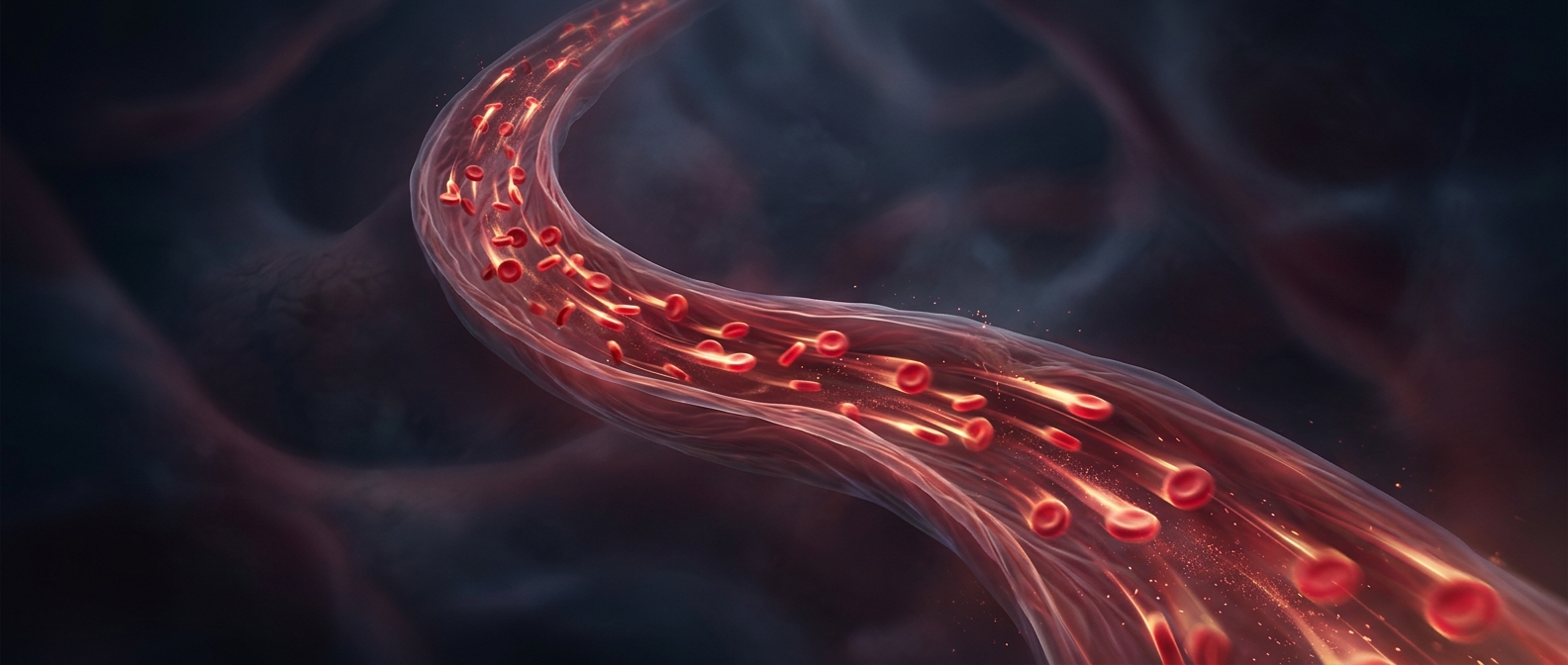
Blood’s color comes largely from hemoglobin, the oxygen-carrying protein in red blood cells. Blood with less oxygen is a darker red than oxygen-rich blood, but it is still red. The blue appearance is an optical result of light interacting with skin and tissue—not a change in the blood’s color. If a vein is viewed directly, without skin covering it, it does not appear blue.