Two Circuits, One Continuous Journey
Blood does not make one uninterrupted trip from the heart to the toes and straight back. The heart drives it through two linked circuits. The systemic circuit carries oxygen-rich blood to the body; the pulmonary circuit sends oxygen-poor blood through the lungs and back to the heart.
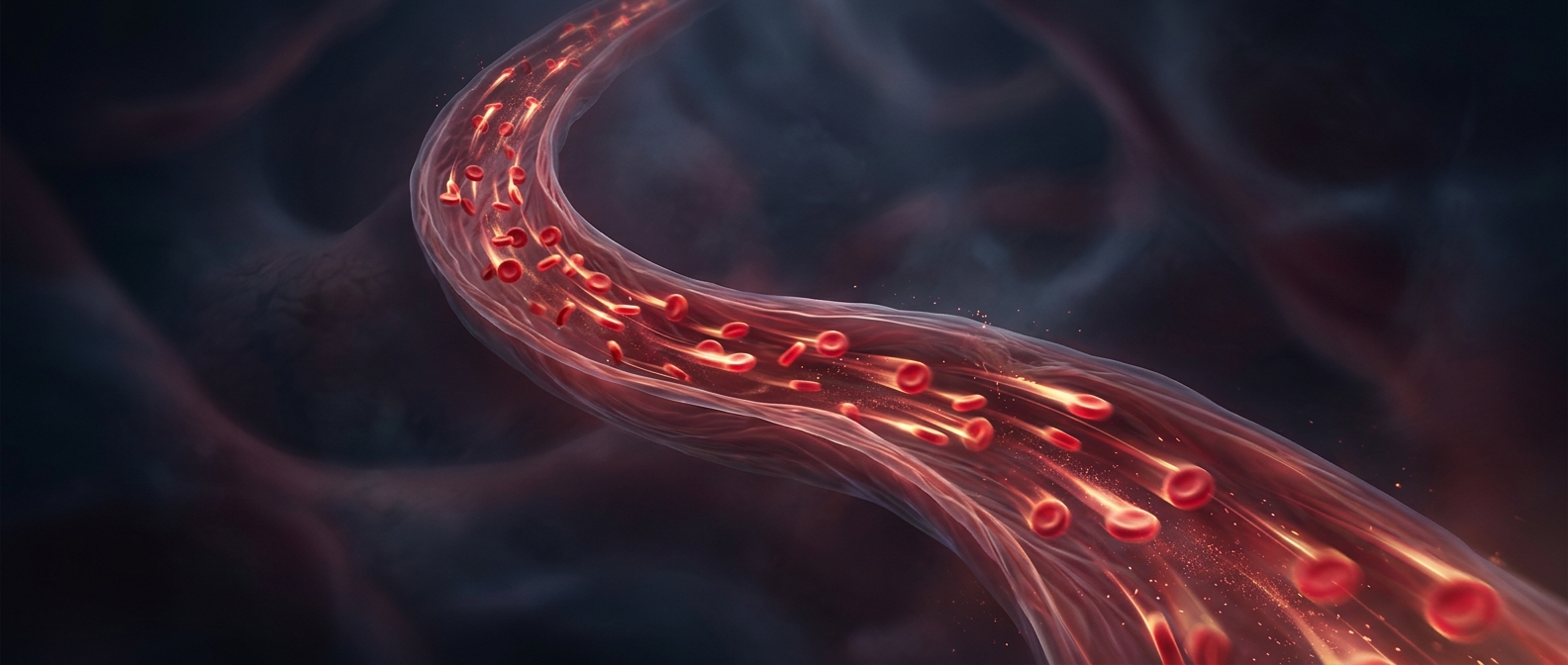
The heart’s left side pushes blood into large arteries. As those vessels branch into smaller arteries and then tiny capillaries, blood reaches tissues throughout the body. Capillaries are thin enough for oxygen and nutrients to pass into nearby cells, while carbon dioxide and other waste products enter the blood. The returning blood travels through veins to the heart’s right side.
The Lungs Reset the Supply
The right side pumps that blood to the lungs. There, carbon dioxide leaves the blood and oxygen enters it across the walls of tiny air sacs. The refreshed blood returns to the heart’s left side, ready for another trip through the body.
Heart valves help keep this route moving in one direction: they open to let blood pass and close to prevent it from flowing backward. Each heartbeat adds pressure that propels blood onward, while the branching network distributes it to distant tissues.
A full loop can take less than half a minute, but it is not a fixed travel time for every red blood cell. The pace changes with the body’s needs—for example, during exercise, when working muscles demand more oxygen, the heart pumps faster. Even at rest, the circulation’s speed reflects a remarkable fact: the heart and lungs are not separate stops, but a coordinated relay that continually replenishes the blood reaching every part of the body.