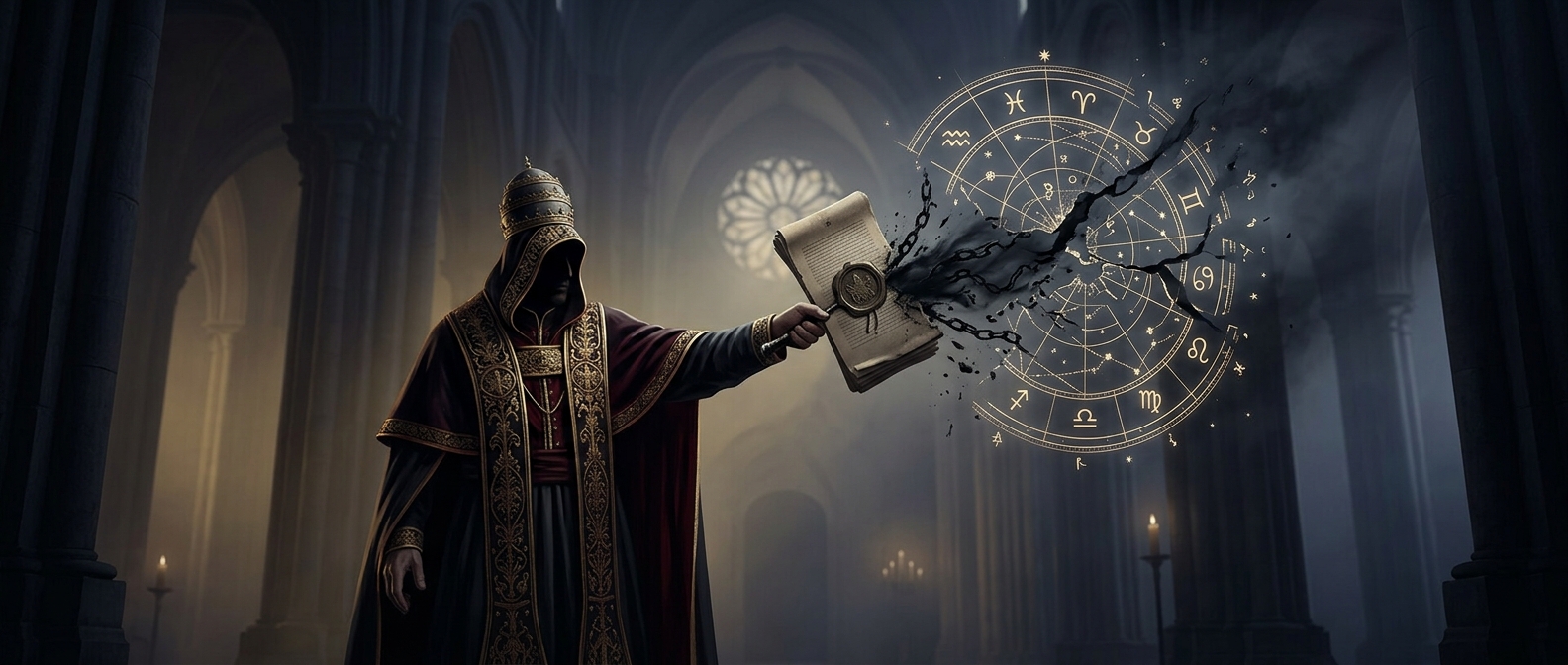
Why Sixtus V Targeted Predictive Astrology
A papal bull is a formal decree issued by a pope. In 1586, Sixtus V used one to condemn divination, with particular attention to judicial astrology: the practice of interpreting the positions of planets and stars to predict specific events in human affairs.
The distinction mattered. The concern was not simply that people watched the heavens or calculated planetary movements. It was that astrologers claimed those movements could reveal what would happen to individuals and political leaders—including whether a pope or king would die.
Predictions That Could Become Political
A forecast about a ruler’s death was more than a private curiosity. In a world where political authority was closely tied to personal succession, such a prediction could feed fear and speculation about who would take power next. It might also be used to influence decisions or to make a ruler seem vulnerable. The bull treated these claims as a serious threat, not harmless entertainment.
That helps explain the decree’s emphasis on divination: the target was astrology used to assert knowledge of consequential future events. It is therefore more precise to describe Sixtus’s action as a sweeping condemnation of predictive astrology than as a ban on every form of astronomical or astrological practice.
A Boundary Around the Heavens
The decree drew a line between observing celestial patterns and claiming that they disclosed the fates of people and states. Its political edge is striking: a forecast written from the stars could carry implications for the earthly question of who would rule next.