The Moon Sets the Schedule for Tidal Power
A tidal plant does not produce electricity simply because the sea rises and falls. It needs a designed route for moving water and equipment that can turn that movement into useful power. The Moon’s gravity helps create the changing ocean levels and currents that supply this energy; the Sun’s gravity also affects the tides, so the Moon is the dominant influence, not the only one.
Two Ways to Turn a Tide Into Electricity
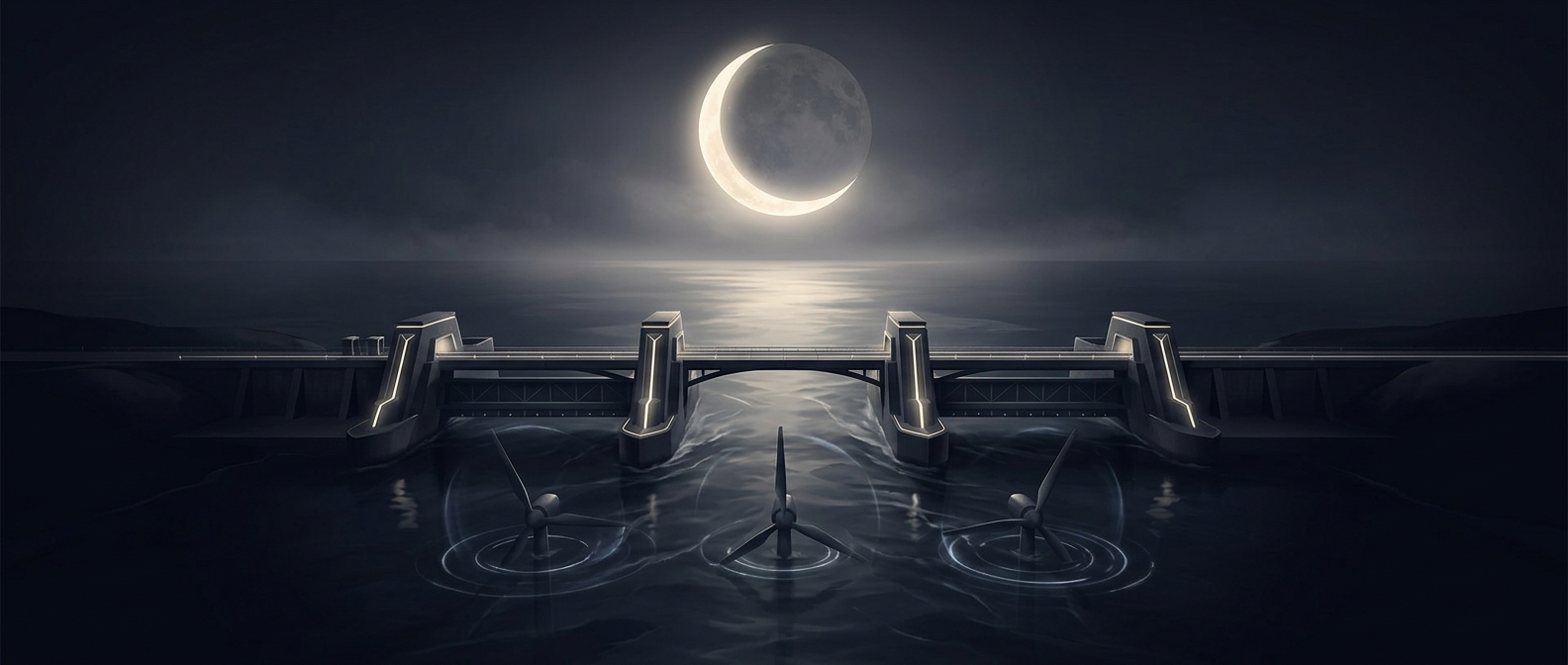
Some plants use a tidal barrage, a barrier built across a suitable bay or estuary. Gates let water pass as the tide changes. When water is held back on one side, the difference in water level creates pressure. Releasing it through turbines—machines with blades spun by flowing water—generates electricity. Depending on the design, turbines may also generate power as water flows in the opposite direction.
Other systems place underwater turbines in fast tidal currents. These work much like wind turbines, but water’s greater density lets moving currents push their blades without needing a dam across the bay.
A Predictable Resource With a Fixed Geography
Tides follow regular astronomical cycles, making their timing more predictable than wind or sunshine. But predictable does not mean constant: the strongest flows occur only at particular stages of the tidal cycle, so output rises and falls. A plant must also sit where the coastline and seabed create suitable water-level differences or currents, and its construction must account for navigation and marine habitats.
That is the central tradeoff: the Moon provides a remarkably dependable clock, but it cannot make every shoreline a power site—or make tidal electricity available at the same rate all day.