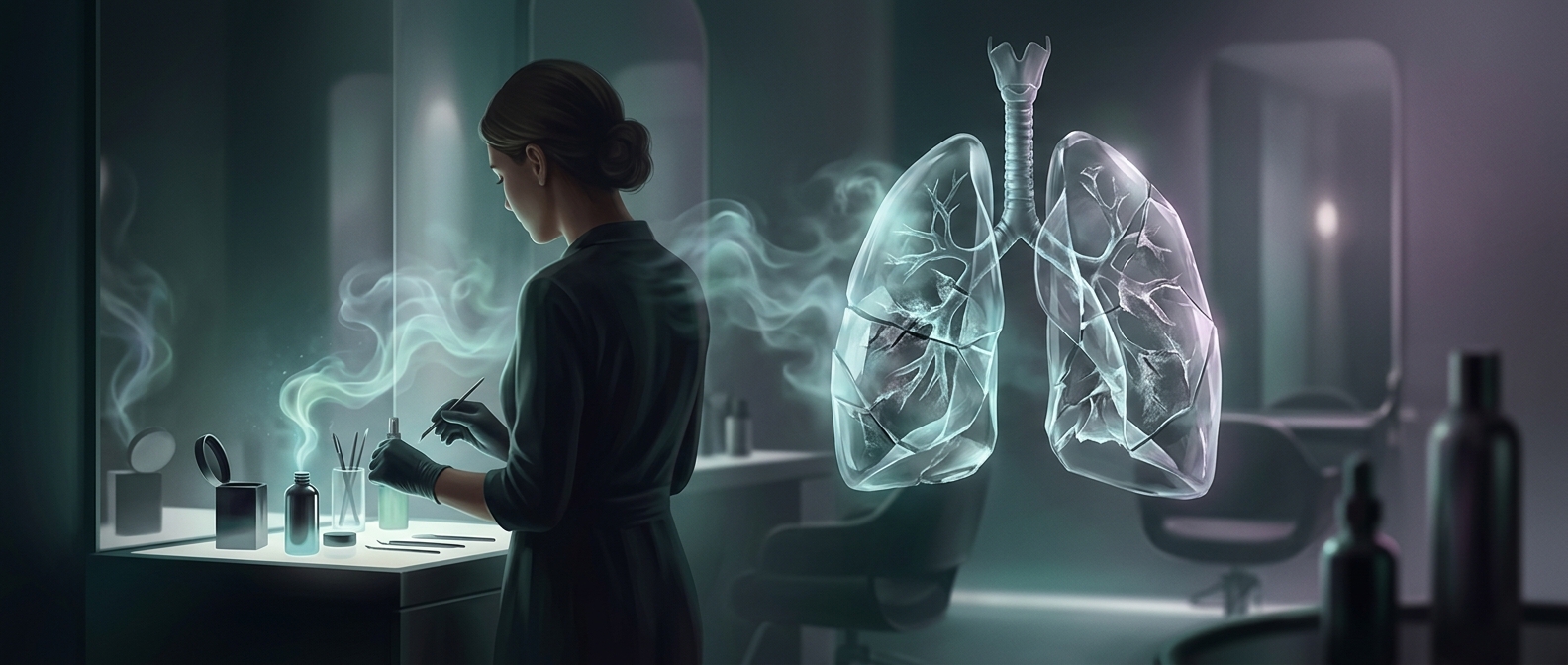
How Nail-Salon Products Can Affect the Airways
A nail service can send more into the air than a noticeable odor. Filing artificial nails creates fine acrylic dust, while some liquid and gel products release methacrylates—chemicals used to form or harden artificial nails. A technician working close to a client’s hands may inhale these particles or vapors repeatedly, especially when they linger around the work area.
From Irritation to Occupational Asthma
The airways are the branching tubes that carry air into the lungs. Irritating substances can inflame their lining, making the tubes more reactive. With repeated exposure, some workers become sensitized: their immune system responds unusually strongly to a substance that may not bother other people. Once sensitized, even a later, smaller exposure can trigger coughing, wheezing, chest tightness, or shortness of breath. Asthma that develops or is worsened by workplace exposures is called occupational asthma.
This is different from a brief reaction to a strong smell. The key risk is repeated contact with airborne material at work, which can gradually change how the airways respond. Symptoms may appear during a shift, worsen over the workweek, or ease when a person is away from the salon.
Why Prevention Matters
Reducing what reaches the breathing zone can lower exposure: effective local exhaust ventilation draws dust and vapors away near the nail table, while keeping product containers closed and using appropriate work practices limits their release. A well-fitting mask designed for dust does not necessarily protect against chemical vapors, so protection has to match the substance and task.
If airway sensitivity becomes persistent, leaving the exposure behind may not fully restore normal breathing. That makes control at the source especially important: the air a technician breathes throughout ordinary appointments can matter as much as any single strong-smelling product.