A pause that keeps the story legible
A villain’s speech often arrives at a moment when the game needs to deliver information the player cannot afford to miss: what the antagonist wants, what is about to happen, or why the next fight matters. If that explanation plays while enemies attack, players may focus on survival and miss the plot. If control is taken away for a long cinematic, the story is clearer, but the player has to stop playing and watch.
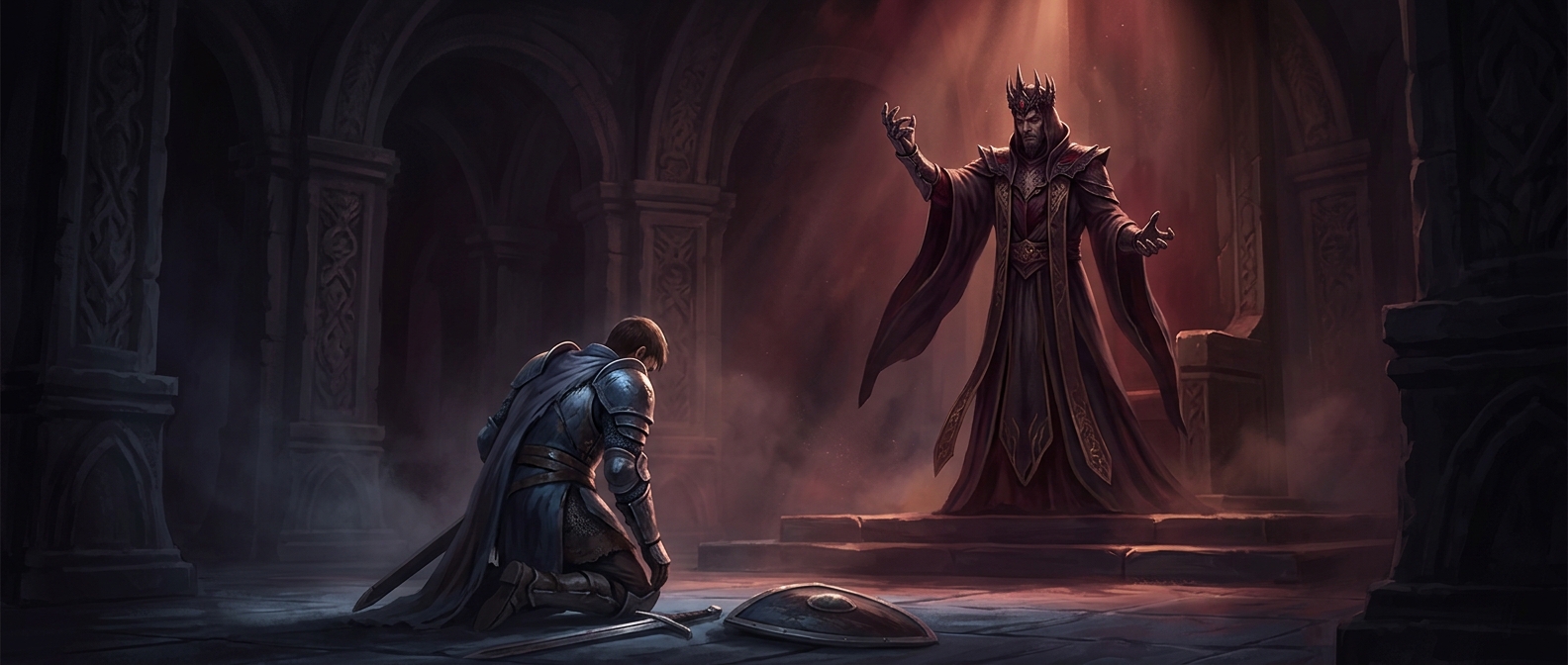
Letting the villain talk while the player character stands ready is a compromise between those two modes. The game keeps the scene in the same physical space as the action, but temporarily suspends the threat so the dialogue can land.
Why the hero doesn’t simply shoot
The pause creates a familiar mismatch: the player sees an armed character with an obvious opportunity, while the story treats the speech as unavoidable. Games can reduce that friction by making the hero’s stillness part of the scene—perhaps the villain is out of reach, protected, or holding someone at risk. Without such a reason, the speech can feel less like a choice by the character than a rule imposed by the game.
Designers also have practical alternatives. They can move dialogue into a safe walk through the level, break it into short exchanges during combat, or put it in a cutscene. Each changes the rhythm: combat dialogue competes with attention, while a cutscene gives the story control at the cost of player control.
The speech is also a pacing tool
A monologue can hold the player in place long enough to set a threat, reveal a motive, or build anticipation before a battle. Its success depends on what the player is doing around it. A quiet pause can make the coming fight feel deliberate; a long speech with no meaningful reason for the delay can make the villain seem to be waiting for the game to catch up.
That’s why the best version of this trope makes the pause do double duty: it delivers the plan and makes the player feel the danger of being forced to listen.