A life translated into a conversation system
BINA48 was built to make one woman’s account of herself available through a machine. Its designers gathered material from Bina Rothblatt—her memories, opinions, and characteristic ways of speaking—and used it to shape the robot’s responses. The goal was not simply to give a machine a face, but to make conversation feel as though it came from a recognizable person.
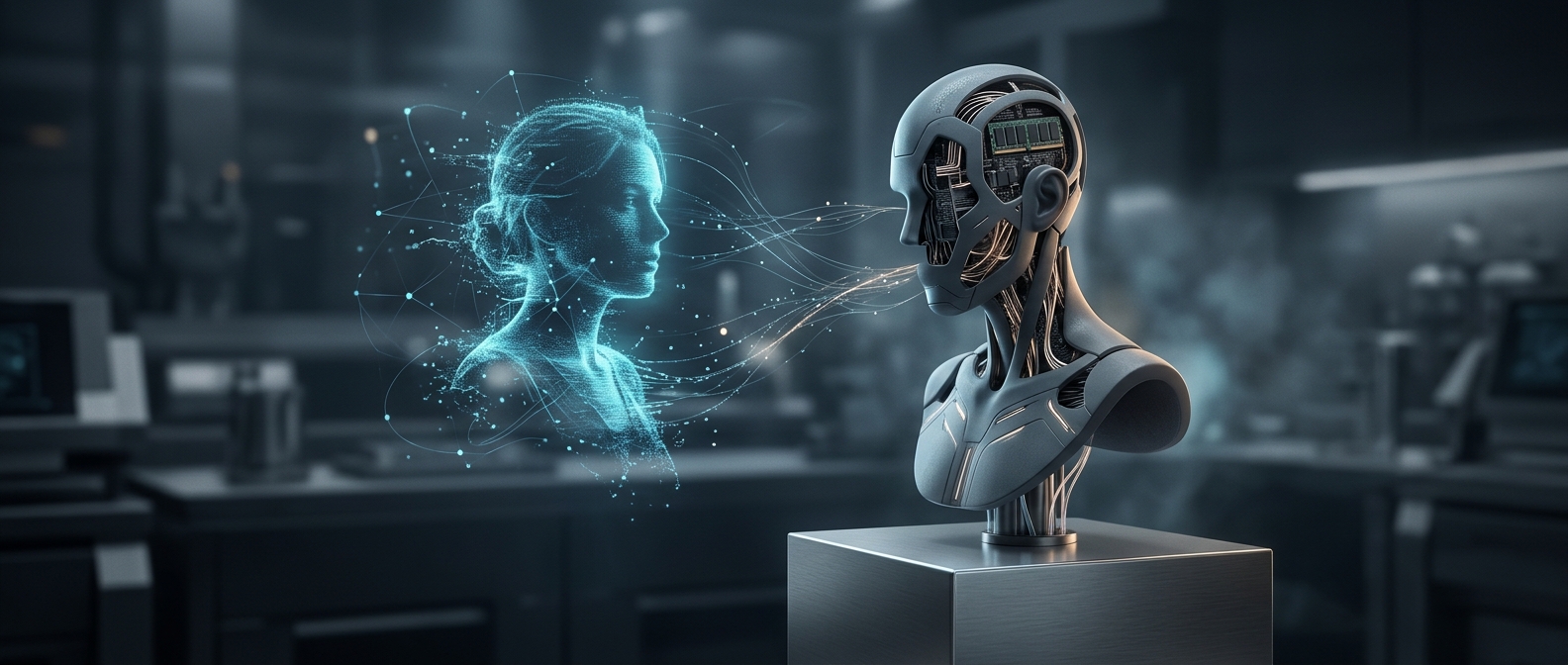
That material has to be converted into something software can use. A conversational system draws on recorded information and patterns in language to produce replies when someone asks a question. BINA48’s bust-like head adds a visible face and spoken delivery to that exchange. The effect depends on both parts: what the system has been told about Bina and how it presents its answers.
A portrait, not a complete copy
A person’s memories are not a tidy archive. They are selective, change over time, and often depend on context. An interview can preserve what someone chooses to recall and explain, but it cannot capture every experience or reproduce the full process by which a person forms a new thought. BINA48 therefore represents a constructed portrait of Bina, assembled from recorded material and programmed behavior—not a transfer of her entire mind.
That distinction is part of what makes the project compelling. When a robot answers in a way that resembles its model, a familiar human question becomes practical: how much of a personality can be carried by a collection of stories, beliefs, and speaking habits? BINA48 gives visitors something concrete to test—not an abstract idea of digital immortality, but a conversation with a machine built from one living woman’s self-description.