A greenhouse small enough to travel
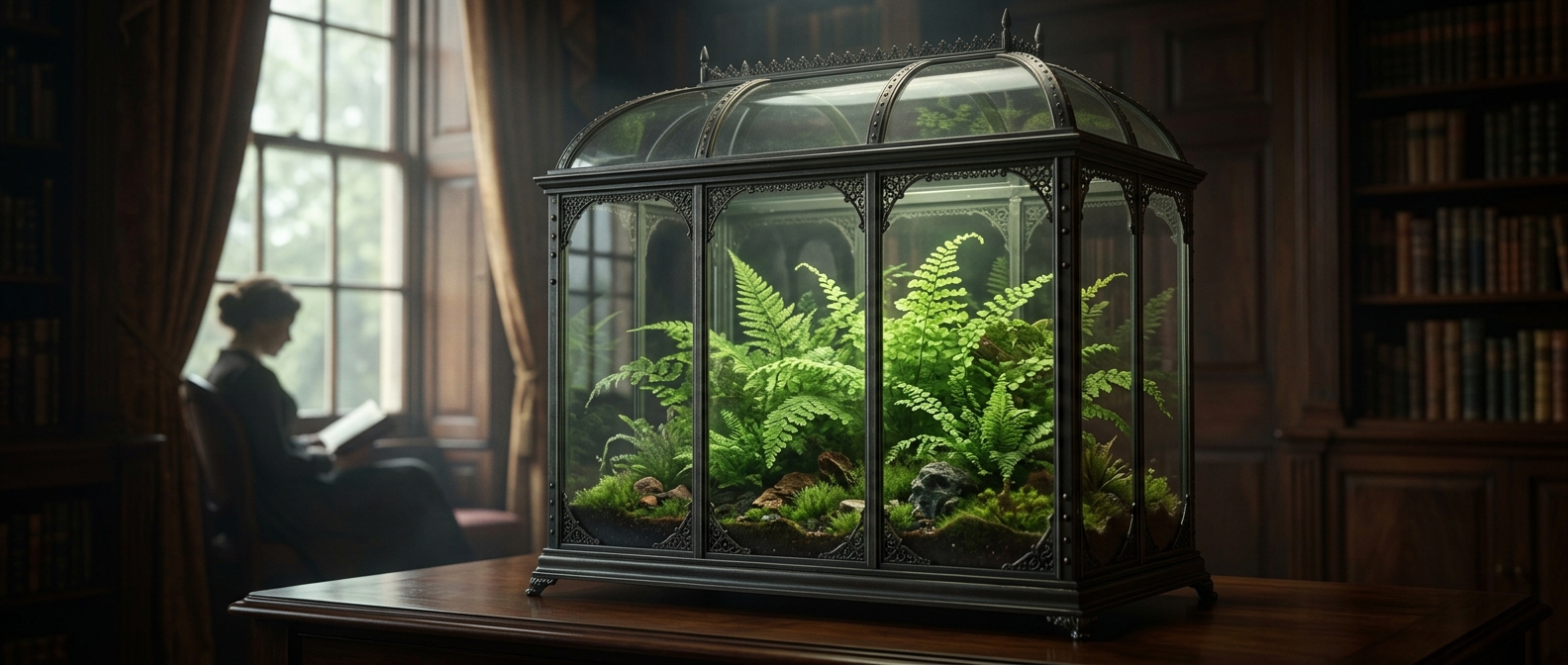
In a soot-darkened city, a fern’s problem was not just dirty leaves. Smoke particles could coat them, while dry indoor air and irregular watering stressed plants that had evolved in damp, sheltered habitats. The Wardian case addressed those problems by putting the plant inside a glass-sided box with a close-fitting lid.
Glass let in light while keeping much of the surrounding dust and soot out. Inside, moisture released by the soil and leaves gathered on the glass, then condensed and ran back down. That small water cycle helped keep the air humid and the soil moist, so the plant needed less attention than an exposed pot. The case was not an aquarium: it held air as well as plants, and it worked by creating a protected growing environment, not by filling with water.
Protection that changed how plants traveled
The same features that helped a fern survive in a polluted room made the case useful on journeys. A plant enclosed in its own humid environment was less exposed to drying winds, salt spray, and changing conditions during transport. Collectors and nurseries could move living plants over long distances with a better chance of keeping them alive.
That mattered in an era when people were eager to grow plants collected far from home, but moving them was difficult. The case turned a delicate plant into something that could travel in a miniature greenhouse rather than arrive as dried leaves or a dead specimen. In the city, its practical promise was more intimate: a fern could sit behind glass, with the soot outside and a small, steadier climate within.