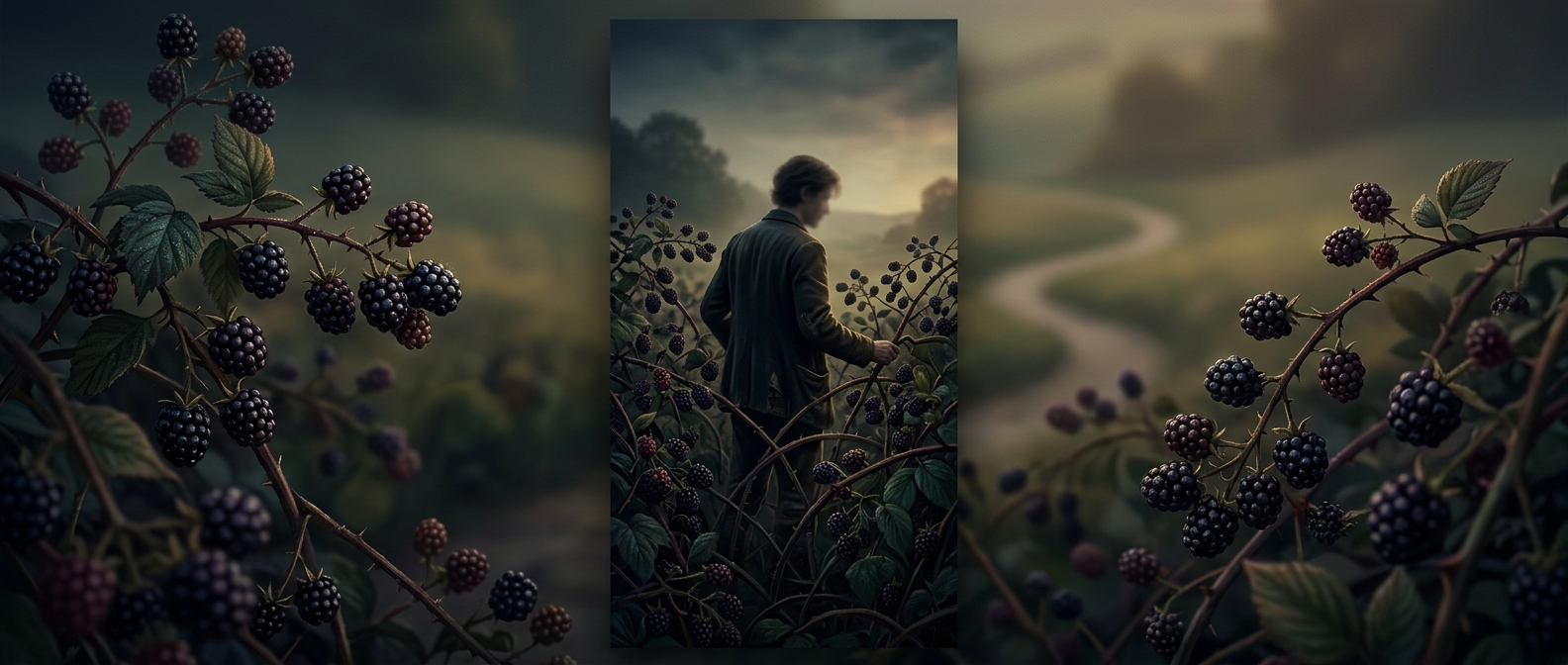
Why a Fruit-Bearing Plant Became a Farm Problem
Blackberry brambles could spread beyond the patch where they were welcome. Their arching canes can take root when their tips touch soil, while birds carry seeds to new places. Given room to grow, a small stand can become a dense tangle that is difficult to cross or work around.
On farmland, that growth had a cost. Brambles could occupy ground wanted for crops or grazing, and their hooked thorns made routine work—moving through a field, tending animals, or clearing a boundary—more difficult. The berries might be edible, but their value at harvest did not necessarily outweigh the labor of controlling the plants across a working landscape.
The Cost of Clearing a Bramble Patch
Removing a patch was not simply a matter of cutting down visible canes. Rooted growth could remain and send up new shoots, so clearing required repeated effort. Meanwhile, the thorns turned even gathering the fruit into a slow, careful task: a picker had to reach between canes without snagging clothing or skin.
That tension explains how the same plant could be both useful and unwanted. A blackberry patch offered food when someone was willing to pick it, yet its persistent, spreading growth made it a nuisance where farmers needed open, manageable land. The problem was not the berry; it was controlling the bramble around it.