A blast wave that crossed borders
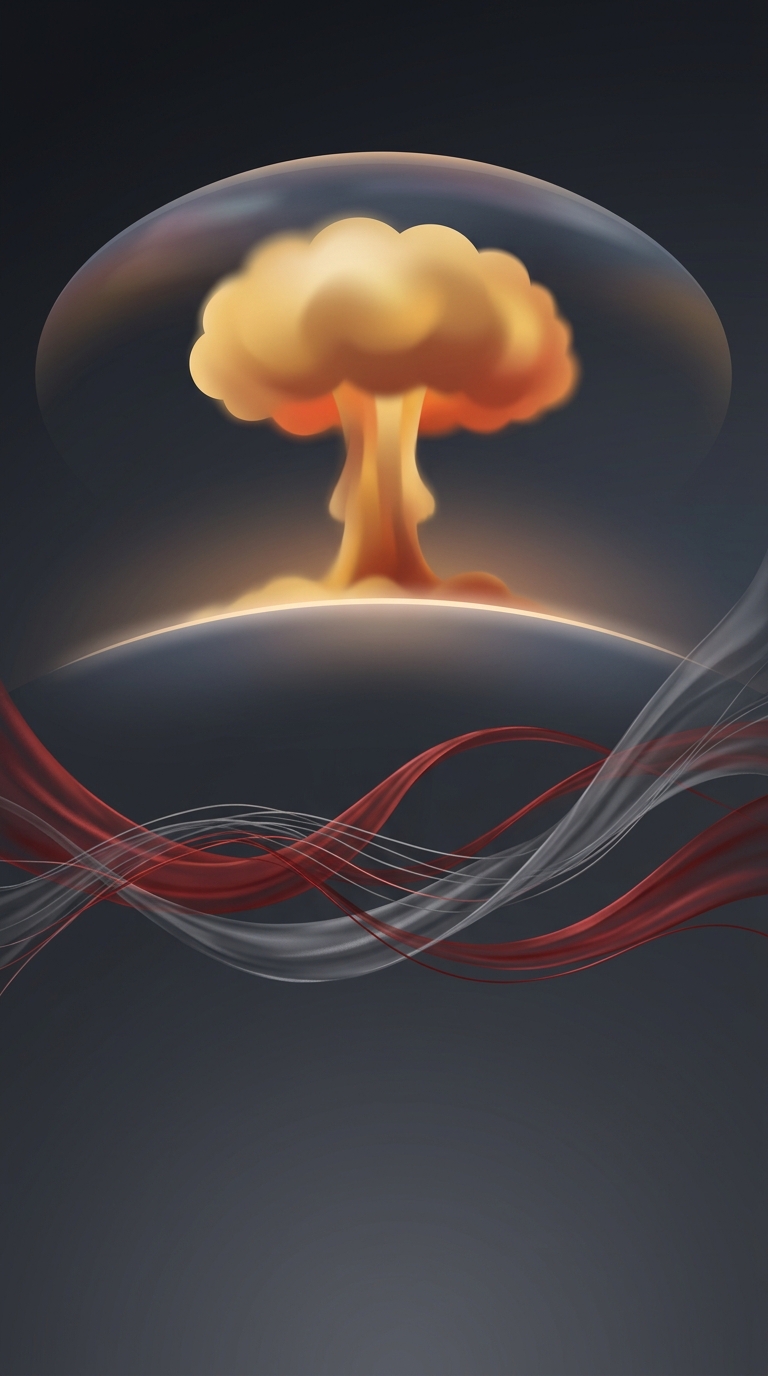
The Tsar Bomba’s distant damage came from more than the force of the explosion itself. Detonated high above Novaya Zemlya, it sent a pressure wave through the atmosphere: a moving pulse of compressed air that spread outward and then passed through the region. At long distances, that pulse could still flex buildings and rattle or break windowpanes. The windows in northern Europe were evidence that the atmosphere had carried the blast’s effects far beyond the test site.
An airburst also changed what the explosion did to the ground. Compared with a detonation at the surface, one high above it would throw less soil and debris into the radioactive cloud. But reducing that local fallout did not make a weapon of this scale safe; the test still released radioactive material and demonstrated the reach of an immense explosion.
Why the engineers cut the design
The bomb was designed as a staged thermonuclear weapon: one nuclear explosion would create the extreme conditions needed to drive a much larger fusion reaction. The original concept included a uranium component that would add substantial energy through fission, the splitting of heavy atoms. Engineers substituted lead for that component in the tested version, reducing the expected yield and the amount of fallout it would produce.
That choice revealed the tension behind the test. A larger yield could make a more dramatic demonstration, but it would also intensify the weapon’s effects and radioactive contamination. Even after the reduction, the result was so destructive that it served chiefly as a display of capability, not a practical battlefield weapon. Its most vivid message was also an unintended one: a single test could make the atmosphere itself carry evidence of Soviet power across national borders.