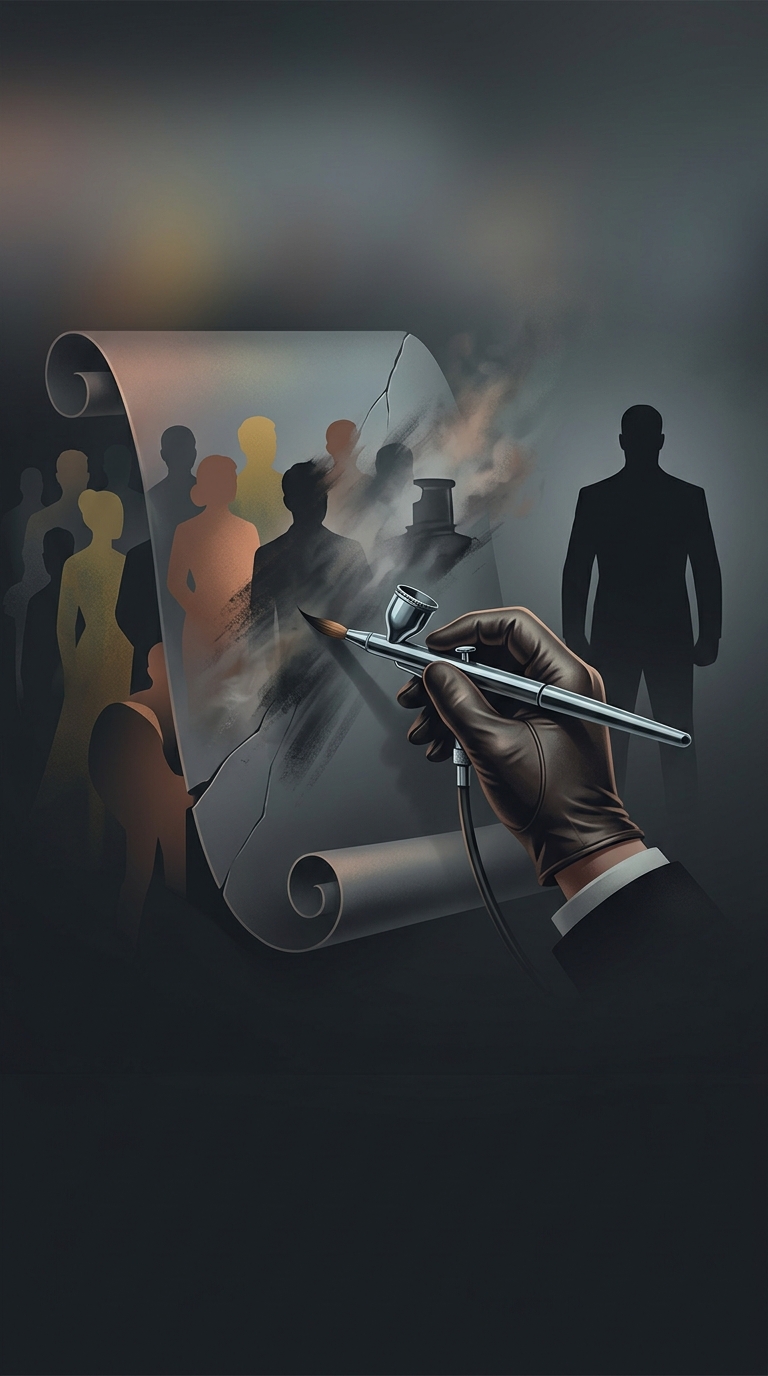
How a missing person was painted out
In Soviet photographs, removing a political figure was a practical darkroom task as well as a political act. Retouchers could alter a print by painting over the unwanted person and rebuilding the background with fine strokes of pigment. Depending on the image, the repair might imitate foliage, architecture, or an uninterrupted stretch of sky. A polished result could then be copied and printed in newspapers or books, giving the altered version a much wider audience than the original.
The method worked best when the person occupied a separable patch of the frame. A figure against a plain wall was easier to erase convincingly than one whose outline crossed several people or complicated details. Retouchers had to preserve the photograph’s light, texture, and perspective; a crude patch would advertise the very absence it was meant to conceal.
Editing the record, not just the picture
A photograph of officials together could suggest who belonged to the leadership and who had fallen from favor. Once a person became an enemy of the state, keeping that image in circulation could preserve a visible reminder of an earlier alliance. Altering it helped bring the public record into line with the new political story: the condemned figure was not merely gone, but increasingly absent from the scenes of power.
That did not make every original disappear. Unaltered prints and negatives could survive in archives or private collections, while edited versions circulated publicly. The gap between them is historically revealing. Comparing versions can show that a photograph was changed and, sometimes, help establish which people or details were removed. The retouching that concealed a person from contemporary viewers can therefore become evidence of how the state tried to manage memory.