
A closer look
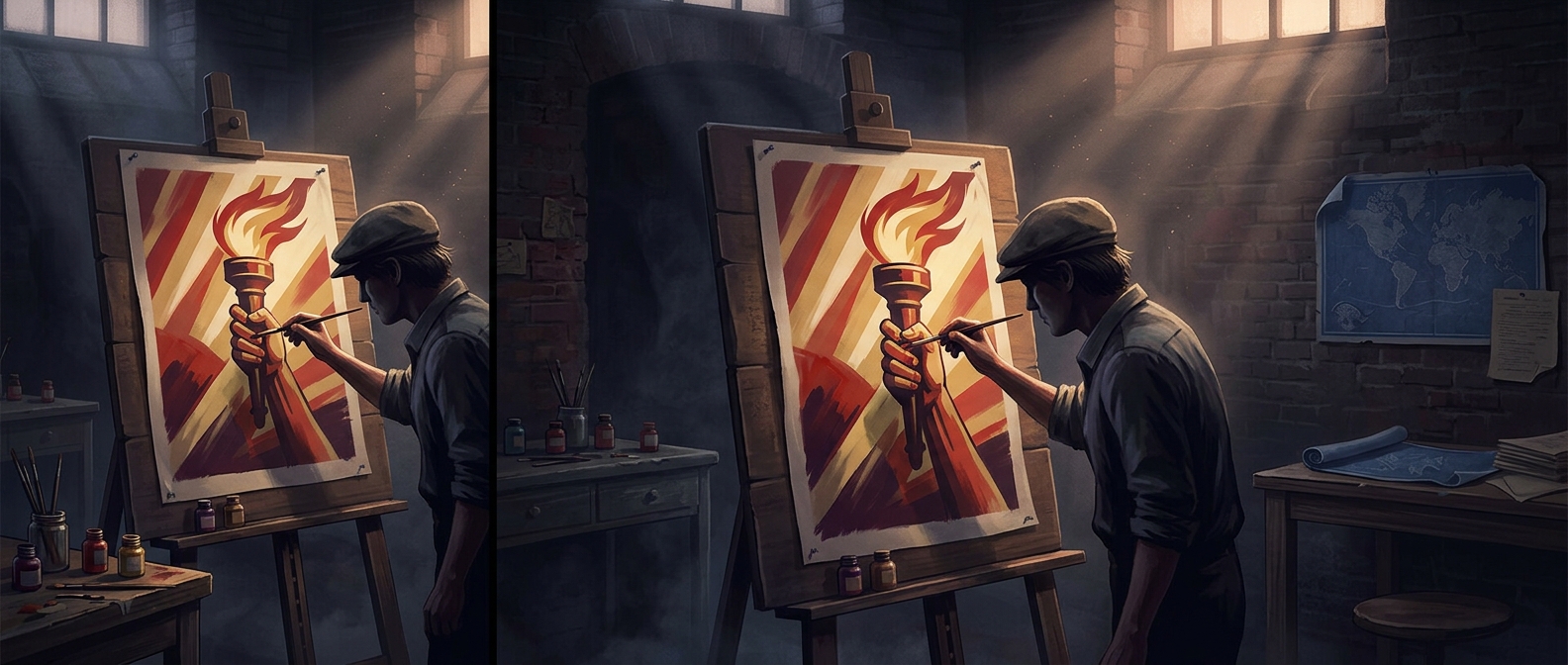
During the Cold War, the fiercest battles weren’t always fought with bombs but with billboards, television, and whispers. Imagine walking through Berlin in the early 1960s: one side of the wall lit by neon ads bragging about Western consumer goods, the other plastered with posters proclaiming equality and strength under socialism. Propaganda was essentially advertising ideology, and it directly shaped how ordinary people dressed, ate, or even dreamed. The echo today? Look at how TikTok trends or curated Instagram feeds persuade you not just what to buy—but who to be. Propaganda didn’t die with the wall; it just changed filters.