A newspaper supplement built to look like evidence
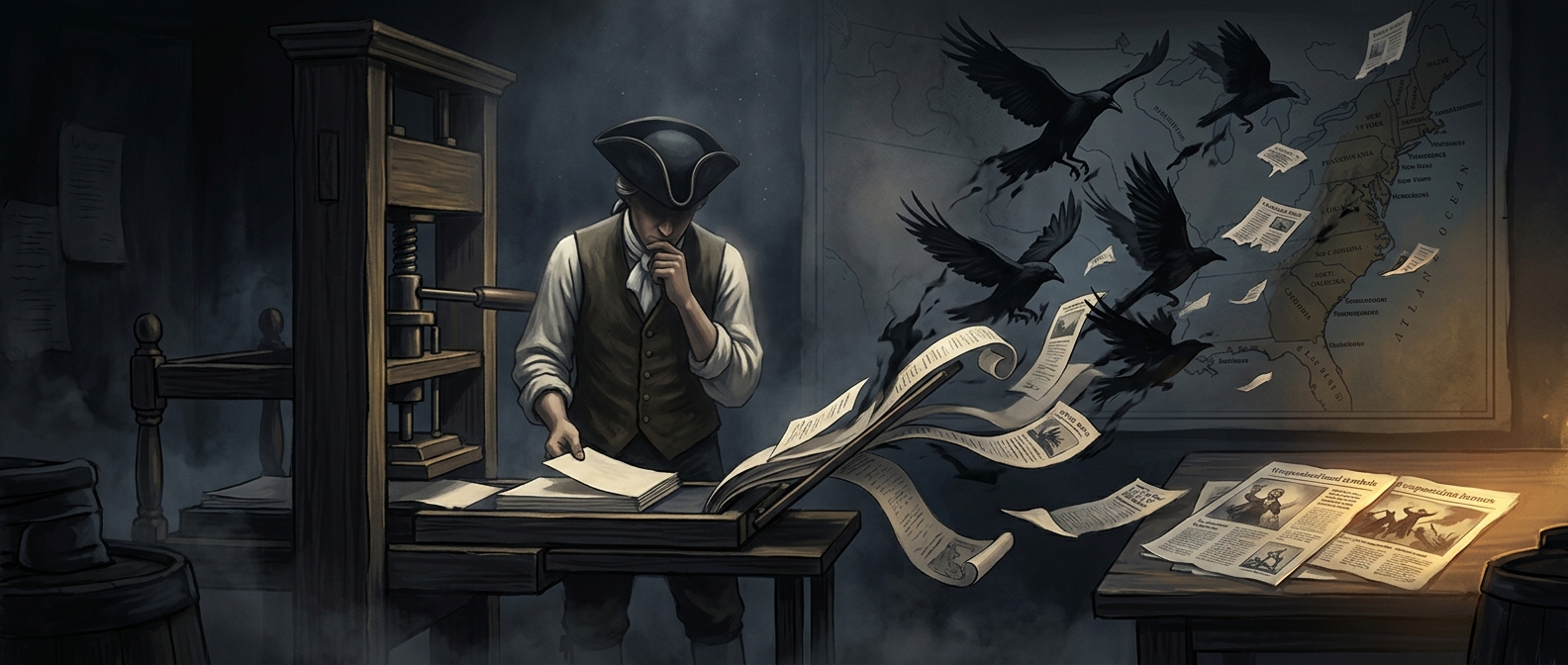
In 1782, while serving as an American diplomat in Paris, Benjamin Franklin created a counterfeit newspaper supplement describing British-backed violence on the frontier. Its reports included claims that Native American allies of the British had delivered American scalps to British commanders. The stories were presented not as Franklin’s argument, but as news supposedly supported by letters and documents.
That distinction was the point. A reader could dismiss a political essay as partisan advocacy; a newspaper account that appeared to quote correspondence seemed to offer evidence. Franklin used the familiar appearance of printed news—reports, names, and purported letters—to make an invented account feel independently verified.
The target was Britain’s reputation
Franklin arranged for the supplement to reach British leaders and circulate beyond his own circle. Its allegations could embarrass the Crown in front of audiences whose support or judgment mattered, including people in Europe and Britain itself. The maneuver also turned Britain’s alliance with Native nations into a liability: the forged reports invited readers to associate British policy with atrocities on the American frontier.
The tactic reveals how information traveled as a weapon during the Revolutionary War. Franklin was not merely trying to persuade readers that Britain behaved brutally; he was trying to make them believe that the proof had already appeared in print. The paper’s credibility depended on its disguise—and its most pointed accusation was that Britain’s own supposed evidence of victory exposed the moral cost of the war.