A declaration that exposed who counted as a citizen
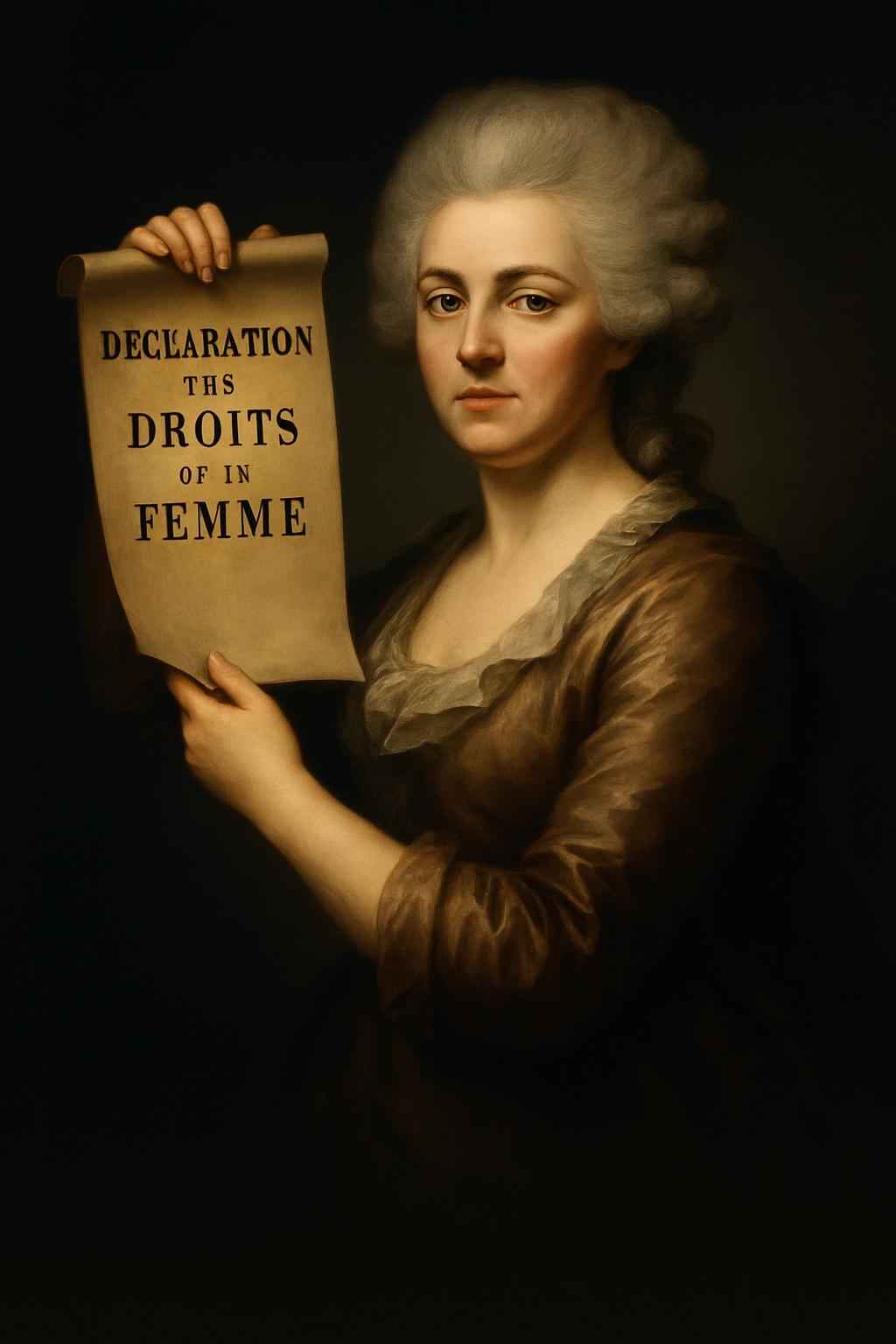
Olympe de Gouges built her 1791 declaration to confront a gap in the French Revolution’s language. The 1789 Declaration of the Rights of Man and of the Citizen announced universal rights, but political rights and public authority remained largely in men’s hands. De Gouges answered by rewriting its structure around women: if rights belonged to people by nature, she argued, women could not reasonably be excluded from them.
Her proposal reached beyond formal voting rights. It called for women’s access to public office and education, and for economic and legal arrangements that would give them greater independence. In the declaration’s logic, equality meant being able to shape laws, earn a living, and claim rights within family life—not simply being praised as a mother or companion.
From revolutionary principles to daily life
The declaration was a political intervention, not a law that changed women’s status. Its force came partly from using the Revolution’s own vocabulary and turning it against the limits of the new order. De Gouges made exclusion harder to present as an accidental omission: if women were subject to the law, her argument implied, they should also have a voice in making it.
That challenge mattered in a society where women could participate in public debate and revolutionary events but were denied equal political authority. Education and economic independence were essential to the case because rights on paper mean less when people lack the means to exercise them.
A fate that sharpened the contradiction
De Gouges was guillotined in 1793 amid the Revolution’s escalating political conflict. Her execution followed her political writings and confrontation with revolutionary authorities; it should not be reduced to a simple punishment for publishing this declaration. Still, the contrast was stark: a revolution proclaimed rights in universal terms while a woman who demanded that those terms apply to women was silenced. Her declaration remains a vivid record of how revolutionary ideals could be used to question the boundaries their authors had left in place.