A Portrait Hidden in the Uniform
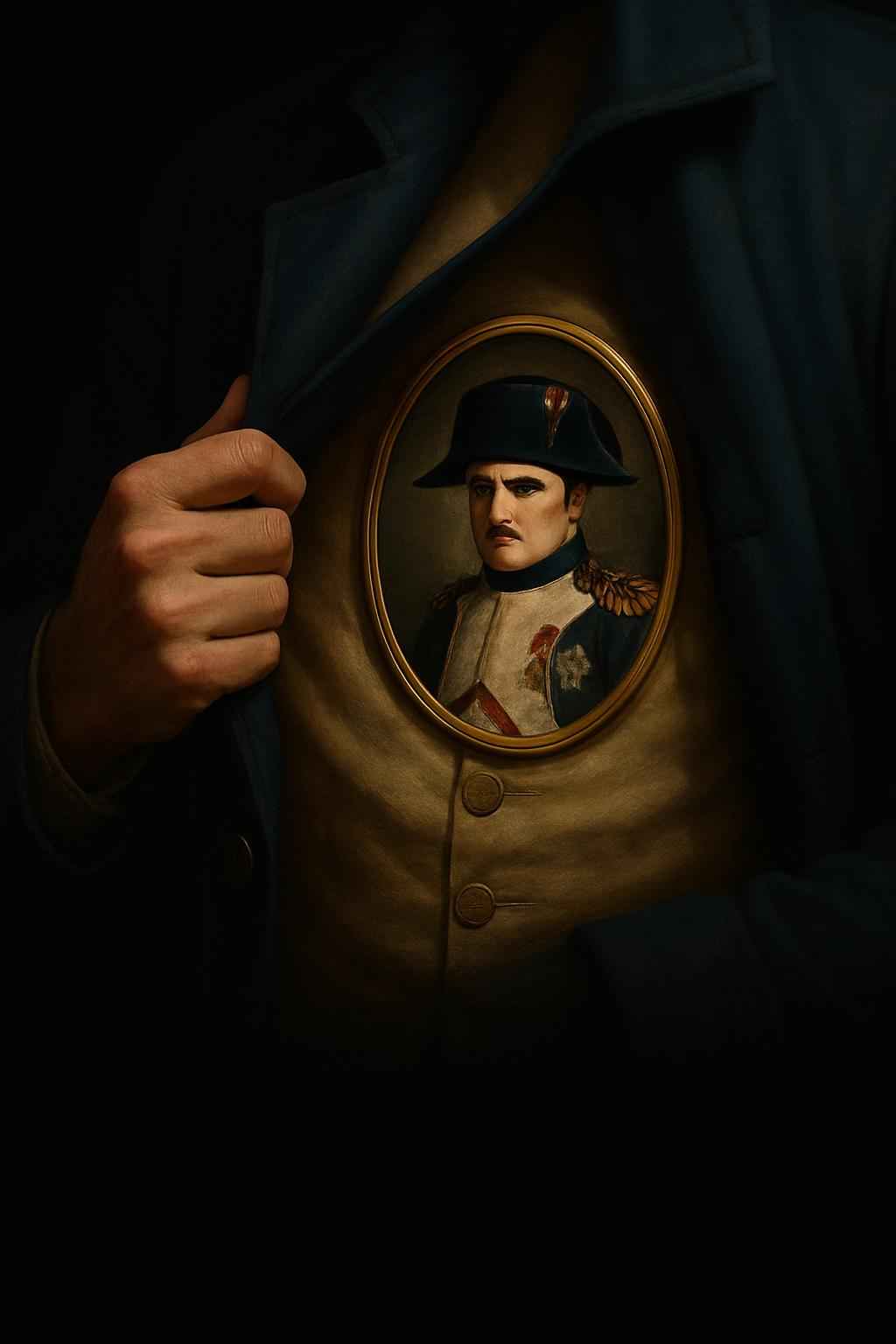
A miniature portrait could make political loyalty tangible. Sewn into a jacket lining, an image of Napoleon stayed close to its owner while remaining out of sight. The lining mattered: it turned the portrait into a private possession carried through ordinary movement, rather than a public emblem displayed on the uniform.
From Image to Keepsake
These portraits were made with pigments on linen, using techniques shaped by the emergence of photography. That placed them between older hand-painted miniatures and newer ways of producing images. Their small scale made them wearable; their material gave them the feel of an object to keep, not merely a likeness to look at.
Loyalty After Defeat
Napoleon’s exile separated him from the soldiers who had served under him. A portrait could not undo that distance or restore his power, but it gave allegiance a physical form that could travel with its owner. The jacket became both clothing and a discreet container for memory: even after defeat, a soldier could carry an image of the emperor against his body.