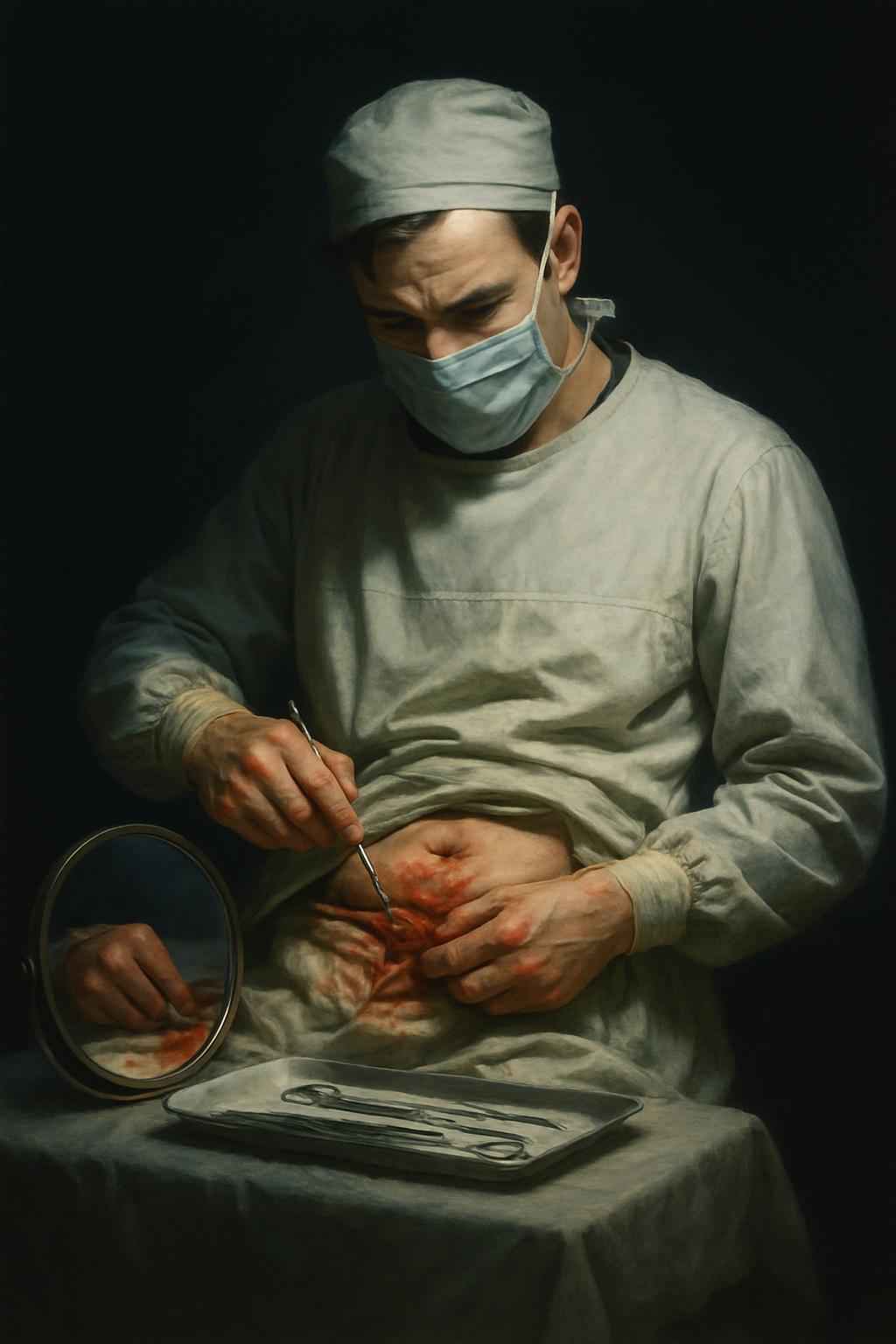
The operation did not end when the incision was closed
For surgeons in the mid-19th century, a successful operation could still be followed by a deadly infection. Wounds sometimes became swollen and filled with pus; infections could spread through the body. Doctors had no antibiotics, and the idea that invisible microorganisms caused many infections was not yet widely accepted. The danger seemed to arise after surgery, rather than from what happened in the operating room.
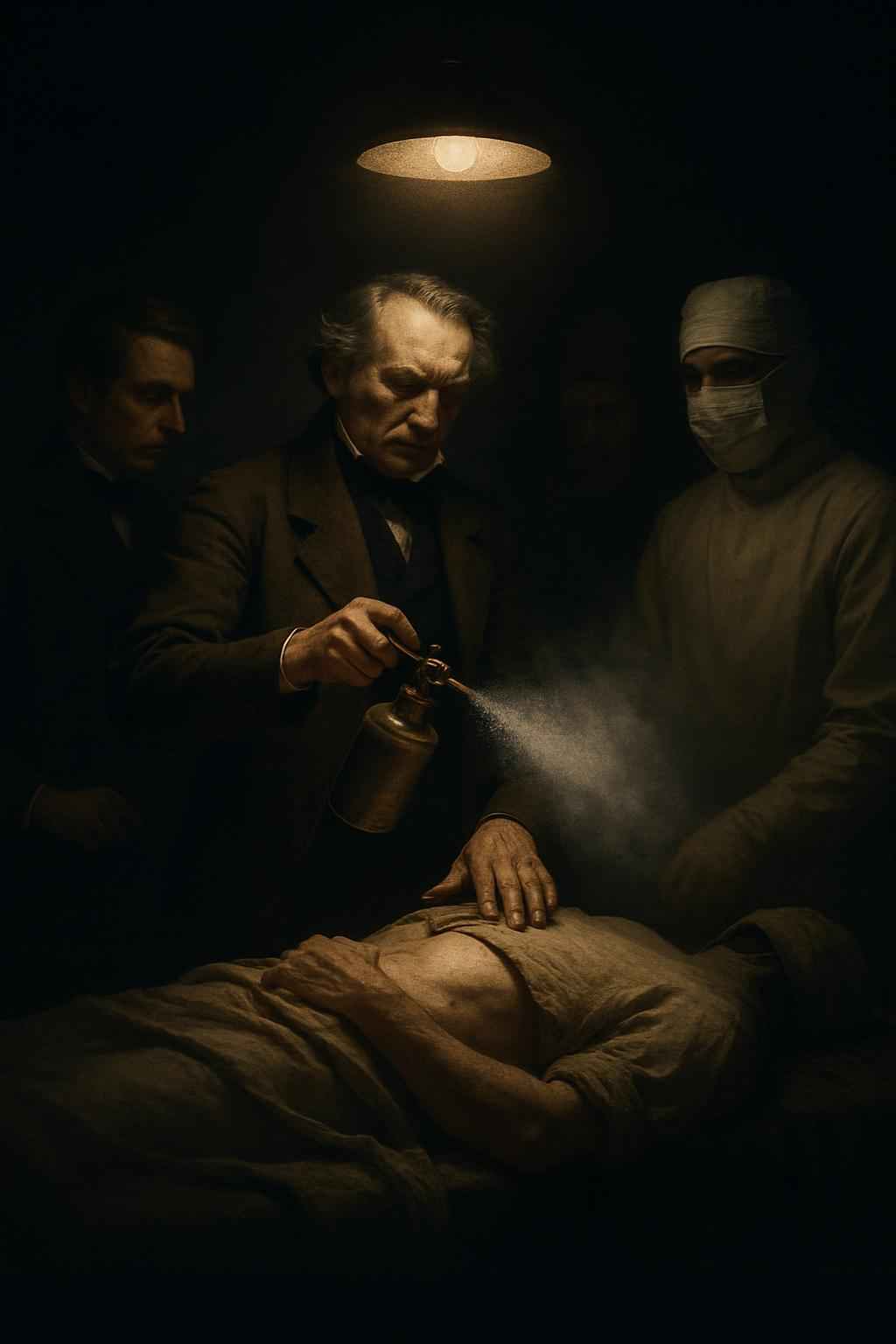
Joseph Lister’s intervention in Glasgow in 1867 changed that timeline. Influenced by the emerging idea that microbes caused decay, he treated contamination as something surgeons could try to prevent during the operation itself.
Carbolic acid made prevention part of the procedure
Lister used carbolic acid—also called phenol, a chemical that can kill many microbes—to disinfect wounds and surgical equipment. His early method included spraying a fine mist around the operative field. The spray was one part of a broader routine: keeping instruments and dressings clean and treating the wound so that microbes were less likely to take hold.
This was antiseptic surgery: the effort to destroy or suppress germs on the body and equipment. It differed from the later emphasis on aseptic surgery, which aims to keep germs out in the first place, including through sterilized instruments and barriers.
A new way to understand surgical risk
The method was demanding and could irritate tissue, and other surgeons did not adopt it uniformly. But when Lister’s approach took hold, infections and deaths fell in settings using it. Its deeper consequence was a change in what counted as surgical skill: success depended not only on cutting and stitching, but also on controlling contamination throughout the operation.
That shift helped make cleanliness an active medical intervention—not a matter of appearance or an afterthought once the patient was already ill.