Why Aghori Practice Crosses the Boundaries of the “Pure”
Aghoris are a small ascetic tradition within Hinduism, associated especially with devotion to Shiva. Their practices are not simply displays of toughness. They express a demanding religious idea: if ultimate reality is one, then the divisions people treat as absolute—including pure and impure, sacred and ordinary, life and death—cannot be final truths.
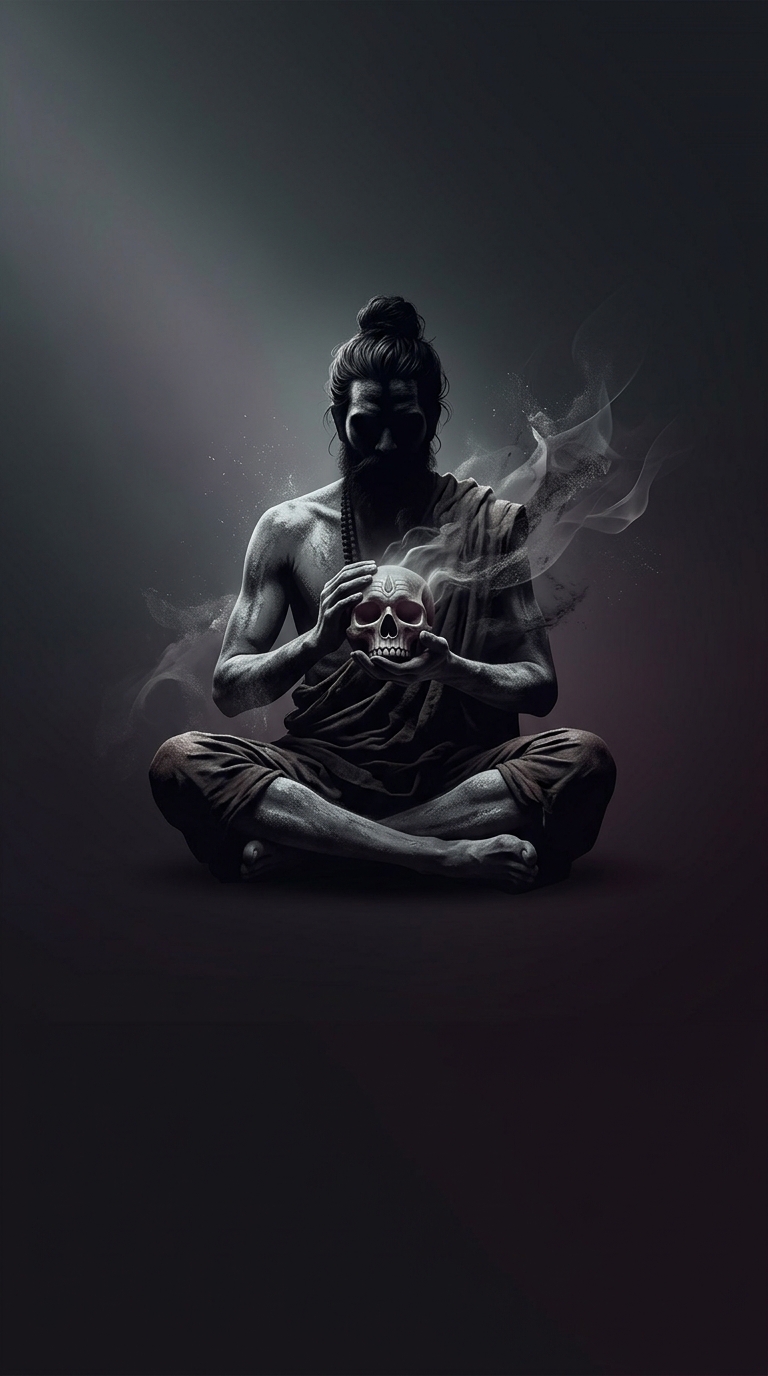
That idea is put into practice through deliberate contact with things many people avoid. Some Aghoris meditate in cremation grounds, smear their bodies with cremation ash, or use a human skull as a bowl. In Hindu settings, cremation grounds are places where death is made unmistakable; the skull, called a kapala, can serve as a ritual object as well as a vessel.
What the transgression is meant to do
The point is not merely to shock outsiders. Rules of purity and pollution shape everyday religious and social life, so crossing them can challenge the assumption that holiness belongs only to clean, orderly, socially approved spaces. Ash also makes the body’s impermanence visible: the living body, too, will eventually return to dust.
For an ascetic, such encounters can function as spiritual discipline. Rather than recoil from death or from what society labels defiling, the practitioner seeks to overcome fear and attachment—and to recognize the divine as present even there. This is a religious interpretation, not a claim that ritual objects or cremation ash have scientifically demonstrated powers.
A path, not a spectacle
Aghori life is often sensationalized because its outward signs are startling. But a skull bowl or ash-covered body makes sense only within a larger discipline and theology; copying the gesture alone would not reproduce its meaning. Nor does every Aghori practice every rite in the same way. The striking implication is that, in this tradition, a cremation ground can become not the opposite of a sacred place but a setting for confronting what sacredness is supposed to include.