Why the thyroid concentrates iodine
The thyroid needs iodine to make the hormones that regulate the body’s energy use. Thyroid cells pull iodine from the bloodstream and use it to build those hormones. Radioactive iodine takes advantage of that ordinary task: after a dose is swallowed, the thyroid absorbs it far more readily than most other tissues.
This makes the treatment selective, but not perfectly precise. It targets iodine-using thyroid tissue rather than recognizing which cells are overactive. That distinction matters: the aim is to reduce excess hormone production, yet some healthy thyroid tissue can be affected too.
Damage happens close to where the iodine collects
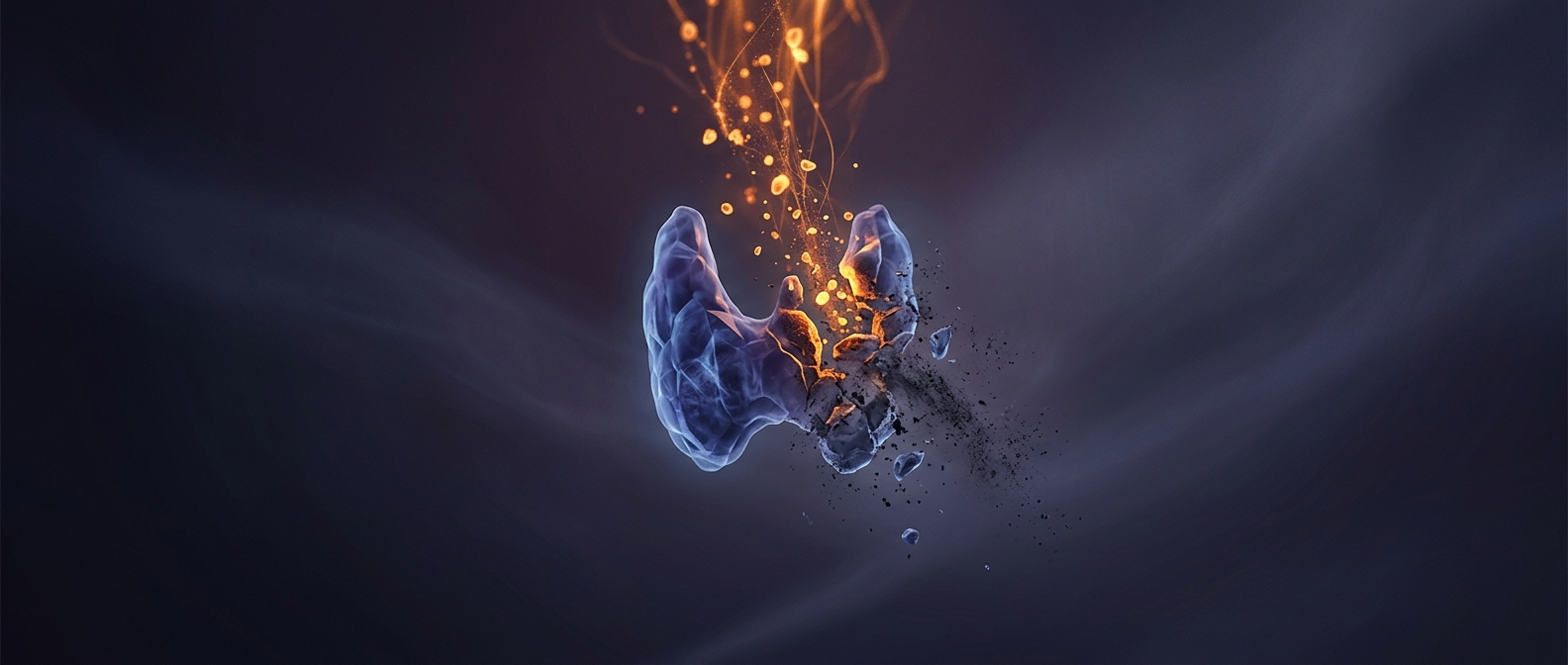
Iodine-131 gives off beta radiation, which travels only a short distance through tissue. As the radioactive iodine concentrates in the thyroid, that radiation injures nearby thyroid cells and gradually reduces how much hormone the gland can make. Because the effect depends on cell damage over time, hormone levels do not usually change immediately; clinicians monitor them after treatment rather than judging the result on the day the dose is given.
The treatment can leave the thyroid making too little hormone, sometimes requiring lifelong thyroid-hormone replacement. That is a tradeoff of reducing the gland’s overproduction: the same local damage that quiets an overactive thyroid can also diminish its normal output. Follow-up blood tests help identify where a patient has landed and whether medication is needed.