How a Microwave Turns Energy Into Heat
Inside a microwave oven, an electronic component generates microwaves—electromagnetic waves that travel through the cooking chamber and into the food. Their changing electric field pushes charged parts of water molecules back and forth. The molecules do not simply spin freely; they jostle against neighboring molecules, and that motion becomes heat.
The waves also heat other ingredients, including fats and dissolved salts. So a microwave does not warm food only by heating its water, even though water is often a major source of the heat.
Why the Heat Has Hot Spots
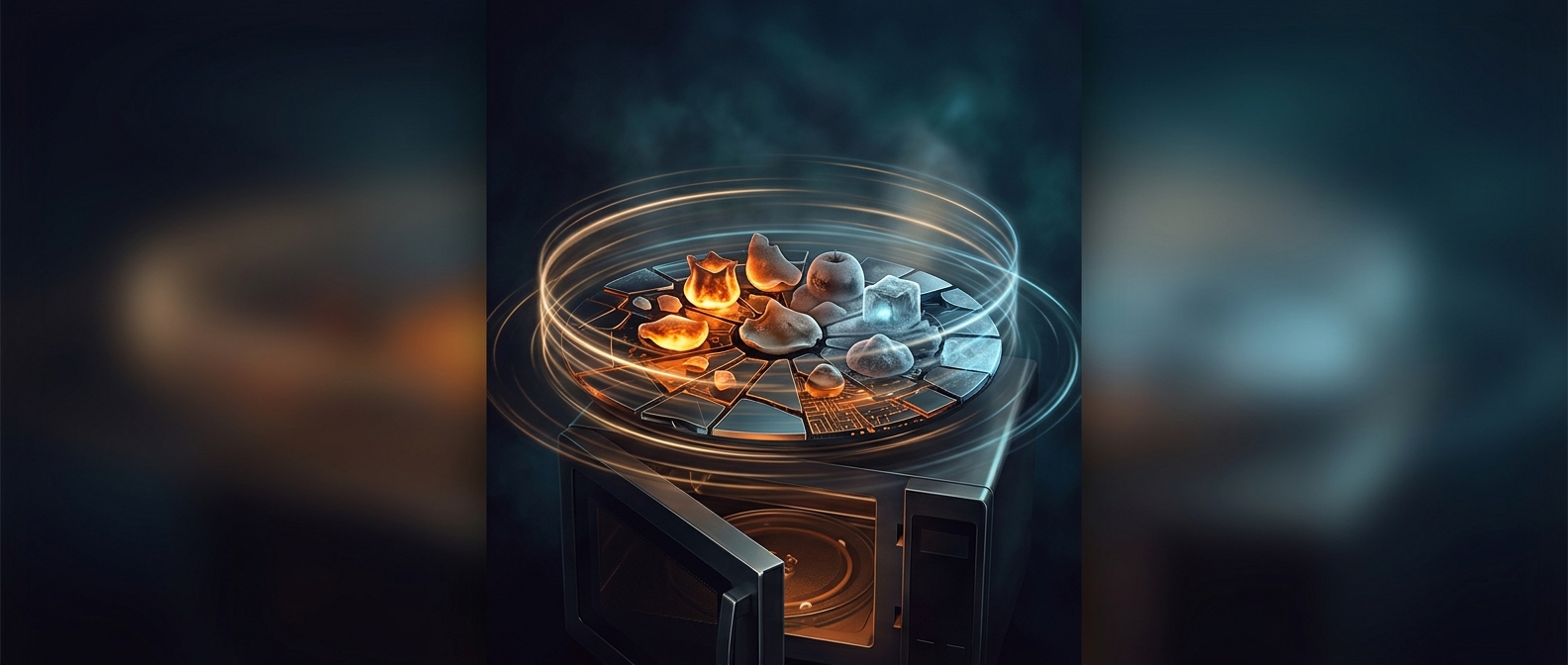
Microwave energy does not spread through a dish like heat from a flame. Waves reflect off the oven’s metal walls and overlap, creating regions where more energy is absorbed and others where less is. Food also absorbs energy as the waves travel into it, so its outer layers can warm faster than its interior. Shape and composition matter: a thin edge, a dense lump, or a patch with more moisture may heat differently from the rest.
The result is a shifting pattern of hot and cool zones, not a uniformly heated block. A turntable moves the food through some of those zones, but it cannot make every bite heat at the same rate.
What Helps Even Things Out
Stirring moves hot portions into cooler ones; arranging food in a ring rather than a mound can also reduce the distance microwaves must penetrate. A short pause after heating gives heat time to move from warmer areas into cooler ones. That pause is not wasted time: it is part of how a dish becomes more evenly warm, even though the microwave itself has stopped.