A Trampoline Is a Shared, Moving Surface
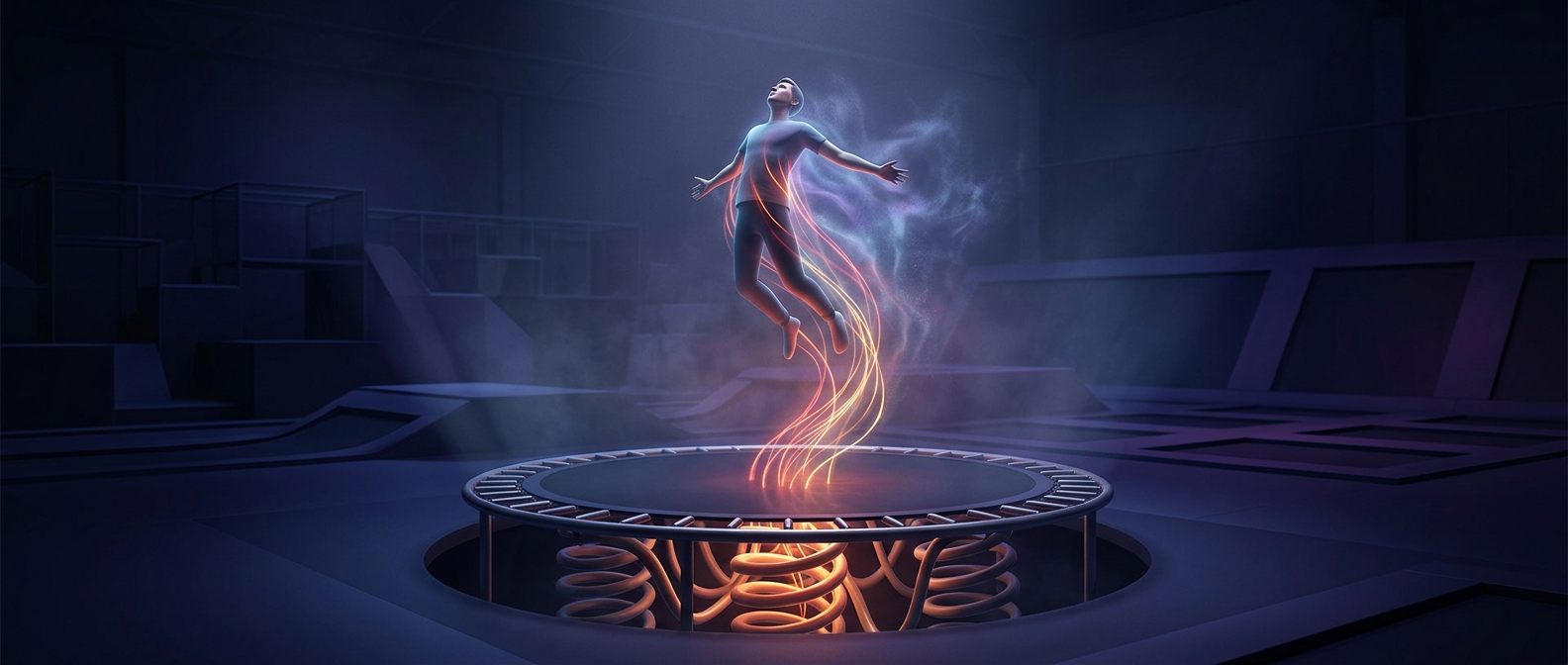
A trampoline does not respond to each person independently. Its mat is stretched across a frame by springs, so a landing bends a broad area of fabric and changes the tension around it. That disturbance travels through the mat as a wave, carrying motion to other parts of the surface.
When the mat rises beneath you, it can push back as your feet press down. But if someone else’s landing has already pulled your part of the mat downward, your feet meet a surface moving away from them. The timing of the two motions matters more than the strength of your own jump.
Timing Can Cancel the Lift
The mat’s movement can be thought of as a rhythm: it moves down, reaches a low point, then recoils upward. A second jumper adds another rhythm to the same flexible surface. When the motions line up, the mat may move farther and give a stronger rebound. When they oppose each other, they can partly cancel.
That cancellation is not the trampoline losing energy altogether. The motion is being redistributed through the mat, springs, and frame, and some energy is also lost as heat and sound. For the jumper landing at the wrong moment, though, the practical result is immediate: less upward push beneath their feet.
Why the Same Jump Can Feel Different
Because the surface is already moving, identical effort can produce noticeably different results from one landing to the next. A small change in when another person jumps—or where they land—can alter the mat’s motion under you. The trampoline is not simply storing your landing and returning it on your schedule; it is responding to everyone’s motion at once.
That is why a badly timed landing can interrupt a jump so abruptly: your legs are ready to spring, but the surface has not yet begun its return.