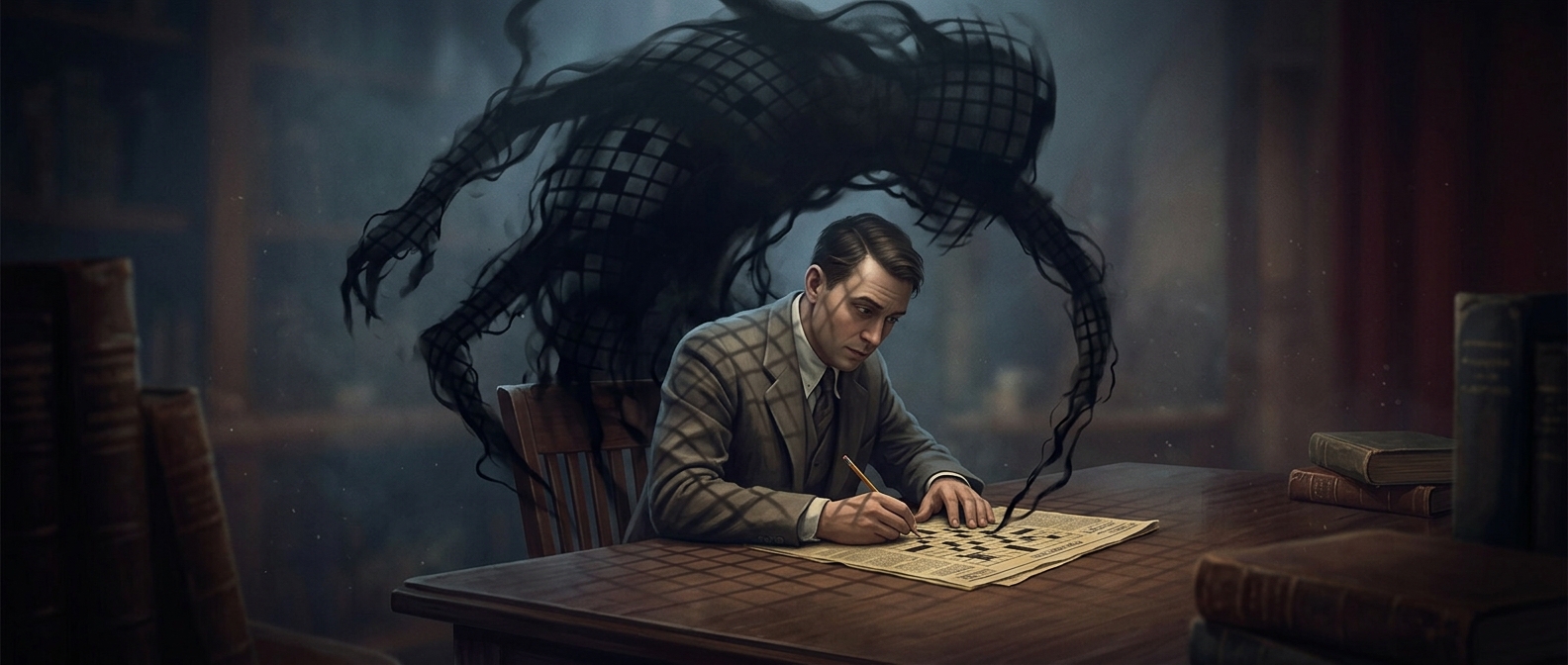
Why a Word Game Looked Like a Waste of Time
Crosswords arrived at a moment when newspapers were also arbiters of respectable behavior. Their appeal was easy to mistake for idleness: a solver could spend a long stretch filling squares, chasing clues, and checking one answer against another, without producing anything an employer or household could point to. Critics treated that absorbed attention as evidence that the puzzle was frivolous—and potentially distracting from work, reading, or other duties.
The puzzle’s design helped make it absorbing. Each answer had to fit both its clue and the crossing letters, so a guess in one corner could unlock several elsewhere. That small cycle of uncertainty and reward made crosswords more than a passing diversion for many readers, but it also fed the impression that they could swallow time.
Newspapers Followed Their Readers
A newspaper’s judgment of a pastime could change when readers made clear they wanted it. Puzzles gave people a reason to return to the page, compare answers, and make the paper part of a daily routine. What had looked to some editors like a threat to productive attention could also become a feature that held readers’ attention—and helped a publication compete for it.
That shift was not simply a sudden discovery that crosswords were intellectually worthwhile. It reflected a familiar tension in publishing: condemning a popular habit and serving the audience that enjoys it are different choices. Once newspapers began printing puzzles themselves, the pastime moved from the margins of respectable reading into the paper’s regular offerings. The same squares once blamed for stealing time could now help sell it.