The yellow-light squeeze
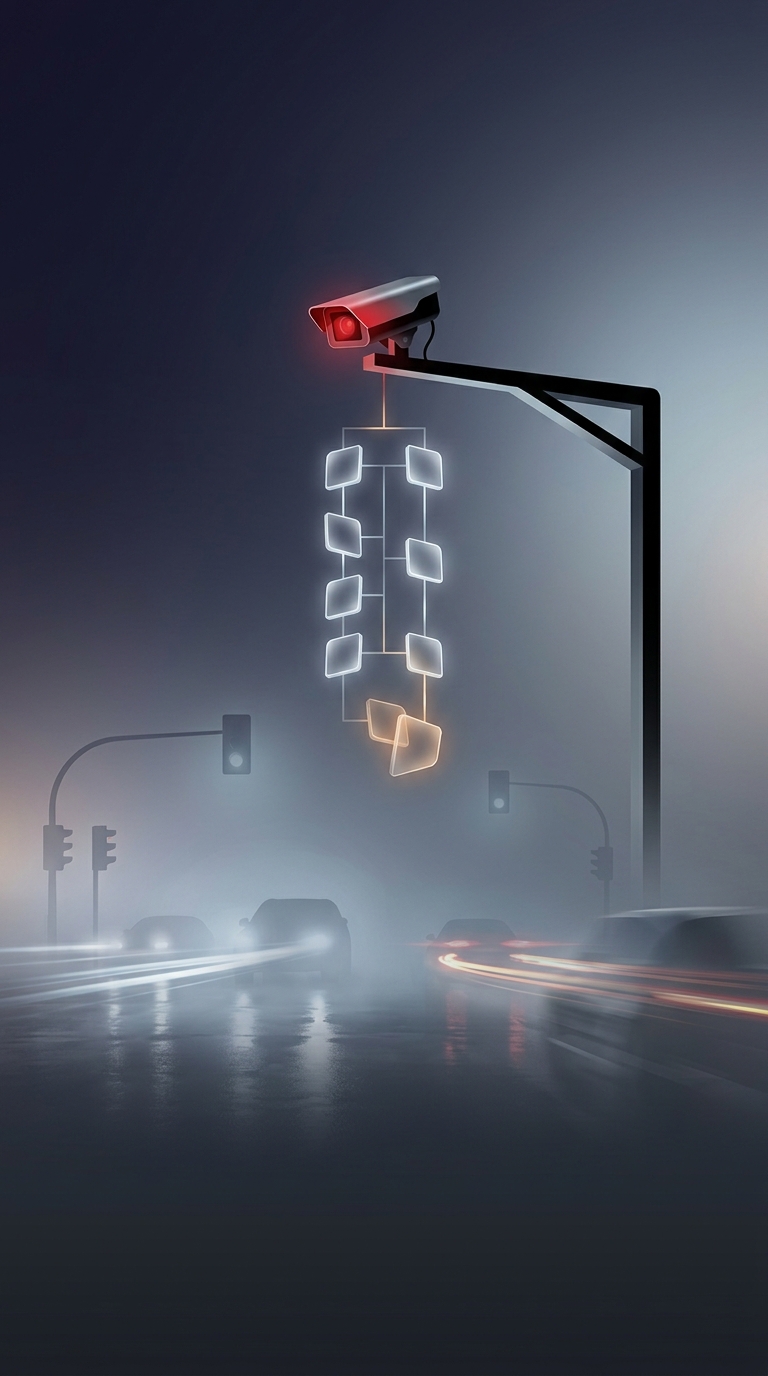
A frequently criticized way to increase red-light-camera tickets is to shorten the yellow interval—the time between a green signal turning yellow and the light turning red. Drivers who enter after the signal turns red can trigger a camera, so even a small change can affect how many violations are recorded.
The tactic works by narrowing a driver’s decision window. On yellow, a driver must judge whether there is enough time to stop safely or whether they are already too close to continue through. If the interval is cut, more drivers may still be crossing when the signal turns red, particularly at higher speeds or on wide intersections. The camera then records a violation that might not have occurred under a longer yellow.
Why the timing matters
Yellow timing is an engineering choice, not just a countdown to enforcement. It needs to give drivers a reasonable chance to respond, brake, and clear the intersection. The appropriate interval depends on factors such as approach speed and the intersection’s layout. Too little time can make stopping abruptly unsafe; too much can delay traffic and reduce the signal’s efficiency.
That creates an obvious conflict when a city both sets the signal timing and collects fines from camera citations. A shorter interval can raise revenue while making the intersection less forgiving. It also makes a ticket feel less like a response to reckless driving and more like a trap.
A safeguard against the trap
For that reason, yellow-light timing is central to disputes over automated enforcement. Reviewing the signal plan—and whether it changed around the time cameras were installed—can reveal whether ticket totals reflect driver behavior, a tighter timing window, or both. The key detail is not merely that a camera is watching: the length of the yellow can shape who gets caught.