Why autonomous cars could change the shape of city streets
A self-driving electric car is not just a vehicle with a different powertrain. If many such cars share a city, their routes, stopping places and charging needs can change how streets and parking space are used. The biggest changes may be less about building enormous new intersections and more about redesigning the details that govern traffic flow.
Intersections become coordination problems
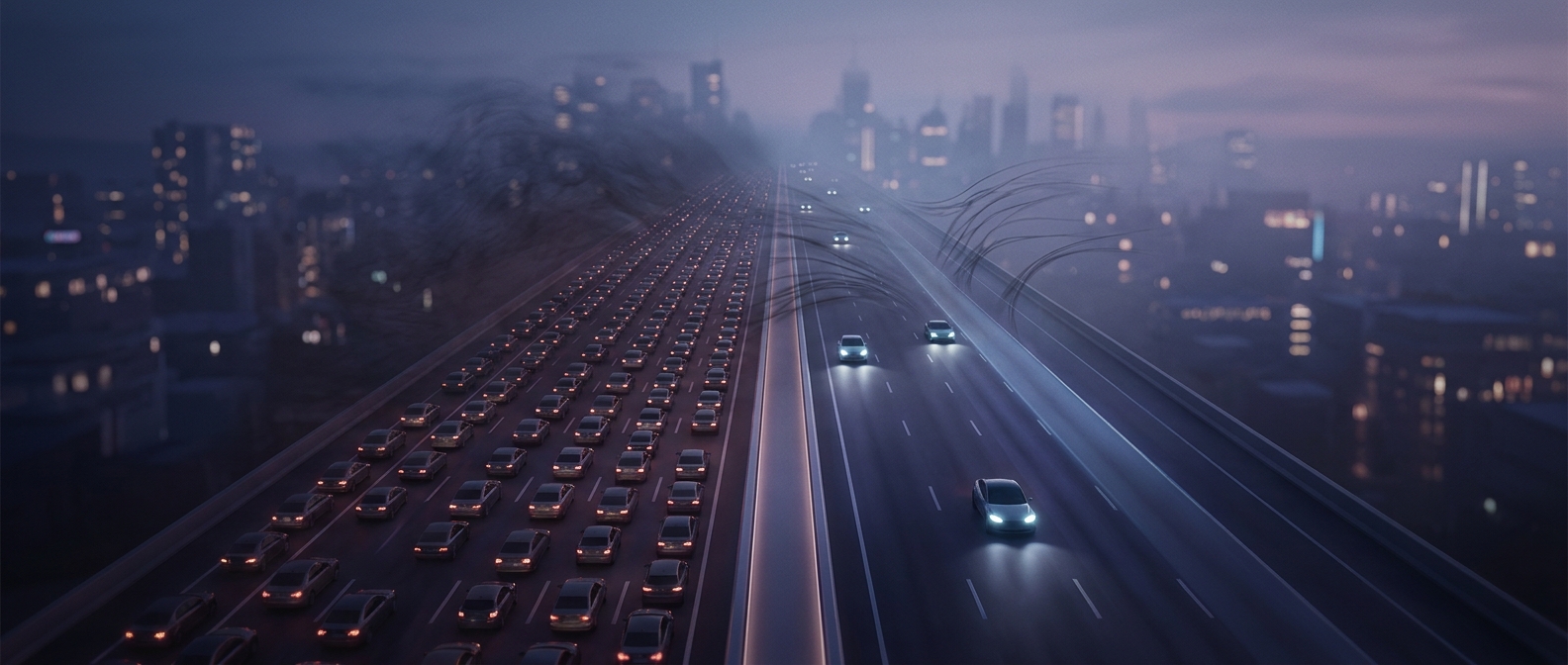
Today, traffic lights assign turns in timed phases: one stream of vehicles moves while another waits. Autonomous vehicles could coordinate their speed and spacing as they approach a junction, helping them pass through with fewer abrupt stops. That coordination can happen between vehicles, or through vehicle-to-infrastructure communication—wireless messages between a car and equipment such as a traffic signal.
But a connected signal is not a substitute for a safe intersection. Cars still need to detect pedestrians, cyclists and unexpected obstacles, and streets must remain legible to people who are not connected to a network. Cities may therefore combine digital systems with familiar signals, crossings and clear road markings rather than simply removing traffic lights.
Parking gives way to pickup space and charging
A car that can drive itself to a passenger—or travel elsewhere after dropping one off—may spend less time parked beside its destination. That creates an opportunity to convert some parking areas into housing, public space or other uses. It also creates a practical curbside challenge: several vehicles may arrive to pick up or drop off passengers at once, so cities need to manage where they stop and how long they wait.
Electric vehicles add another layer. Cars that remain in service for much of the day need reliable places to charge, while chargers compete for limited street and parking space. The infrastructure shift is therefore as much about allocating curbs and managing energy as it is about adding digital communications.